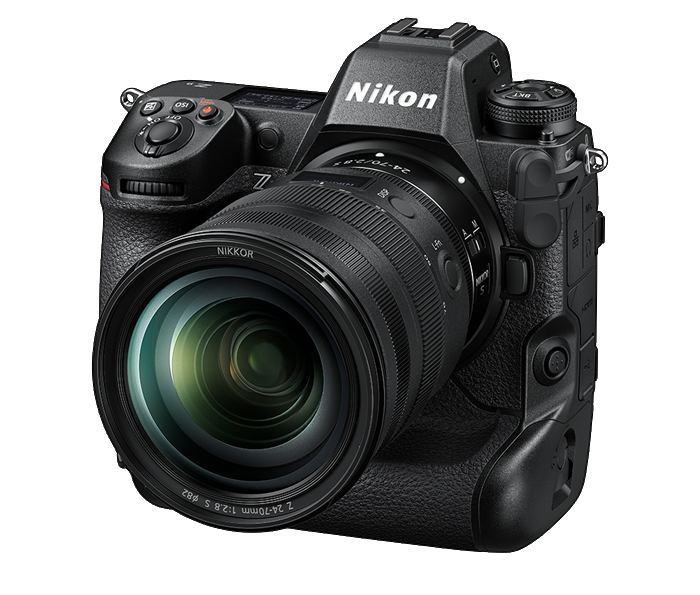

The Nikon Z9 and the Sony A7S III are two of the most sought-after full-frame mirrorless cameras on the market, drawing interest from professional photographers and videographers alike. Each camera serves different user needs and shooting styles, making them a common point of comparison. While the Nikon Z9 is built for those who value high-resolution images and robust features, the Sony A7S III caters more to filmmakers and low-light enthusiasts with its exceptional ISO performance and features tailored for video capture.
Key differentiators include the Z9's impressive 46-megapixel sensor versus the A7S III's 12-megapixel setup, which significantly affects image quality for stills. Additionally, the autofocus systems and video capabilities present distinct advantages for either camera, depending on user requirements. Both cameras are weather-sealed and have electronic viewfinders, providing reliability and versatility in diverse shooting environments.
Specifications Comparison
Detailed Comparison
Image Quality
When it comes to image quality, the Nikon Z9 boasts a full-frame sensor with 46 megapixels, allowing for detailed images that are ideal for large print-outs and extensive cropping. The sensor size of 35.9 x 23.9 mm provides a wider dynamic range and better color depth, especially in well-lit conditions. This makes the Z9 a fantastic option for professional photographers who require high-resolution images, whether for portraits, landscapes, or commercial work.
In comparison, the Sony A7S III, with its 12 megapixels, might seem at a disadvantage for still photography. However, it compensates with exceptional low-light performance thanks to its broader ISO range that extends from 40 to 409600. This makes it a preferred choice for shooting in dim conditions. Although the pixel count is lower, the quality of the individual pixels can deliver outstanding results in low-light scenarios without introducing excessive noise.
Overall, the Z9 offers varying levels of image quality suitable for diverse applications, while the A7S III excels in low-light capabilities. For general photography, the Z9 is the better choice, but for low-light environments, the A7S III can produce outstanding results.
Autofocus System
The autofocus systems in both cameras demonstrate significant advancements in technology, catering to different shooting styles. The Nikon Z9 features 493 autofocus points, providing extensive coverage across the frame. This allows for reliable subject tracking and focusing, particularly beneficial when shooting fast-moving subjects, making it an excellent choice for sports or wildlife photography.
On the other hand, the Sony A7S III houses 759 autofocus points, which cover 92% of the sensor area. This comprehensive coverage translates into some of the fastest autofocus performance on the market, particularly in video recording scenarios. It also includes advanced tracking technologies, which are enhanced for face and eye detection, ideal for portrait work or capturing dynamic action.
While both cameras have robust autofocus systems, the Z9's focus on sheer number of points versus the A7S III's emphasis on performance speed could sway a user's preference. For photographers needing fast, consistent autofocus in diverse shooting contexts, the Z9 shines; however, for videographers focusing on intelligent tracking, the A7S III has the edge.
Video Capabilities
Both the Nikon Z9 and Sony A7S III offer outstanding video capabilities, with both supporting 4K at 120 frames per second. However, the Z9's video specifications position it as a more versatile tool for various filming scenarios. The Z9 can record 8K video, providing greater resolution for cinematic projects and future-proofing content for higher-resolution displays.
Conversely, while the A7S III lacks 8K capabilities, it excels in video quality at lower resolutions, coupled with an advanced heat management system, which enables extended recording times without overheating. This is crucial for filmmakers who prioritize continuous shooting during lengthy projects. Furthermore, the A7S III includes S-Log and HLG capabilities for an expanded dynamic range during post-production.
Both cameras have made their marks in the video world, but if 8K is a priority, the Z9 clearly leads the pack. However, for videographers focused on 4K performance, low-light shooting, and ease of use in long recording sessions, the A7S III remains a strong contender.
Build & Ergonomics
In terms of build quality, both cameras are constructed to withstand the rigors of professional use, featuring weather-sealed designs. The Nikon Z9 is noticeably larger and heavier, weighing 1340 g compared to the A7S III's more manageable 699 g, which could impact portability for users who travel or shoot for extended periods.
The ergonomics of the Z9 are designed for comfort, with an overall layout that provides easy access to essential controls, crucial for reporters or sports photographers who need to remain agile. The larger grip and buttons cater to those with larger hands or who will be using gloves in colder conditions.
The A7S III, while smaller, has an efficient control layout that prioritizes quick adjustments. Its compact form factor makes it ideal for discreet shooting and travel. Thus, while the Z9 might be more suitable for those needing an exceptionally robust and ergonomically sound body for extensive use, the A7S III's lighter weight will benefit users looking for a versatile camera.
Battery & Storage
Battery life is a significant consideration for working professionals, and here the Nikon Z9 again takes the lead with a battery life of approximately 740 shots per charge, surpassing the A7S III's 600 shots. This longer battery life can be a crucial factor during demanding shoots where opportunities to change batteries are limited.
Regarding storage, both cameras support CFexpress Type B cards, which allow for high-speed data transfers required for recording high-resolution video. The Z9 also has dual card slots, providing redundancy and extra storage options, which is beneficial when shooting time-sensitive events or when maximizing the output of high-resolution images.
While the A7S III does support dual memory cards too, the overall battery performance gives the Z9 a noteworthy advantage for professional photographers who can't afford downtime during shoots. Therefore, for users whose shooting style requires extended use, the Z9 is a more reliable option in this aspect.
Value for Money
In terms of value, the Nikon Z9 comes at a premium price of $5500, reflecting its advanced feature set, including high-resolution capabilities, extended battery life, and superior video performance. This makes it a worthwhile investment for professionals who require the highest quality and performance in their photography and videography pursuits.
On the other hand, the Sony A7S III is priced at $3499, making it more accessible for those entering the world of full-frame mirrorless cameras or cinematography. Its value lies in its extensive range of features, especially for video, paired with commendable low-light performance. Thus, it targets both enthusiasts and professionals looking for quality without maxing out budgets.
Ultimately, while the Z9 provides exceptional value for demanding users, cost-sensitive consumers might find the A7S III offers a better balance between features and price. Therefore, the choice will largely depend on the buyer's priorities and intended usage.
Our Verdict
Overall, the Nikon Z9 emerges as the winner, primarily due to its superior resolution and battery performance, making it an ideal choice for photographers who need high-quality images and extended usage. In terms of video quality and higher shooting speeds at 8K resolutions, it outpaces the competition. However, the Sony A7S III holds its ground with exceptional low-light performance, advanced autofocus, and a more budget-friendly price, establishing it as the go-to choice for videographers and those seeking great value without needing the latest features. Ultimately, buyers should consider their specific needs and use cases to make an informed decision.
Nikon Z9
Sony A7S III
Also Compare
Frequently Asked Questions
Which camera is better for low-light photography?
The Sony A7S III excels in low-light photography due to its lower megapixel count and broader ISO range, allowing for cleaner images in challenging light conditions.
Is the Nikon Z9 worth the higher price?
If you require high-resolution images, extended battery life, and the ability to shoot 8K video, the Nikon Z9's advanced features justify its premium price.
Which camera has better autofocus performance?
While both have excellent autofocus systems, the Sony A7S III offers faster focusing for video and better tracking capabilities, especially in dynamic shooting situations.
Can the Z9 shoot high-quality video?
Yes, the Nikon Z9 can shoot 8K video and 4K at up to 120fps, offering high-quality video performance suitable for professional filmmakers.
What's the main difference in battery life between the two cameras?
The Nikon Z9 offers approximately 740 shots per charge, while the Sony A7S III provides about 600 shots, giving the Z9 the advantage for longer shoots.