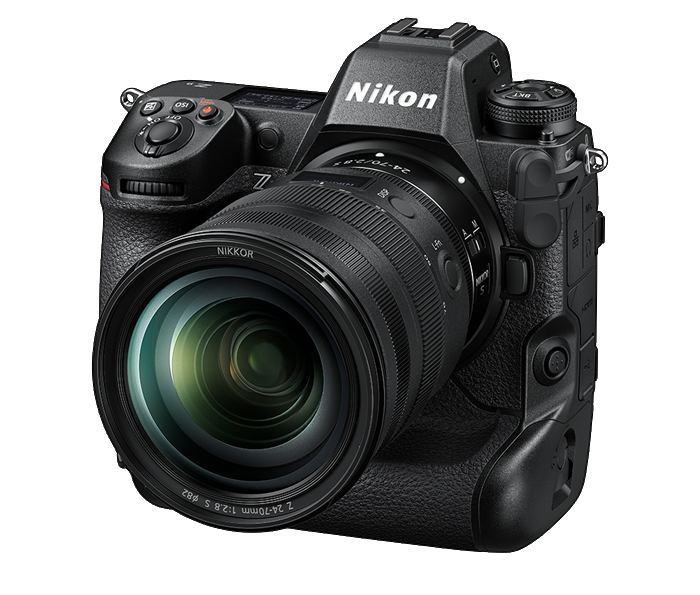
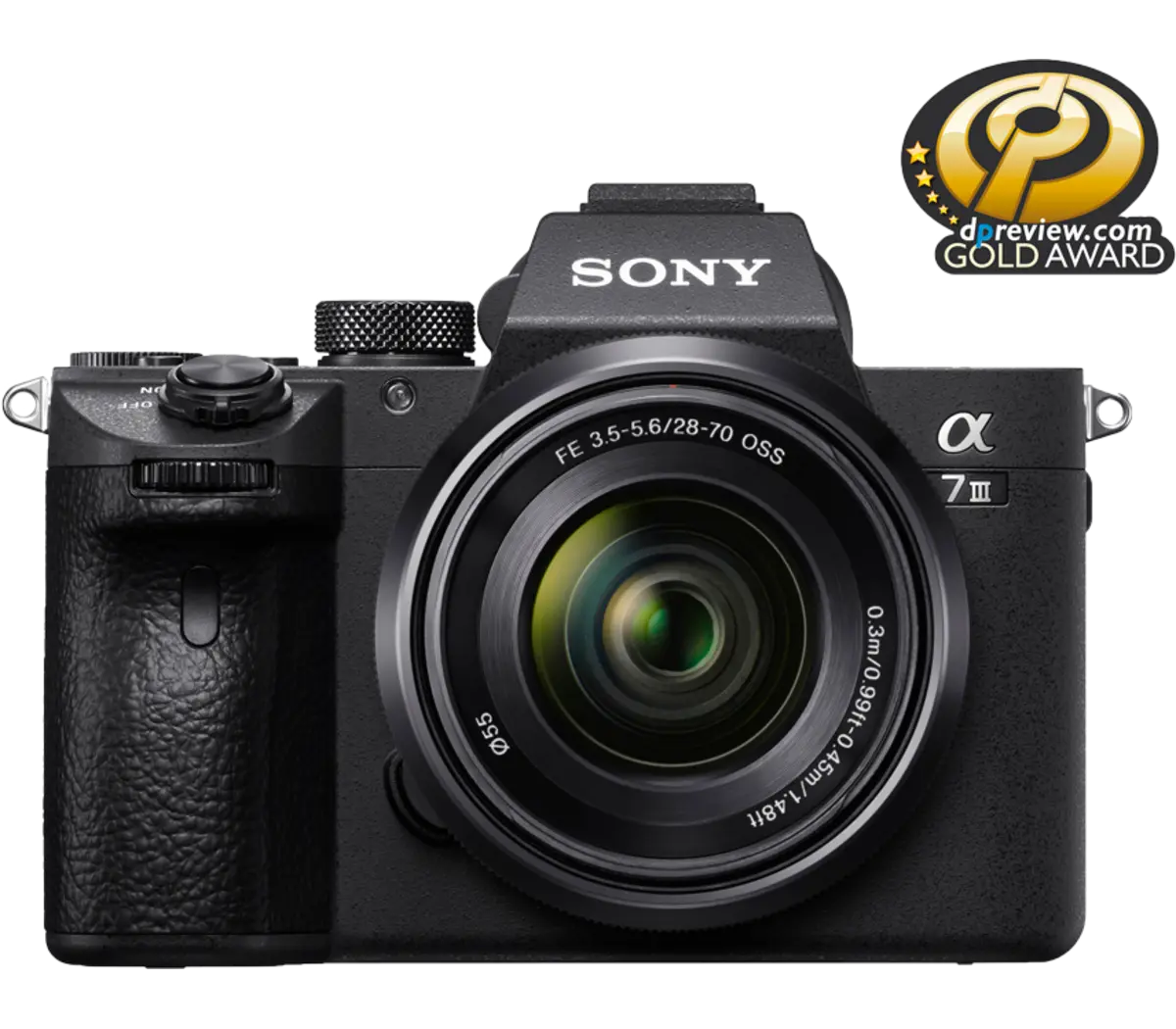
The Nikon Z9 and Sony A7 III are two full-frame mirrorless cameras frequently compared by professionals and advanced enthusiasts looking for high performance in photography and videography. While the Nikon Z9 is Nikon's flagship mirrorless model, targeted at sports, wildlife, and demanding commercial photographers, the Sony A7 III holds a popular spot as a versatile all-rounder-often considered one of the best value options for those entering or upgrading within the full-frame market.
Buyers may compare these cameras when deciding between an ultimate pro tool (Z9) and a more affordable but capable workhorse (A7 III). The key differentiators are resolution, speed, autofocus technology, video capabilities, physical size, and of course, price point. Understanding their differences will help buyers make the right choice for their needs, whether that's capturing high-speed action, cinematic video, or high-resolution landscape images.
Specifications Comparison
Detailed Comparison
Image Quality
The Nikon Z9 boasts a 46-megapixel full-frame sensor, delivering much higher resolution than the Sony A7 III's 24-megapixel sensor. This significant difference gives the Z9 a clear advantage for detailed landscape, commercial, or studio work where cropping and very large prints are expected. The Z9 also benefits from state-of-the-art sensor technology and Nikon's new image processor, resulting in impressive dynamic range and color reproduction.
In contrast, the Sony A7 III's 24MP sensor is no slouch. Its back-illuminated design produces excellent noise control at high ISOs, making it highly effective for low-light shooting. The A7 III's sensor delivers very respectable image quality for most genres, but when ultimate detail is needed, it falls short of the Z9.
For photographers who demand top resolution and cropping flexibility, the Z9 stands out, while the A7 III is a solid performer for everyday use. Both deliver professional-level image quality, but Nikon's Z9 simply offers more detail and headroom for demanding applications.
Autofocus System
The autofocus capabilities of these cameras reflect their respective generations and intended markets. The Sony A7 III has 693 phase-detection points-more than the Z9's 493 points-covering a wide area for subject tracking. Its real-time Eye AF and animal-eye detection are well regarded for reliability, especially in portrait and event scenarios. For its price class and age, the A7 III's autofocus is still among the best.
However, the Nikon Z9 introduces a next-generation autofocus algorithm with deep-learning subject recognition, 3D tracking borrowed from Nikon's flagship DSLRs, and fully blackout-free shooting. Its 493 AF points combined with advanced processing allow for extreme precision in tracking fast or erratic subjects-particularly valuable for sports and wildlife. The Z9 also benefits from more powerful hardware, giving it a clear advantage, especially for action.
While the A7 III AF system is still excellent and highly competitive, the advancements in the Z9's system are tangible and significant for challenging professional work.
Video Capabilities
The Nikon Z9 is designed as a true hybrid camera, with video capabilities that rival high-end professional cinema tools. It records up to 4K at an impressive 120p without crop, offering stunning slow-motion and superior codec options. The Z9 can internally record 10-bit video, has advanced heat management for long record times, and supports features like waveform monitoring and high-performance autofocus in video mode-ideal for commercial or cinematic shooters.
The Sony A7 III records 4K video up to 30p, oversampling from its full-frame sensor for crisp detail. It offers clean footage and good color science, making it a staple among hybrid shooters and aspiring filmmakers. However, it doesn't provide 4K 60p or higher frame rates, and its internal video options are more limited compared to the Z9-no 10-bit internal recording, for example.
For users looking to shoot high-quality video, the Z9 leads by a considerable margin, especially for advanced or professional workflows. The A7 III still provides good 4K video but is outpaced by the newer Z9's robust suite.
Build & Ergonomics
There is a stark contrast in build philosophy between these cameras. The Nikon Z9 emphasizes professional durability and operation, weighing 1340g and equipped with a large, integrated vertical grip. Its rugged, weather-sealed magnesium alloy body is purpose-built for extreme environments and long sessions, while its 3.2-inch, high-res touchscreen and large electronic viewfinder provide an immersive shooting experience. The Z9's button layout and additional controls are tailored for rapid operation and comfort, even with gloves or in difficult settings.
The Sony A7 III is designed for portability and versatility. Weighing just 650g, it's significantly lighter and more compact (127 x 96 x 74 mm), making it a better choice for travel, event, or street photographers who prioritize a smaller kit. It also has weather sealing and a well-designed grip, though its 3-inch LCD and lower-resolution viewfinder/screen are less immersive compared to the Z9. The absence of a built-in vertical grip may be a downside for sports or portrait shooters.
While the Z9 clearly wins in ruggedness and ergonomic features for demanding usage, the lighter A7 III has obvious advantages in compactness and ease of carry. Which is better depends on the user's needs.
Battery & Storage
Both cameras offer impressive battery performance for mirrorless bodies. The Nikon Z9 delivers 740 shots per charge, slightly higher than the A7 III's 710 shots, despite its higher resolution and more power-hungry hardware. This longevity is due in part to the Z9's power-efficient EXPEED 7 processor and large battery. The integrated grip of the Z9 also allows use of a larger, more durable battery, advantageous for all-day work.
The Sony A7 III uses Sony's robust NP-FZ100 battery, which is well known for longevity in mirrorless cameras. Despite the slightly lower shot count, the A7 III's compact body still manages an excellent runtime, making it top in its size class.
In storage, the Z9 generally supports dual CFexpress/SD slots, offering higher write speeds necessary for its high-res imaging and fast video. The A7 III features dual SD card slots (with only one supporting the fastest UHS-II standard), suiting most users but not matching the speed potential of CFexpress for high-bitrate video or continuous shooting.
Overall, the Z9 edges out the A7 III in shot count and media versatility, while the A7 III remains strong for its size.
Value for Money
The Sony A7 III is one of the best value propositions on the full-frame market. For around $2000, it offers outstanding image quality, autofocus, good video, and a robust feature set in a compact body. For many advanced amateurs, event shooters, and even professionals needing a second body, the A7 III delivers performance well beyond its price tier and continues to be a go-to for value-oriented buyers.
The Nikon Z9 retails at $5500, nearly three times the cost of the A7 III. It justifies the higher price with flagship-level build, unmatched speed, ultra-high resolution, next-gen AF, and pro video features-capabilities necessary for certain demanding assignments in sports, wildlife, news, or commercial production. If you need these features, the Z9 is worth the investment, but for most users, it represents overkill in both capability and cost.
For the majority of buyers, the A7 III presents a better value. It offers an amazing balance of features, quality, and price for all but the highest-end professional scenarios.
Lens Ecosystem
Sony's E-mount has been on the market longer and offers a broader native lens lineup, including options from Sony, Sigma, Tamron, Zeiss, and others. This mature ecosystem provides users with more native lens choices at varying price points and specialties, making it easier to find the right gear for any genre.
The Nikon Z mount, while newer, is rapidly growing and covers most focal lengths with high-quality glass-often noted for its impressive optical performance. Third-party support is gaining momentum, but selection lags slightly behind Sony, particularly at the budget end or for less common focal lengths.
Users heavily invested in either ecosystem should consider lens availability and compatibility before making a move. As of now, Sony's system is more complete, especially for users requiring specialized or affordable glass.
Our Verdict
The Nikon Z9 wins overall based on its consistently superior performance in image quality, autofocus, video, and robustness, reflecting its status as a true flagship camera. For professionals who need extreme speed, resolution, and reliability in the harshest conditions, the Z9 is unmatched. However, the Sony A7 III remains the king of value, offering phenomenal performance at a fraction of the price and in a much lighter, more compact package. For most enthusiasts, advanced amateurs, and those prioritizing portability or a broad lens selection, the A7 III will be the better real-world fit, particularly for those not requiring the utmost in speed or resolution. Both cameras are excellent in their own right-the best choice depends entirely on budget and specific shooting needs.
Nikon Z9
Sony A7 III
Also Compare
Frequently Asked Questions
Who should buy the Nikon Z9 over the Sony A7 III?
The Nikon Z9 is best suited for professionals who require the highest possible resolution, fastest continuous shooting, advanced autofocus, and robust video features. It's ideal for sports, wildlife, news, and commercial photographers or videographers who need flagship-level tools and can justify the higher investment.
Is the Sony A7 III still a good buy in 2024?
Yes, the Sony A7 III remains an excellent value choice, delivering great image quality, reliable autofocus, and solid video at a very attractive price. While its specs are behind newer flagships, it still outperforms many rivals in its class and boasts the broadest selection of native lenses.
How do the sizes and weights compare for travel or event photography?
The Sony A7 III is much lighter (650g) and more compact, making it far more comfortable for travel, long events, or handheld use. In contrast, the Z9 is significantly larger and heavier (1340g) due to its integrated professional grip and build, best for users who prioritize ergonomics over portability.
Which camera is better for video work or hybrid shooting?
The Nikon Z9 is far more advanced for video, offering 4K 120p, internal 10-bit capture, and professional tools. It's the clear choice for serious videographers or those who require top-quality hybrid (photo + video) performance. The A7 III, while competent for casual or enthusiast videographers, is limited to 4K 30p and lacks higher-end video features.
Does either camera offer better lens choices?
Sony's E-mount ecosystem is currently broader and more mature, with a larger variety of lenses from Sony and third parties at different price points. Nikon's Z-mount selection is expanding rapidly with high-quality options but still trails Sony for specialized focal lengths and budget-friendly alternatives.