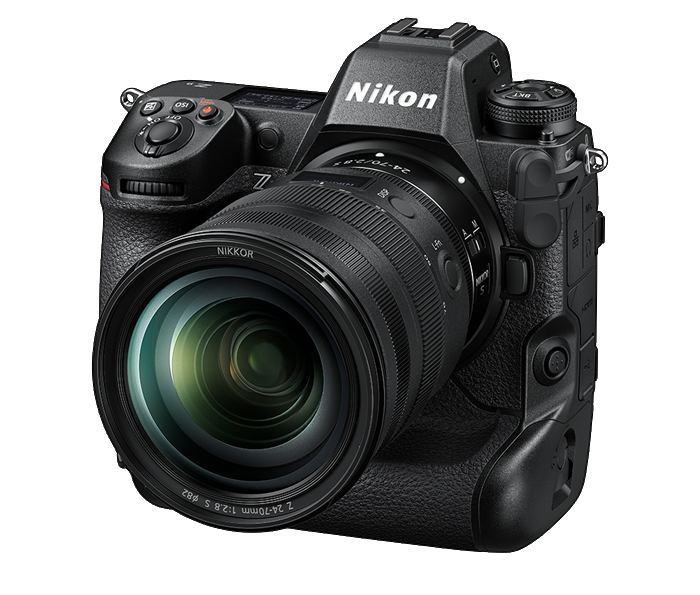
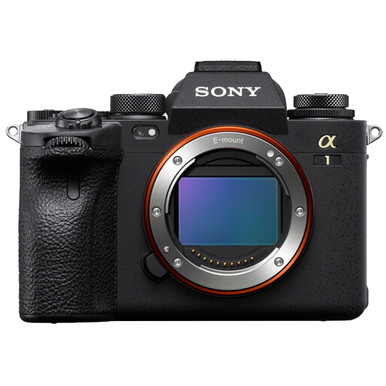
The Nikon Z9 and Sony A1 are two of the most advanced professional mirrorless cameras currently available, appealing primarily to photographers and videographers who demand high performance and versatility. Both models are designed to cater to the needs of serious enthusiasts and professionals alike, making them a common point of comparison for those looking to invest in a flagship camera. Key differentiators that typically arise in discussions about these models include their respective image quality, autofocus capabilities, video performance, and overall ergonomics.
Specifications Comparison
Detailed Comparison
Image Quality
The Nikon Z9 features a 46-megapixel sensor, delivering impressive resolution and dynamic range that lends itself well to both landscape and portrait photography. It excels in producing rich colors and fine details, making it a strong contender for photographers focusing on still images. On the other hand, the Sony A1 boasts a slightly higher resolution at 50 megapixels, this enables even finer detail retrieval, which can be beneficial for large-format printing or cropping in post-processing. Moreover, its expanded ISO range gives it a slight edge in low-light scenarios, allowing for cleaner images at higher ISO settings. While both cameras produce stunning image quality, the Sony A1's slight advantage in megapixels and ISO performance makes it stand out in this category.
Autofocus System
With 493 autofocus points, the Nikon Z9's system provides excellent coverage across the frame, ensuring that fast-moving subjects can be tracked effectively. The sophisticated subject detection algorithms enable reliable focusing on people and animals, making it an excellent choice for wildlife and sports photography. The Sony A1 boasts an impressive 759 autofocus points, offering even more coverage. Its Real-Time Eye autofocus is highly advanced, especially for human and animal subjects, providing precise tracking that is regarded as one of the best in the market. Given the additional autofocus points and superior AI-driven focusing technology of the Sony A1, it emerges as the winner in this category.
Video Capabilities
Both the Nikon Z9 and Sony A1 are top-tier options for videographers, with the capability of shooting 4K video at up to 120 frames per second. In terms of video formats, the Z9 supports 10-bit N-RAW and ProRes RAW recording internally, a feature designed for high-quality post-production work, which is significant for professional filmmakers. The A1 also offers impressive features such as S-Log3 and HLG for HDR content, providing flexibility in color grading. However, the Z9's ability to shoot 8K video at 30 fps gives it a notable edge for users looking to work in this higher resolution format. Therefore, while both cameras cater well to video needs, the broader versatility and higher resolution capabilities of the Z9 win out here.
Build & Ergonomics
Durability and ergonomics are critical for any professional camera, and both the Nikon Z9 and Sony A1 are built to withstand challenging conditions. The Z9's robust weather-sealing makes it exceptionally resilient against dust and moisture, essential for outdoor photography. Additionally, its larger grip and weight (1,340g) make it comfortable for long shooting sessions. Conversely, the A1, weighing only 737g, is lighter and more compact, which may appeal to those needing a travel-friendly option. Despite its smaller size, the A1 still manages a solid build quality with weather-sealing. While the Z9 may be preferred for extended outdoor use due to its superior durability and grip comfort, the A1's lightweight design is a distinct advantage for those prioritizing portability. Thus, it results in a tied outcome for users with different ergonomic preferences.
Battery & Storage
Battery performance is crucial for long shooting sessions, and the Nikon Z9 excels with a battery life of approximately 740 shots per charge, which is significantly higher than the A1's 530 shots. This extended battery life means less downtime for Z9 users, especially in demanding settings where changing batteries can be disruptive. In terms of storage, both cameras support dual card slots, but the Z9 provides faster card writing speeds which can be beneficial for constant high-burst photography or recording high-quality video. Although the A1's features are competitive, the Z9's superior battery life gives it an advantage for extended use, especially in professional workflows.
Value for Money
Pricing is often a decisive factor in choosing between the Nikon Z9 and Sony A1. The Z9 is priced at $5,500, while the A1 is available for $6,500, reflecting the premium nature of both systems. In terms of overall features and performance, the Z9 offers strong advantages in video capabilities and battery life without sacrificing quality in crucial areas such as autofocus and imaging. However, the A1's edge in image resolution and autofocus prowess maintains a competitive value for those who prioritize those specifications. Therefore, considering performance to cost ratio, especially for videographers and hybrid shooters, the Nikon Z9 can be seen as offering better value for investment.
Lens Ecosystem
Both Nikon and Sony have a strong lens ecosystem, but there are some differences to consider. Sony's E-mount has a slightly more extensive range of native lenses, including a solid lineup of high-quality GM lenses for professional use. Meanwhile, Nikon's Z-mount is developing quickly but still doesn't match the breadth of options available for Sony. Users considering these systems should consider their existing investments, in terms of lenses, as well as the future availability of lenses for their camera choice. While both brands have excellent quality lenses, the wider options available for the Sony A1 give it the decision edge here.
Our Verdict
Overall, the Nikon Z9 emerges as the winner of this comparison, primarily due to its superior battery life, video capabilities with 8K support, and better value for money. It is particularly suited for professionals who need high-resolution video and robust performance for extended photography sessions. However, those who prioritize image resolution and advanced autofocus tracking may find the Sony A1 a better fit for their needs. Each camera excels in areas crucial for specific shooting scenarios, making the choice dependent on individual priorities.
Nikon Z9
Sony A1
Also Compare
Frequently Asked Questions
Which camera is better for wildlife photography?
The Sony A1 may have an advantage for wildlife photography due to its superior autofocus system with more points and advanced tracking capabilities.
Can either camera shoot 8K video?
Yes, the Nikon Z9 can shoot 8K video at 30 fps, while the Sony A1 does not offer 8K video recording.
How do the sizes and weights of the two cameras compare?
The Nikon Z9 is larger and heavier at 1,340g compared to the A1's 737g, making the Sony A1 more portable for travel.
Which camera has better battery life?
The Nikon Z9 offers superior battery life rated for approximately 740 shots, while the Sony A1 is rated for around 530 shots.
What is the difference in lens options?
Sony has a broader selection of native lenses for the E-mount system, while Nikon's Z-mount is still growing but offers high-quality options.