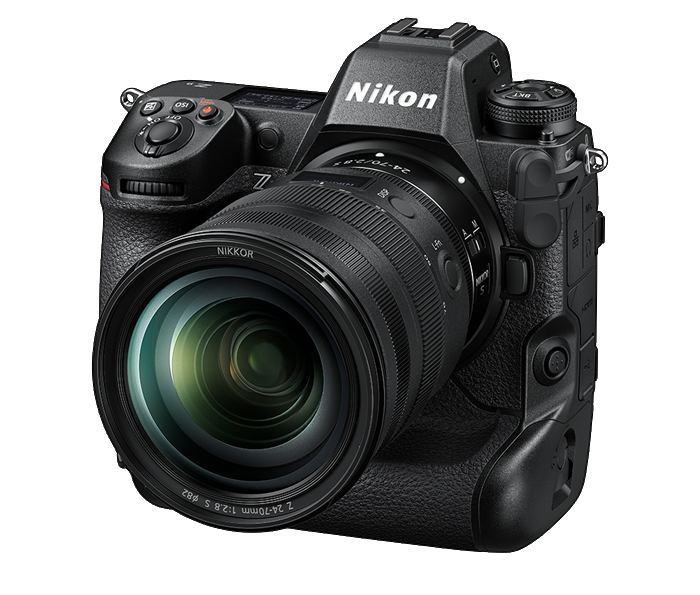
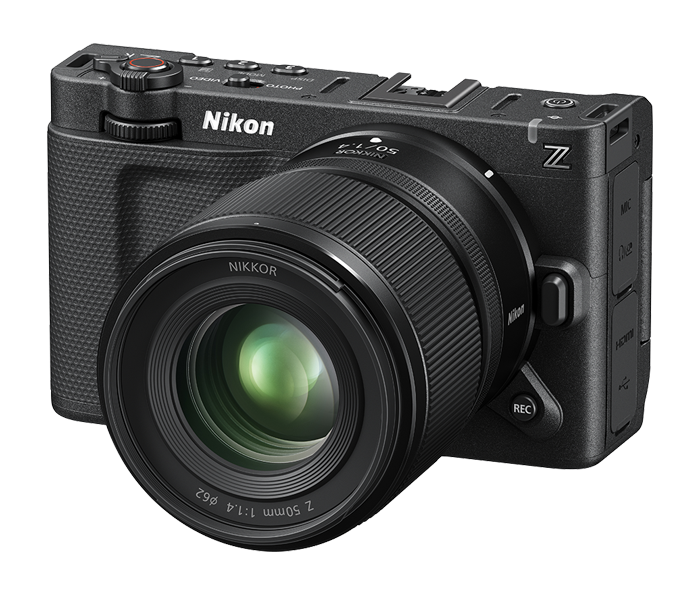
The Nikon Z9 and Nikon ZR are two full-frame mirrorless cameras from Nikon's Z-mount lineup, but they cater to very different types of photographers. The Z9 represents Nikon's flagship professional camera body, designed for demanding sports, wildlife, and studio work, while the ZR is a more affordable, lightweight option that enters the market as a versatile, modern camera suitable for enthusiasts and advanced amateurs seeking high performance without the premium heft or price tag of the Z9.
Photographers often compare these two models because they both offer full-frame performance within the same lens ecosystem but prioritize different features and ergonomics. The Z9 shines with cutting-edge speed, robust construction, and advanced imaging, whereas the ZR stands out with its compact form factor, lower weight, and an attractive price point. Buyers deciding between these cameras may be torn between the power and durability of the flagship versus the flexibility, portability, and value of the mid-range contender.
Key differentiators include sensor resolution, autofocus sophistication, frame rates, video features, stabilization, physical size, and the inclusion (or omission) of a viewfinder. Understanding how these differences affect real-world use is crucial for making an informed choice.
Specifications Comparison
Detailed Comparison
Image Quality
The Z9 boasts a 46-megapixel full-frame sensor, offering greater resolution and more detailed images compared to the ZR's 25-megapixel sensor. This makes the Z9 especially suited for photographers who need to crop their images extensively or create large prints where fine detail is critical. Landscapes, studio portraiture, and commercial work will benefit from the Z9's higher resolving power.
In contrast, the Nikon ZR, while using a similar full-frame (35.9 x 23.9 mm) sensor, opts for a more modest 25 megapixels. This generally translates to slightly larger pixels, which can contribute to improved low-light performance and better high-ISO noise characteristics, though neither camera is likely to disappoint in this regard. The ZR's ISO range runs natively from 100-64,000, a typical range for recent full-frame sensors.
Additionally, the Z9's significant sensor advantage comes in handy for situations requiring very high image quality, such as landscape, studio, and commercial photography. However, for most practical use cases and web publishing, the ZR's 25 megapixels is more than sufficient, and files are smaller and easier to manage.
Overall, the Z9 delivers superior detail and flexibility in post-processing due to its higher resolution, while the ZR remains highly competent for nearly all photographic needs.
Autofocus System
The Z9 features an advanced autofocus system with 493 points, enabling highly precise subject tracking and coverage across nearly the entire image frame. This system excels at capturing fast-moving subjects, making it ideal for sports, wildlife, and action photographers. The comprehensive AF area and sophisticated algorithms further solidify the Z9's professional credentials.
On the other hand, the ZR provides a capable autofocus system with 273 points. While this covers a substantial area and fares well for most everyday and enthusiast level shooting, it lacks the sheer number and density of points found in the Z9, resulting in slower or less reliable tracking for very fast-moving subjects or in highly challenging focus scenarios.
While both cameras leverage modern AF technologies, those who routinely demand the absolute fastest and most robust autofocus performance will find the Z9 significantly more capable.
For most genres of photography, the ZR's autofocus is likely to be sufficient, but professionals who rely on top-tier performance will benefit more from the Z9.
Video Capabilities
Video shooters will find both models appealing, but their feature sets differ significantly. The Z9 is a powerhouse, offering 4K video recording at up to 120p, a high frame rate that is excellent for slow-motion footage and advanced cinematic work. Its professional-grade processing and heat management allow for extended recording durations and high efficiency, further enhancing its appeal to videographers.
The ZR's video specifications aren't detailed fully, except for the lack of an electronic viewfinder (EVF). However, its improved in-body stabilization (rated at 7.5 stops versus the Z9's 6 stops) benefits handheld shooting, particularly for vlogging, run-and-gun filmmaking, or travel video. Its larger, higher-resolution 4" screen (3,070,000 dots) could be especially beneficial for those who compose solely using the rear LCD, given the absence of a viewfinder.
That said, the Z9's superior frame rate, pro-grade durability, and likely higher-end video codecs and features (given its flagship status) make it the stronger choice for serious video professionals. The ZR, meanwhile, is functional and potentially more portable for casual or travel-centric video use.
Overall, the Z9 offers more robust and advanced video capabilities, while the ZR emphasizes stabilized, lightweight shooting for more casual users.
Build & Ergonomics
Physically, the Z9 is a substantial camera, weighing 1340 grams and measuring 149 x 150 x 91 mm. It features professional-level weather sealing and a rugged construction, designed for years of heavy use in challenging conditions. Its integrated vertical grip and large battery accommodate long shoots and ergonomic handling, especially with larger lenses.
In stark contrast, the ZR is highly compact and portable at just 630 grams and 133 x 81 x 49 mm. Its design will appeal to those who prioritize a lightweight system, easy carry, and discreet shooting. Despite its small size, it retains weather sealing for reliable operation in adverse conditions. However, it lacks a built-in viewfinder, requiring users to compose exclusively via the large rear screen, which can be limiting in bright light or for those who prefer traditional framing.
The Z9 appeals to professionals who need robust durability and better ergonomics for extended handheld use, especially with telephoto lenses. The ZR's lightness makes it suitable for travel, street, or everyday use where portability is paramount.
Each camera has a particular build advantage: the Z9 for robustness and ergonomic handling, the ZR for compactness and ease of carry.
Battery & Storage
The Z9 is equipped with a substantial battery, delivering up to 740 shots per charge, which is impressive for a mirrorless camera of its class. This, combined with its large body, caters to professionals who need to shoot all day without frequent battery changes. The specific storage options aren't detailed here, but Z9 is known to support dual card slots with fast CFexpress and SD support for redundancy and high-speed workflows.
The ZR, at a much lower weight and smaller size, likely uses a more modest battery. Its battery life and storage capabilities aren't specified, but lightweight cameras in this class often have shorter battery life and single card slots. This could require more frequent battery swaps and less redundancy, especially for demanding shoots.
For professional or event photographers where uninterrupted power is essential, the Z9 is the clear winner. The ZR will be more than adequate for casual, travel, or street photographers who typically carry spare batteries and prioritize portability over marathon battery life.
Given the information, the Z9 wins for battery endurance and professional-grade storage features.
Value for Money
The Nikon ZR enters the market at $2200, making it a highly accessible option for enthusiasts, advanced amateurs, or professionals seeking a lightweight backup body. It delivers a full-frame sensor, advanced stabilization, and modern features at less than half the Z9's price, appealing to value-conscious buyers or those expanding their kit without breaking the bank.
By contrast, the Z9 commands a premium at $5500, justified by its flagship features: high-resolution sensor, sophisticated autofocus, pro-level video, rugged build, and superior battery life. For professionals earning from their photography or those who simply demand the best, the investment can be well worth it. However, for hobbyists or those with moderate needs, the Z9's price may be prohibitively high relative to marginal real-world benefits.
Therefore, the ZR wins the value-for-money equation, delivering robust imaging and stabilization performance in a compact, affordable package.
Buyers must weigh their needs carefully: the Z9 offers best-in-class performance at a cost, while the ZR provides exceptional value for those who can forgo some flagship features.
Lens Ecosystem
Both cameras utilize the Nikon Z mount, granting access to Nikon's rapidly growing native Z-mount lens lineup as well as compatibility with F-mount (DSLR) lenses via adapter. Users can expect equal access to a broad range of primes, zooms, third-party options, and specialty lenses.
Since both are full-frame and share the same lens mount, their prospective users enjoy identical lens compatibility, enabling the same creative possibilities regardless of the body chosen.
Prospective buyers only need to consider handling and balance-the Z9's bulky form pairs best with large pro glass, while lighter lenses maintain harmony on the compact ZR. Nonetheless, the ecosystem itself is shared.
Our Verdict
Overall, the Nikon Z9 emerges as the winner in this comparison, dominating most technical and performance-centric aspects such as image quality, autofocus, video capabilities, battery life, and professional flexibility. Its higher price is justified for commercial, sports, wildlife, or demanding users who need uncompromised power and ruggedness. The Nikon ZR, while not matching the Z9's flagship prowess, is exceptionally strong for its price, with great stabilization, compact design, and sufficient resolution for most purposes. Those seeking portability, value, or an all-day carry solution will be best served by the ZR, which brings much of the modern Nikon experience to a far wider audience. Ultimately, choose the Z9 if you're a professional or serious enthusiast who needs the best of everything, especially for high-speed or high-res work. Opt for the ZR if you want a lighter camera with solid performance and outstanding value for money, and can work without an electronic viewfinder.
Nikon Z9
Nikon ZR
Also Compare
Frequently Asked Questions
Which camera is best for action, sports, or wildlife photography?
The Nikon Z9 is superior for action, sports, and wildlife thanks to its 493-point autofocus system, 30 fps shooting, and robust build. These features allow it to track fast-moving subjects and endure demanding conditions, outclassing the ZR's more modest AF system and max 20 fps burst.
Is the Nikon ZR good enough for professional work?
The ZR is capable of professional results in many scenarios, especially for documentary, travel, portrait, or event work where portability matters and ultimate resolution or AF speed is less critical. However, for high-pressure professional environments, the Z9's robustness and performance are preferable.
How important is having an electronic viewfinder (EVF)?
An EVF allows for clearer, steadier framing, especially in bright sunlight or when using telephoto lenses. The Z9 includes a high-quality EVF, while the ZR lacks one, requiring all composition via the rear LCD. For traditionalists or those who shoot often outdoors, the absence of an EVF in the ZR may be a significant drawback.
Which camera is better for travel and everyday use?
The Nikon ZR is far lighter and more compact (630g vs. Z9's 1340g), making it a better choice for travel, street photography, or casual everyday shooting where carrying comfort is key.
Are both cameras compatible with my existing Nikon Z lenses?
Yes, both cameras support the full range of Nikon Z-mount lenses, as well as adapted F-mount DSLR lenses, offering maximum system flexibility regardless of the body chosen.
What are the main reasons NOT to choose the Nikon Z9?
The Z9's main drawbacks are its size, weight, and high price. If portability, affordability, or simplicity are higher priorities than absolute performance and ruggedness, the ZR (or another Z-mount body) may be a better fit.