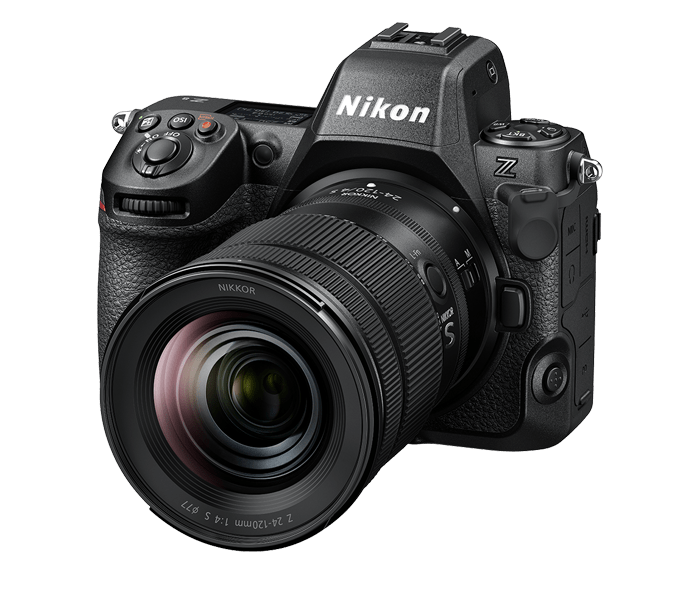

The Nikon Z8 and Sony ZV-E1 are both remarkable full-frame mirrorless cameras released in 2023, but they cater to slightly different audiences. Enthusiasts and professionals may gravitate towards the Nikon Z8 for its high resolution and advanced features, while content creators and vloggers might prefer the more compact and user-friendly Sony ZV-E1. As both manufacturers have loyal fan bases, potential buyers often compare these two models to determine which fits their specific needs for photography and videography.
Specifications Comparison
Detailed Comparison
Image Quality
When it comes to image quality, the Nikon Z8 stands out with its impressive 46 megapixel sensor, allowing for larger prints and greater detail in high-resolution images. It utilizes a slightly larger sensor size (35.9 x 23.9 mm) compared to the ZV-E1 (35.6 x 23.8 mm), which contributes to a marginally better dynamic range and low-light performance. This makes the Z8 ideal for landscape, portrait, and any form of photography that requires maximum detail. In contrast, the Sony ZV-E1, while lower in megapixels at 12, still produces excellent results due to its advanced sensor technology and wider ISO range, making it versatile for different lighting conditions. However, for sheer detail and versatility, the NIkon Z8 is more appealing.
Autofocus System
Autofocus is critical for both photography and videography, and here, the Sony ZV-E1 shines with its 759 autofocus points, surpassing the Nikon Z8's 493 points. The advanced Eye-AF technology in the ZV-E1 allows for quick and reliable focus tracking, especially beneficial for vlogging and moving subjects. On the other hand, while the Z8 has fewer autofocus points, it still offers robust functionality and speed, especially for still photography. The Z8's autofocus is particularly strong in low-light environments, but for vlogs or fast-paced content creation, the ZV-E1's more extensive system provides a greater advantage.
Video Capabilities
Video performance is a vital consideration for many users, and in this area, the Nikon Z8 clearly leads with its capacity to shoot 4K video at up to 120p. This high frame rate allows for smooth slow-motion footage and makes it more suitable for professional videographers. The ZV-E1 does support 4K but is limited to 60p, which is less versatile for those requiring high frame-rate options. Additionally, the Z8's 6-stop in-body stabilization effectively reduces shake, while the ZV-E1 offers 5 stops. For serious video work, especially in cinematic styles, the Z8 is more suited, while the ZV-E1 remains a solid choice for casual video creators.
Build & Ergonomics
The build quality of both cameras is impressive, with weather sealing present in both models for durability in various conditions. The Nikon Z8 is larger and heavier at 910g compared to the 483g of the ZV-E1, which makes it feel more substantial in the hand and better suited for extended shooting sessions. However, the ZV-E1's compact dimensions and lightweight design make it extremely portable, catering to vloggers who require easy mobility. Ergonomically, the Z8 offers a more extensive grip and button layout that could cater to professional photographers, while the ZV-E1 is designed with accessibility in mind, featuring a simple user interface for ease of use.
Battery & Storage
Battery life can significantly impact the shooting experience, and in this regard, the Sony ZV-E1 has a clear advantage with a battery life of 570 shots compared to 340 for the Nikon Z8. This longer battery life can be crucial for all-day shoots, particularly in video-heavy workflows. Additionally, both cameras use different memory cards; while the Z8 uses dual CFexpress Type B and SD slots, enhancing write speeds for high-resolution video, the ZV-E1 uses a single SD UHS-II slot. The concentration of storage options on the Z8 aligns well with its professional videography capabilities, yet for casual video or photography shoots, the ZV-E1's lighter setup may suffice.
Value for Money
Pricing often plays a decisive role in camera selection, and the ZV-E1's price of $2200 presents a more budget-friendly option compared to the Nikon Z8, which is priced at $3999. For those who prioritize video content and are looking for more of an all-in-one solution without breaking the bank, the ZV-E1 offers excellent performance at a considerably lower price. In contrast, while the Z8 is priced higher, it appeals more to photographers and professional videographers who may benefit from the robust feature set, high resolution, and advanced build quality-essential for demanding projects. Value ultimately depends on the specific needs of the user.
Our Verdict
In the overall comparison between the Nikon Z8 and the Sony ZV-E1, the Nikon Z8 emerges as the superior choice for photographers and videographers seeking high resolution, extensive video capabilities, and robust autofocus. While the Sony ZV-E1 excels in portability, battery life, and value for money, making it an outstanding option for content creators and casual users, the Z8 is designed more for professional use. For buyers who require high-end image quality and advanced features, the Nikon Z8 is the better option, while those focused on vlogging or more general usage might find the advantages of the ZV-E1 more appealing.