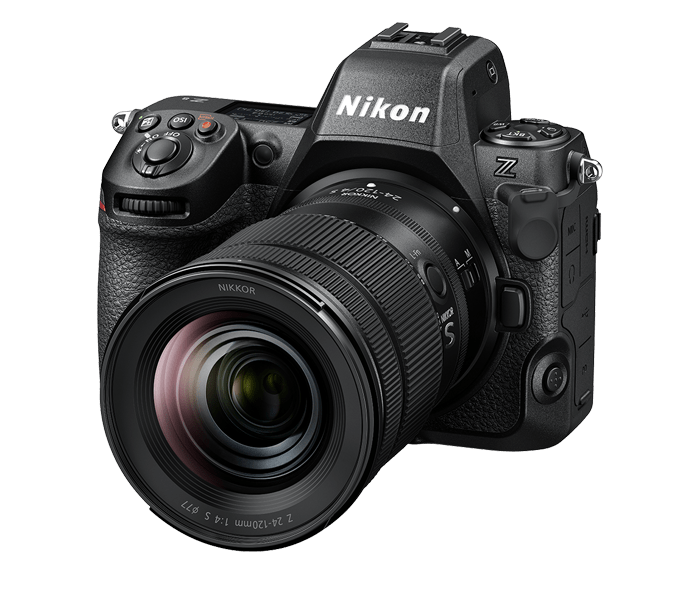

The Nikon Z8 and Sony A9 II are two powerful full-frame mirrorless cameras that are frequently compared by both professional photographers and enthusiasts. Each offers distinct advantages, making them appealing to different types of users. The Nikon Z8, released in 2023, is geared toward users interested in high-resolution imaging and advanced video capabilities, while the Sony A9 II, released in 2019, is designed for fast-paced action photography with its impressive autofocus system and robust performance in low-light conditions. Understanding the key differentiators such as image quality, autofocus capabilities, video performance, ergonomics, battery life, and overall value will help buyers make informed decisions about which camera is the right fit for their specific needs.
Specifications Comparison
Detailed Comparison
Image Quality
The Nikon Z8 boasts an impressive 46-megapixel sensor, which significantly outpaces the A9 II's 24-megapixel sensor. This advantage allows the Z8 to capture finer details and is especially beneficial for landscape and studio photographers who often require higher resolutions for large prints or cropping flexibility. On the other hand, the Sony A9 II utilizes a proven image sensor that performs exceptionally well in various lighting conditions, providing sharp images with rich colors. While the Z8 holds the advantage in resolution, the A9 II's image quality is more than sufficient for sports photography and fast-moving subjects, where reaction times and autofocus capabilities often matter more than sheer megapixels.
Autofocus System
The autofocus systems of the Nikon Z8 and Sony A9 II are both outstanding, though they cater to slightly different needs. The Z8 features 493 autofocus points, while the A9 II boasts 693 points, giving it a notable edge in coverage especially useful in dynamic shooting situations. The A9 II is known for its eye-tracking technology, which excels in capturing fast-moving subjects with precision, making it a favorite among sports and wildlife photographers. However, the Z8's autofocus performance is also impressive, especially considering its higher resolution sensor and ability to track subjects through its advanced algorithms, making it competitive. The differences, while significant, make each camera highly capable in their respective domains.
Video Capabilities
When it comes to video, the Nikon Z8 significantly outclasses the A9 II with its ability to shoot 4K at 120 frames per second, while the A9 II is limited to 4K at 30 frames per second. This opens the door for high-frame-rate video applications, providing creators with more options for slow-motion effects and dynamic content. The Z8 also supports 10-bit HDMI output for more nuanced color grading. On the other hand, the A9 II offers strong 4K performance suitable for many applications but does not match the Z8's advanced specs for serious videographers. Overall, for those prioritizing video performance, the Z8 emerges clearly ahead.
Build & Ergonomics
In terms of build quality, both cameras claim robust constructions with weather sealing, making them reliable in challenging conditions. The Nikon Z8 is slightly larger and heavier at 910g compared to the A9 II's 678g, which could impact portability for users who travel frequently. The Z8 also features a larger screen with 2,088,960 dots, providing better visibility and detail for reviewing images or controlling settings. Ergonomically, while both cameras are well-designed, the slightly bulkier frame of the Z8 may not be as comfortable for prolonged shooting compared to the A9 II for some users. Ultimately, build and handling choose based on user preference for size and weight considerations.
Battery & Storage
The battery performance of the Sony A9 II is notably superior, offering approximately 690 shots per charge compared to the Z8's 340 shots. This can be crucial for photographers who need longevity in the field without frequent recharges. Additionally, both cameras support dual card slots, but the Z8 supports high-capacity CFexpress Type B and SD cards, allowing faster data transfer rates that can be beneficial for high-resolution file storage. The A9 II uses dual SD card slots but lacks the high-speed CFexpress card options. For users whose photo sessions extend beyond a couple of hundred shots, the A9 II offers a decisive advantage.
Value for Money
With the Nikon Z8 priced at $3,999 and the Sony A9 II at $4,500, the Z8 presents a somewhat more favorable price point given its superior sensor resolution and advanced video capabilities. However, the A9 II's strengths lie in its excellent autofocus system and battery life, which may justify the higher price tag for users focused on sports or action photography. Buyers must analyze their specific needs: those requiring high megapixels and versatile video performance may lean towards the Z8, while action photographers prioritizing fast shooting speeds and battery life might find better value in the A9 II.
Our Verdict
Overall, the Nikon Z8 edges out the Sony A9 II, primarily due to its superior resolution and video capabilities. While the A9 II excels with its autofocus system and battery life, which are critical for fast-paced photography, the Z8's advantages in image quality and video specs make it more versatile for a broader range of photography and videography needs. Therefore, while each camera has its niche strengths, the Nikon Z8 ultimately provides a more robust package for users seeking a dual-purpose camera that excels in both stills and motion capture.
Nikon Z8
Sony A9 II
Also Compare
Frequently Asked Questions
Is the Nikon Z8 worth the price premium over the Sony A9 II?
The Z8 brings significant advantages in terms of resolution and advanced video capabilities, which may be worth the price for photographers needing those features. However, if you prioritize a fast autofocus system and particularly long battery life, the A9 II could be more suitable.
Which camera is better for sports photography?
The Sony A9 II excels in sports photography due to its outstanding autofocus performance with 693 points and high-speed shooting capabilities, making it the preferred choice for action shooters.
How do battery lives compare in real-world use?
In real-world conditions, the A9 II delivers significantly better battery performance, allowing for longer shooting sessions without needing a recharge, while the Z8 may require more frequent battery changes.
What about the lens ecosystem for each camera?
Both Nikon and Sony have robust lens ecosystems. Sony's E-mount benefits from a broad selection of lenses optimized for fast performance, while Nikon's Z-mount continues to expand with high-quality options. If you have existing lenses for either brand, that should heavily influence your choice.
Can the Nikon Z8 perform well in low light?
Yes, the Z8's high-resolution sensor combined with effective noise handling at high ISOs makes it very capable in low-light conditions, though the A9 II may still offer better burst performance in extreme low light due to its autofocus system.
Are the video features significantly different?
Yes, the Nikon Z8 outshines the A9 II in video features with its ability to shoot 4K 120p, catering well to videographers seeking advanced options and versatility compared to the A9 II's 4K 30p.