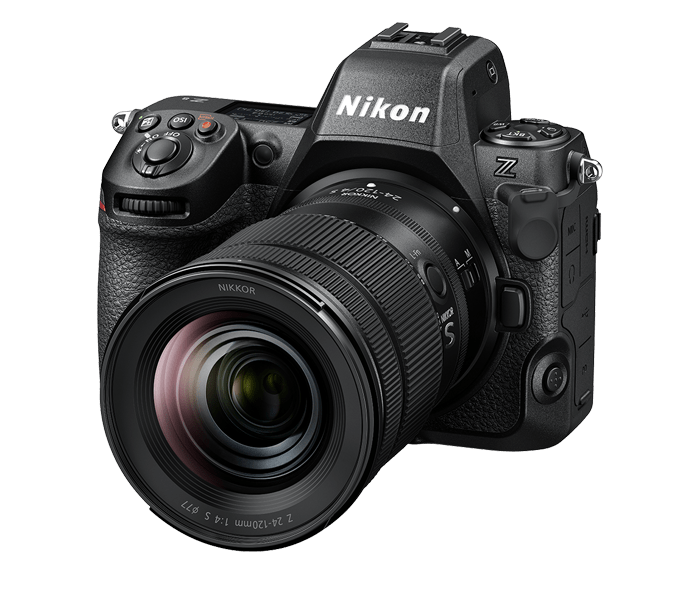
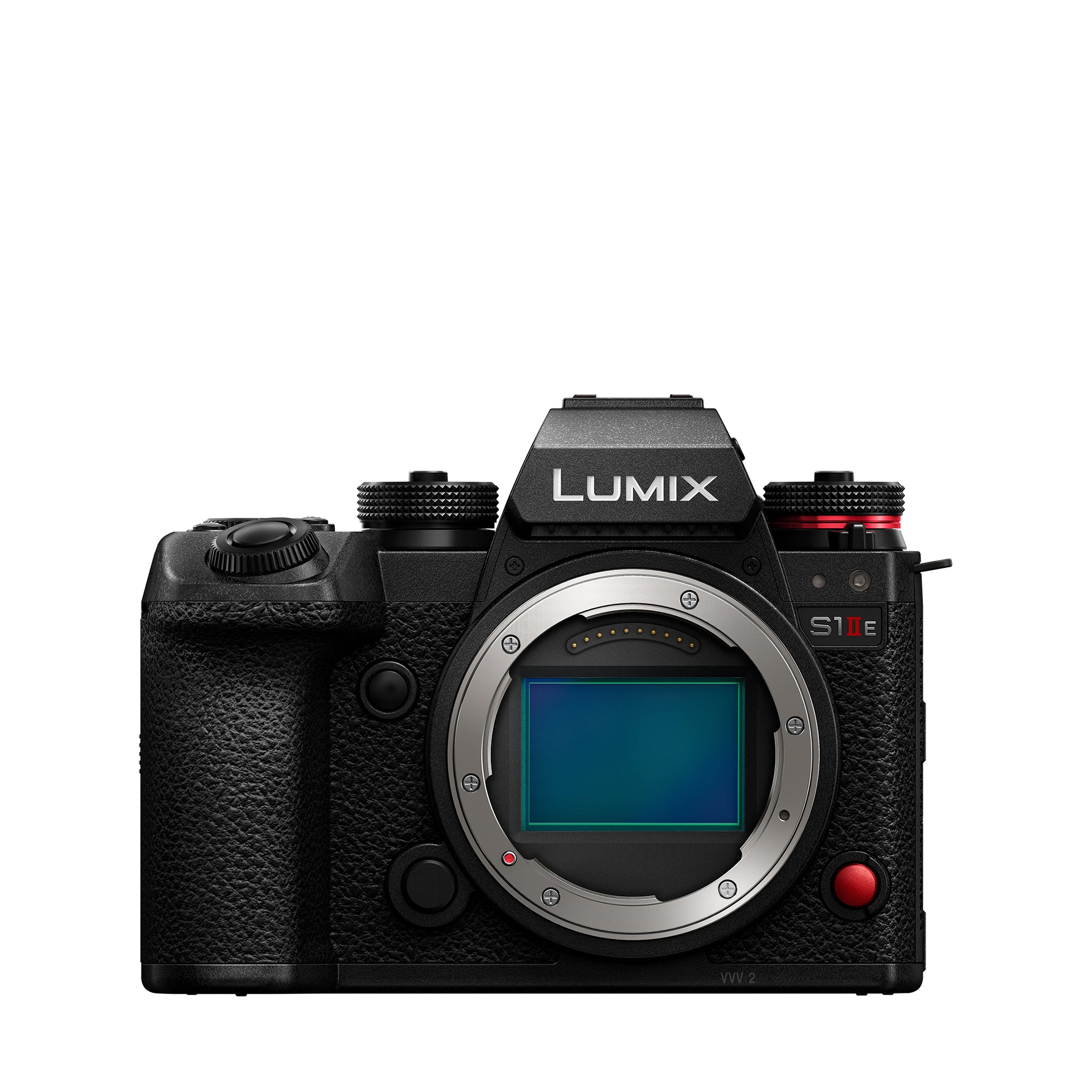
The Nikon Z8 and Panasonic S1 II E are two powerful full-frame mirrorless cameras that often attract professional photographers and videographers seeking high performance in a versatile package. Both cameras are built with advanced features aimed at catering to professional needs, making them a common comparison point. The key differentiators lie in their sensor resolution, video capabilities, and overall ergonomics, which tend to influence buyers depending on their specific use cases, whether that be high-resolution still photography or versatile video production.
Specifications Comparison
Detailed Comparison
Image Quality
The Nikon Z8 boasts a 46-megapixel sensor, offering superior detail and clarity in still images. This higher resolution is particularly advantageous for landscape photographers or anyone needing large prints. The Z8's full-frame sensor also has excellent low-light performance, providing cleaner images at higher ISO settings. On the other hand, the Panasonic S1 II E features a 24.1-megapixel sensor, which, while still delivering impressive image quality, cannot quite match the high-resolution capabilities of the Z8. The S1 II E may offer more manageable file sizes for certain projects, making it easier to process and store numerous images, a noteworthy strength for photographers with limited storage solutions.
Both cameras exhibit excellent color reproduction and dynamic range, but the higher resolution in the Z8 can capture finer textures and details. In terms of raw image processing, Nikon's software ecosystem typically yields compelling results that make the most out of the camera's capabilities. For those prioritizing image quality above all else, the Z8 stands out distinctly.
Autofocus System
The Nikon Z8 includes an advanced autofocus system with 493 focus points, featuring a mixture of phase detection and contrast detection that ensures swift focus locking on subjects, even in challenging lighting conditions. This extensive point coverage also aids in tracking moving subjects, making the Z8 ideal for sports and wildlife photography. The camera's Eye-Detection AF is particularly noteworthy, providing precise focus on subjects' eyes, which is critical for portrait photography.
On the other hand, the Panasonic S1 II E employs a reliable autofocus system but with fewer focus points compared to the Z8. Its contrast-detection mechanism performs well, especially in still situations but may lag behind when tracking fast-moving subjects. Thus, for action photography or dynamic shooting environments, the Nikon's autofocus system holds a significant advantage, giving it the edge in this comparison.
Video Capabilities
When it comes to video specifications, the Panasonic S1 II E takes the lead with its extensive video recording options including 5.9K at 60p and 4K at 120p, alongside slow-motion capabilities at 1080p/240fps. This flexibility makes it highly suitable for professional filmmakers or content creators looking for diverse recording choices and high-resolution output. The S1 II E is also equipped with various V-Log color profiles, bolstering its capability for cinematic production.
While the Nikon Z8 also supports impressive video capabilities, including 4K at 120p, it lacks the higher resolutions offered by the S1 II E. However, the Z8's robust thermal management means it can shoot longer durations without overheating-an essential consideration for video professionals. Despite this, when purely focusing on video specifications, the S1 II E's wider range of options positions it as the preferable choice for video-centric creators.
Build & Ergonomics
The Nikon Z8 has a solid, weather-sealed body, which complements its professional orientation, providing durability in adverse conditions. Its dimensions (144 x 119 x 83 mm) and weight (910 g) strike a balance between sturdiness and portability, while ergonomics are designed for prolonged use without discomfort.
In contrast, the Panasonic S1 II E also boasts a robust weather-sealed design, ensuring it can withstand tough environments as well. Depending on hand size, some users may find the grip on the S1 II E slightly more pronounced, offering great handling and comfort, which is essential for extended shooting sessions. Both cameras are well-designed for professional use, making this aspect a close tie overall, although some individual preferences may sway users towards one or the other.
Battery & Storage
The Nikon Z8 offers a battery life of approximately 340 shots per charge, which is reasonable for a mirrorless camera of its caliber, ensuring photographers can shoot through an entire event or session without frequent battery changes. It also utilizes dual card slots to support CFexpress and SD cards, enhancing storage options for both speed and capacity.
Conversely, the Panasonic S1 II E features a similar battery life, but with added versatility of media storage with dual card slots that accommodate different formats, enabling greater flexibility. Both cameras present comparable battery performance, but the added features of the S1 II E in terms of storage types may cater to users with varying storage needs. Therefore, this comparison is largely even.
Value for Money
At a price point of $3,999, the Nikon Z8 is positioned at a premium level given its high-resolution sensor, advanced autofocus, and impressive still and video performance. For many professionals, these features may justify the investment, particularly for photographers who require the utmost detail in their workflow.
On the other hand, the Panasonic S1 II E is positioned slightly more affordably while still delivering professional-grade features, especially with its extensive video capabilities. For videographers who prioritize high-quality video recording and flexibility, the S1 II E could represent superior value, given its feature set at a lower price. Therefore, which camera offers better value depends largely on individual requirements, balancing still and video capabilities.
Our Verdict
Overall, the Nikon Z8 emerges as the winner for those prioritizing image quality and autofocus precision, making it the best choice for serious photographers seeking top-tier still capture capabilities. Conversely, the Panasonic S1 II E excels in video versatility and value for money, catering to those focused on high-end video production. Each camera has unique strengths, and buyers should consider their particular focus on either high-resolution photography or professional-grade video when making their final choice.
Nikon Z8
Panasonic S1 II E
Also Compare
Frequently Asked Questions
Which camera has better resolution for still photos?
The Nikon Z8 has a higher resolution of 46 megapixels compared to the Panasonic S1 II E's 24.1 megapixels, making it superior for detailed still photography.
Is the Nikon Z8 better for video recording?
While the Nikon Z8 supports 4K video at 120p, the Panasonic S1 II E offers a wider range of video resolutions including 5.9K/60p and slow-motion options, making it a more versatile choice for video work.
How does battery life compare between the two cameras?
Both cameras have a similar battery life of about 340 shots per charge, providing reasonable performance for extended shooting sessions.
Which camera has better autofocus performance?
The Nikon Z8 features a more advanced autofocus system with 493 points, making it superior for tracking and locking onto subjects compared to the S1 II E.
Do both cameras have weather sealing?
Yes, both the Nikon Z8 and Panasonic S1 II E are weather-sealed, safeguarding them against moisture and dust for outdoor shooting.