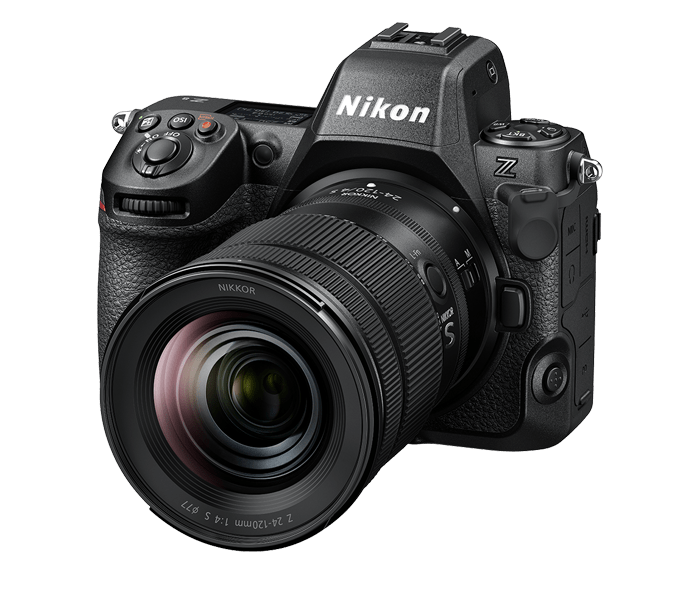
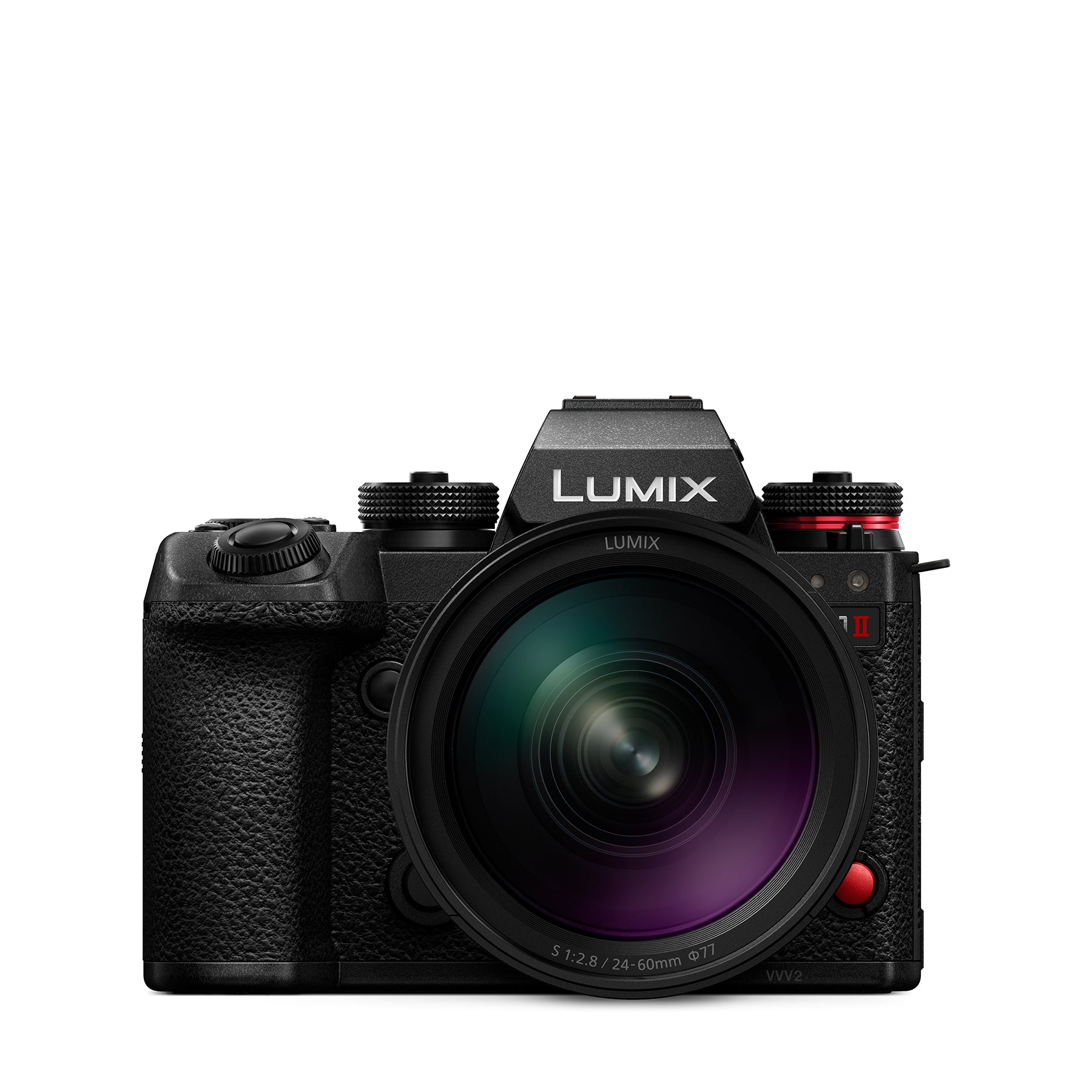
The Nikon Z8 and Panasonic S1 II are both full-frame mirrorless cameras released in 2023 that cater to high-end enthusiasts and professionals, making them popular choices for photographers and videographers alike. Those looking to invest in either of these models often consider factors such as image quality, autofocus performance, video capabilities, and overall build quality. Choosing between them can be key in deciding based on specific needs such as portraiture, landscapes, video production, or travel photography.
Specifications Comparison
Detailed Comparison
Image Quality
The Nikon Z8 boasts a remarkable 46 megapixels, which provides stunning detail and exceptional dynamic range, making it ideal for large prints and cropping flexibility. The larger resolution allows for more detailed textures and colors, appealing to photographers who prioritize image detail, such as landscape and portrait photographers. On the other hand, the Panasonic S1 II features a 24.1 megapixel sensor, which, while lower in resolution, still delivers excellent image quality suitable for a wide range of photography needs. Its lower resolution can actually be advantageous for those who prioritize faster workflows and smaller file sizes without sacrificing quality in everyday shooting scenarios.
Both cameras utilize a full-frame sensor, which contributes to fantastic low-light performance and depth of field control. While the Z8 takes the lead in raw resolution, the S1 II's performance at higher ISO settings also makes it a dependable option for low-light conditions. Therefore, while the Nikon Z8 provides an edge for those demanding the utmost in image resolution, the S1 II holds its ground with solid performance overall, catering to various shooting situations.
Autofocus System
Focusing technology is a critical aspect for many photographers, and the Nikon Z8 features an impressive 493 autofocus points that utilize advanced subject detection algorithms, allowing it to effectively track moving subjects with great accuracy. This extensive coverage enables users to focus on virtually any part of the frame, enhancing its usability for sports and wildlife photography.
Conversely, the Panasonic S1 II also features an advanced autofocus system, though it does not provide the same number of focus points. The contrast-detect and phase-detect hybrid system in S1 II allows for reliable focusing, but during fast-paced shooting situations, the Z8's superior autofocus capability gives it an undeniable advantage. While both cameras include features like face and eye detection, the Z8 enhances this performance considerably, making it the preferred choice for users requiring precision and speed in their autofocus capabilities.
Video Capabilities
When it comes to video production, both the Nikon Z8 and Panasonic S1 II offer strong capabilities, but they cater to different user needs. The Z8 can shoot 4K video at an impressive 120 frames per second, providing outstanding slow-motion options and high-quality footage that meet the demands of many video projects. In addition, its 46MP sensor may allow for cropping without a significant loss of detail when shooting video.
On the other hand, the Panasonic S1 II supports 5.1K video at a maximum of 60 frames per second, which is a significant feature for filmmakers seeking ultra-high resolution content. The S1 II is known for its color science and robust video features, including V-Log and HDR recording capabilities, making it a strong contender for those whose primary focus is on videography. Thus, while the Z8 takes the edge in frame rate for 4K footage, the S1 II leads with its higher resolution in 5.1K video.
Build & Ergonomics
Both cameras are designed with professional use in mind, featuring robust construction and weather-sealed bodies. The Nikon Z8's dimensions of 144 x 119 x 83 mm and weight of 910 grams give it a solid and substantial feel, which inspires confidence when shooting in challenging conditions. Its controls are intuitive, with a comfortable grip that supports prolonged usage.
The Panasonic S1 II, though slightly bulkier and heavier without specified dimensions, also ensures an ergonomic grip and well-placed controls for ease of access. Its build quality and weather sealing make it equally reliable in adverse weather conditions. Both cameras feature an electronic viewfinder, but the experience on the Z8 feels smoother due to its higher resolution EVF. Consequently, while both models perform admirably in terms of build quality, the Z8 edges out with the feel of ergonomics and a more refined user experience.
Battery & Storage
Battery life is crucial for any professional camera, and the Nikon Z8 offers a robust battery life rating of approximately 340 shots per charge, which is adequate for a full day of shooting under normal conditions. It utilizes a standard EN-EL15c battery, which is conveniently compatible with earlier Nikon Z models, thus reducing the need for additional investments.
The Panasonic S1 II's battery specifications were not detailed, but general feedback indicates that Panasonic's battery life tends to be competitive, although it may not reach the performance of the Z8. Both models support dual storage cards, a significant advantage for professional workflows that require redundancy and extensive storage options.
Value for Money
The Nikon Z8 is priced at $3999, making it a high-end investment in the realm of full-frame mirrorless cameras. While it offers significant capabilities in terms of resolution, autofocus, and ergonomics, the cost may be a factor for those on a tighter budget. However, for professionals looking for top-notch image quality and performance, the price can be justified.
On the other hand, the Panasonic S1 II's price may be lower than that of the Z8 (specific pricing isn't provided), making it a more appealing option for those interested in high-quality video capabilities and a versatile system without breaking the bank. With a focus on videography, it also offers more advanced video specifications, which might add to its perceived value for video creators. Ultimately, users have to balance their specific needs with budget considerations when evaluating value.
Our Verdict
Overall, the Nikon Z8 emerges as the stronger choice for photographers who prioritize image quality, autofocus performance, and ergonomics, making it particularly well-suited for high-resolution photography and dynamic action capture. In contrast, the Panasonic S1 II holds its ground as a formidable contender for those focused on serious video production and looking for a camera that offers a great array of video features at potentially a more favorable price point. Therefore, the importance of intended use should guide the final decision.