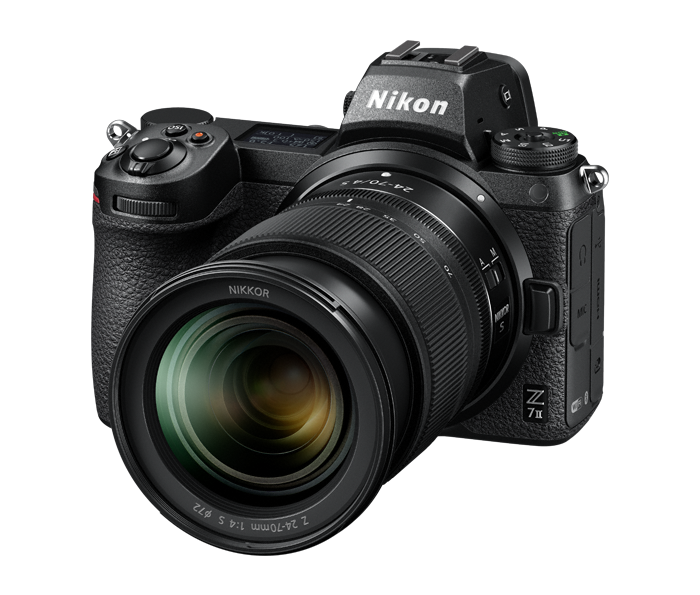

The Nikon Z7 II and Sony A9 II are both premium full-frame mirrorless cameras, often compared by photographers looking for high-performance gear. They appeal to a range of users, from professionals to serious enthusiasts, each with unique needs. The Z7 II is renowned for its exceptionally high resolution, making it ideal for landscape and studio photography, while the A9 II's lightning-fast autofocus and high frame rate cater to sports and wildlife photographers who need to capture fast-moving subjects without missing a beat. The choice between these two giants often boils down to the specific types of photography one engages in and how much one values certain features over others.
Specifications Comparison
Detailed Comparison
Image Quality
The Nikon Z7 II boasts a significant advantage in image resolution, featuring a 46-megapixel sensor compared to the Sony A9 II's 24-megapixel sensor. This higher resolution allows for more detailed images, making the Z7 II particularly ideal for large prints and cropping without significant loss of quality. However, while the A9 II's sensor has fewer megapixels, it performs well inlow light conditions, with a wider native ISO range, and demonstrates less noise at higher ISO settings due to its advanced sensor technology.
Additionally, the Z7 II is better suited for landscape photography where capturing fine details is paramount, while the A9 II excels in delivering fast, high-quality images, which can be essential in action-packed shooting environments. Color reproduction on both cameras is highly regarded, but the Z7 II has the edge in dynamic range, which can make a difference in post-processing flexibility.
In conclusion, if high resolution is your primary concern, the Nikon Z7 II is the clear favorite. Conversely, the Sony A9 II offers a balance of quality and speed, tailored more towards fast-paced photography, giving it a strong performance as well.
Autofocus System
Autofocus is one of the most critical aspects for both of these cameras, particularly for fast-moving subjects. The Sony A9 II features an impressive 693 phase-detection autofocus points, ensuring nearly full-frame coverage, and is renowned for its accuracy and speed, achieving eye tracking even in challenging conditions. This makes it an outstanding choice for sports and wildlife photography, where capturing fleeting moments is essential.
On the other hand, the Nikon Z7 II has 493 autofocus points. While this is still a robust number, it cannot quite match the A9 II's coverage and speed. However, the Z7 II's autofocus system performs admirably and offers excellent performance in lower light conditions, particularly for stationary or slower-moving subjects. It benefits from improvements in the Z7 series, including enhancements in eye-detection for portraits.
Overall, while both cameras offer solid autofocus systems, the speed and coverage of the Sony A9 II give it the edge, particularly for action or wildlife photographers.
Video Capabilities
When it comes to video, both cameras offer robust features suitable for different needs. The Nikon Z7 II supports 4K video recording at up to 60p, which provides a level of versatility that's impressive for filmmakers or those who need to capture high-quality footage. Furthermore, it allows for 10-bit N-Log output via HDMI, which is beneficial for post-production grading.
In contrast, the Sony A9 II also records 4K but is limited to 30p. While it retains exceptional video quality, especially in terms of autofocus during recording, its lower frame rate could be a limiting factor. On the other hand, it offers higher bit depth options and potentially better performance in low light, which can be essential for specific shooting environments.
Thus, for videographers needing high frame rates and advanced video features, the Nikon Z7 II provides more options. However, for those prioritizing autofocus in video and overall video quality at various formats, the A9 II remains a solid competitor.
Build & Ergonomics
Both cameras come with weather-sealed bodies that can withstand harsh conditions, making them reliable choices for outdoor shooting. The Nikon Z7 II weighs slightly more at 705g, compared to the 678g of the Sony A9 II, which may be a consideration for photographers who prioritize portability. Both feature robust handles and intuitive controls, but some users find the grip on the A9 II slightly better, allowing for more comfortable long-duration shooting.
The Z7 II's screen is a bit larger at 3.2 inches and offers a higher resolution of 2.1 million dots compared to the A9 II's 3-inch screen at 1.44 million dots. This can greatly aid in precise focusing and framing, especially in bright conditions. Additionally, both cameras utilize electronic viewfinders, but the Z7 II's offers a higher resolution, which can enhance the overall shooting experience.
In summary, while both cameras are well-built for professional use, the slight edge in ergonomics and screen resolution leans towards the Nikon Z7 II, making it more favorable for prolonged usage.
Battery & Storage
The Nikon Z7 II offers a battery life of approximately 420 shots per charge, which is decent but lower than its competitor. Its dual card slots allow for flexibility in storage and backup during shoots, supporting both XQD and CFexpress cards, catering to high-resolution images and videos efficiently.
On the other hand, the Sony A9 II excels with around 690 shots per charge, making it better suited for extended shooting sessions without the need for frequent battery changes. It also features dual card slots, supporting both SD UHS-II and CFexpress Type A cards, giving flexibility and speed.
Hence, for photographers who prioritize longer shooting durations without frequent battery swaps, the Sony A9 II offers a significant advantage, while both systems adequately support high-speed storage.
Value for Money
The Nikon Z7 II is priced at $2999, presenting a highly competitive option considering its high resolution and excellent image quality, making it suitable for serious enthusiasts and professionals keen on detail-oriented photography. In contrast, the Sony A9 II's price point of $4500 may seem steep, yet it justifies the premium with its superior autofocus capabilities and higher frame rates, particularly appealing to sports photographers needing quick and reliable performance.
When comparing value, it's crucial to consider the intended use. If high megapixels and value in photography are prioritized, the Z7 II stands out; however, for those who need speed and performance for wide-ranging conditions, the A9 II may offer better long-term value despite the higher initial investment.
Thus, while the Nikon Z7 II presents a better price-to-performance ratio for general photography, the A9 II's specialized capabilities make it worthwhile for specific fields where its features can be fully leveraged.
Our Verdict
The comparison between the Nikon Z7 II and Sony A9 II highlights their respective strengths that cater to different photography needs. The Z7 II triumphs in image quality, video capabilities, ergonomics, and value for money, making it an excellent choice for landscape and detailed photography. The A9 II excels in autofocus performance, battery life, and speed, appealing primarily to sports and action photographers. Ultimately, neither camera is a clear overall winner; rather, each has unique advantages depending on the specific requirements of the buyer, making the selection a matter of personal photography style and priorities.
Nikon Z7 II
Sony A9 II
Also Compare
Frequently Asked Questions
Which camera is better for low-light photography?
Both cameras handle low-light situations well, but the Sony A9 II has a better high ISO performance due to its sensor design and lower noise levels at higher sensitivities.
Is one camera more versatile than the other?
The Nikon Z7 II is more suited for landscape and portrait photography due to its high resolution, while the A9 II shines in fast-paced situations like sports and wildlife, making each more versatile depending on the genre.
How do the lenses differ for each system?
Nikon's Z-mount system is expanding, but the established E-mount system of Sony has a more extensive selection of lenses available, particularly for high-end options like G Master lenses.
What are the key differences in video features?
Nikon Z7 II's 4K 60p capabilities offer higher frame rates than the A9 II's 4K 30p, making it better for videographers seeking high-speed recording options.
Which camera has a better resale value?
Generally, Sony cameras, including the A9 II, tend to retain their value better due to their popularity and the brand's strong market presence.