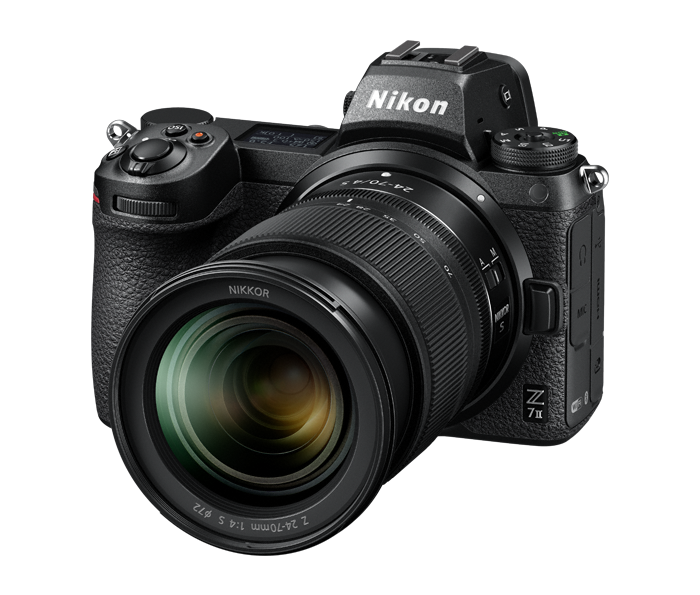
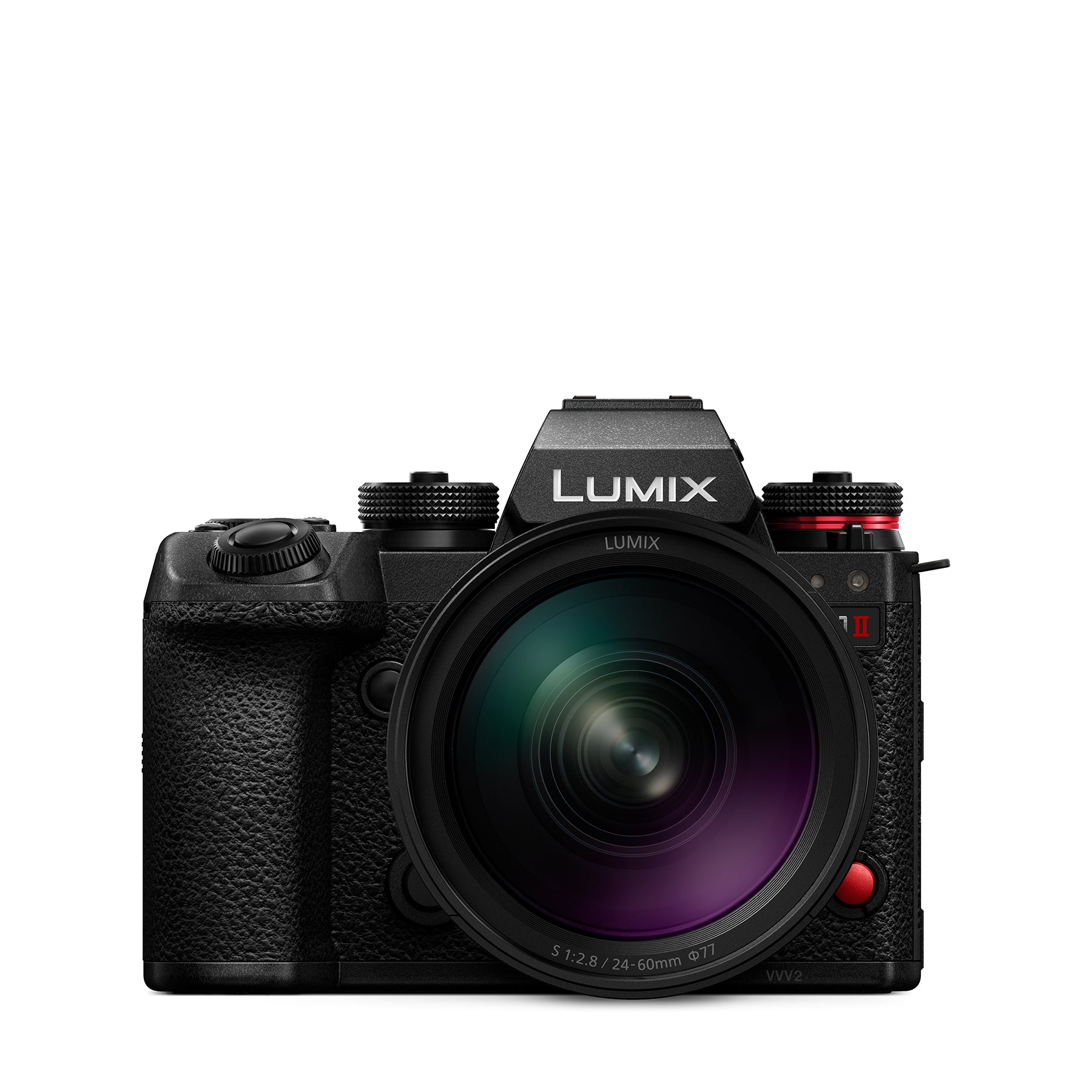
The Nikon Z7 II and the Panasonic S1 II are two full-frame mirrorless cameras that cater to the needs of serious photographers and videographers. The Z7 II, released in 2020, is part of Nikon's well-established Z-series and has garnered praise for its high resolution and robust feature set. The S1 II, launched in 2023, is Panasonic's latest addition to their S series, emphasizing superior video capabilities and advanced stabilization features. Buyers considering these cameras are likely photographers or content creators seeking high-quality images and versatility for both stills and video. The primary differentiators between these models include image resolution, autofocus performance, video capabilities, and stabilization technology, appealing to different user preferences and shooting scenarios.
Specifications Comparison
Detailed Comparison
Image Quality
The Nikon Z7 II shines with its impressive 46-megapixel sensor, which provides exceptional detail and dynamic range, suitable for large printmaking and demanding post-processing. The Z7 II also performs admirably at higher ISO levels, offering a native range of 64-25600 that can be expanded to 32-102400. This makes it a strong contender for low-light shooting, ensuring clean images even in challenging conditions.
In contrast, the Panasonic S1 II features a 24.1-megapixel sensor, which, while lower in resolution, still delivers excellent image quality with good color reproduction and depth of field control. Its lower resolution means improved performance at high ISO settings, which can be beneficial for low-light shooting and may produce less noise than the Z7 II at peak capabilities. The S1 II's image output is particularly favored for video work, where lower resolution can be an advantage in terms of speed and file size.
Ultimately, the choice in image quality will depend on the user's specific needs. If ultra-high resolution and detail are priorities, the Z7 II is the clear victor. However, the S1 II's image quality remains quite capable, especially in certain applications where resolution is not the foremost concern.
Autofocus System
Nikon's Z7 II utilizes a sophisticated autofocus system with 493 focus points, offering a comprehensive coverage across the frame for fast and accurate autofocus. This makes it particularly suitable for action and wildlife photography, where tracking moving subjects can be challenging. The camera also supports Eye-Detection AF, which enhances its performance for portrait photography, ensuring sharp focus on the subject's eyes.
On the other hand, the Panasonic S1 II also offers reliable autofocus but with fewer autofocus points compared to the Z7 II. With a more streamlined number of points, the S1 II emphasizes speed and reliability, particularly in video settings where smooth focus transitions are crucial. Panasonic's Depth From Defocus technology aids in quick focus acquisition, making it effective for both stills and video.
In terms of overall performance, while both cameras provide robust autofocus capabilities, the Z7 II has a slight edge with its greater number of autofocusing points and advanced tracking, especially beneficial for dynamic shooting situations. Therefore, for users who prioritize precise and versatile autofocus, the Nikon takes the lead.
Video Capabilities
The Panasonic S1 II outshines the Nikon Z7 II in video capabilities, featuring the ability to record in 5.1K at up to 60 frames per second. This high-resolution video output allows filmmakers to create stunning cinematic visuals and provides more flexibility for editing and cropping in post-production. Panasonic is also renowned for its color science, making the S1 II a favorite among videographers who need rich, vibrant footage straight out of the camera.
Conversely, the Nikon Z7 II offers 4K video recording at up to 60p, which is still impressive but lags behind in raw resolution compared to the S1 II. The Z7 II delivers strong video performance with good autofocus during video recording and the potential for high visual quality, particularly in controlled settings. However, it lacks some advanced video features, such as internal 10-bit recording found in the Panasonic, which limits its adaptability for professional video applications.
Given the increasing importance of video content creation, especially for hybrid shooters, the S1 II clearly takes the lead in this category. Its extensive feature set makes it better suited for videographers looking to push the boundaries of their work.
Build & Ergonomics
Both the Nikon Z7 II and Panasonic S1 II are built with durability in mind, featuring weather-sealed constructions that protect against moisture and dust, making them suitable for outdoor use in various conditions. The Z7 II is slightly lighter at 705 grams, making it a more portable option, particularly valuable for photographers who may carry their gear for extended periods.
The ergonomics of both cameras are designed for comfort and usability. The Z7 II features a 3.2-inch touchscreen with 2.1 million dots, which provides vibrant visuals and an intuitive interface. The controls are well laid out, allowing for quick adjustments, while the viewfinder provides a clear and detailed display.
In contrast, the S1 II also offers a high-resolution LCD and an excellent EVF, but its increased weight due to a more robust construction can affect long-term handling. However, many users appreciate the solidity of the S1 II, particularly in professional settings. Overall, while both cameras offer solid build quality, the Z7 II may be slightly favored for those prioritizing lighter weight and portability.
Battery & Storage
Battery life is another critical factor that differs in these two cameras. The Nikon Z7 II boasts an impressive battery life capable of capturing approximately 420 shots on a single charge. This is advantageous for long shooting days where access to charging might be limited, particularly for landscape and event photographers.
In comparison, the Panasonic S1 II's battery performance has not been characterized in detail in the provided specifications, but Panasonic cameras typically feature strong battery performance, especially for video shooting, where higher drain is expected. Moreover, the S1 II supports larger battery options that can extend its shooting potential.
On the storage front, both cameras utilize SD memory cards, but the S1 II offers dual card slots and tends to support higher-speed UHS-II cards, which is beneficial for high-resolution video recording and rapid burst shooting. Considering the importance of strong battery life and efficient storage options, the Z7 II has the edge with its proven capability, while the S1 II holds potential but lacks specific battery details in this context.
Value for Money
The Nikon Z7 II is priced at approximately $2999, which reflects its high-resolution sensor, robust feature set, and solid performance across stills and video. For dedicated photographers seeking high-quality images and who may be less focused on video, the Z7 II offers a well-rounded package that can meet the needs of diverse shooting scenarios.
The Panasonic S1 II, being a newer model, might come with a similar price range expected for high-performance video-centric cameras but also brings an enhanced focus on video features and robust stabilization that appeals to content creators. However, with its lower megapixel count, it can feel less appealing to photographers who prioritize high-resolution stills.
When evaluating the overall value, it ultimately depends on the user's intended use. For professional photographers focusing on high-resolution stills, the Z7 II offers better value. In contrast, for those heavily invested in video content creation, the S1 II could justify a similar investment for its advanced features.
Our Verdict
Overall, the Nikon Z7 II emerges as the winner due to its superior image quality and autofocus performance, making it an excellent choice for still photographers. While the Panasonic S1 II has an edge in video production capabilities, which caters to a significant segment of users, the Z7 II's overall strengths in resolution, handling, and battery life position it as the more versatile option for hybrid shooters. Ultimately, photographers will choose based on their specific needs; if video performance is paramount, the S1 II may still be the preferred choice, but for traditional photography enthusiasts, the Nikon Z7 II excels.