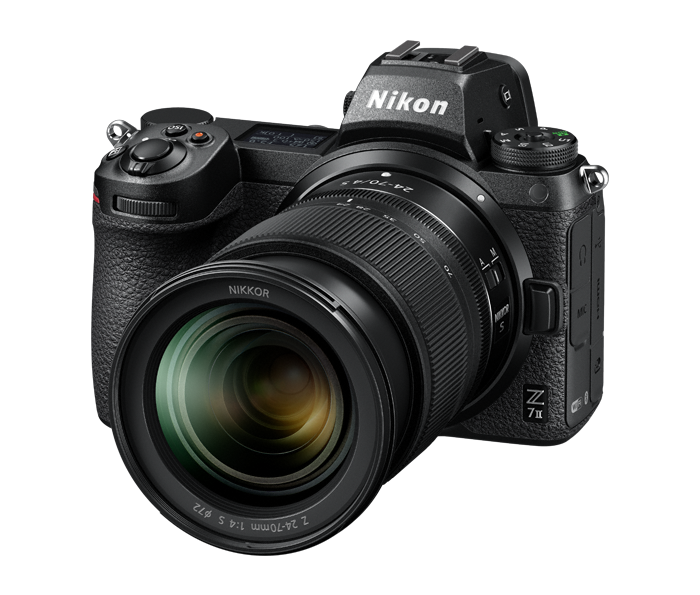
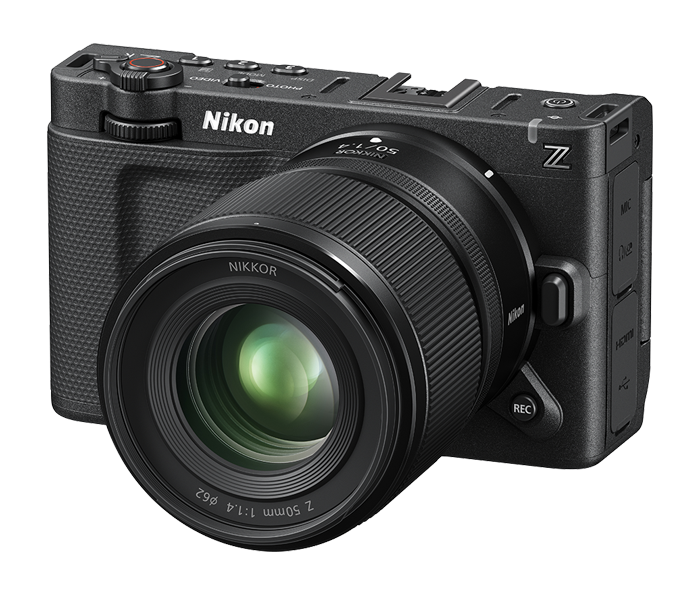
The Nikon Z7 II and Nikon ZR are two full-frame mirrorless cameras from Nikon that are often compared by photography enthusiasts and professionals alike. With the Z7 II being a flagship model and the ZR positioned as a more recent, but less pixel-dense alternative, photographers might find themselves weighing the advantages of higher resolution versus the benefits of improved stabilization and modern features. This comparison will delve into critical aspects of each camera, helping potential buyers make an informed decision based on their specific needs and use cases.
Specifications Comparison
Detailed Comparison
Image Quality
When it comes to image quality, the Nikon Z7 II boasts an impressive 46-megapixel sensor compared to the ZR's 25-megapixel sensor. This higher resolution allows the Z7 II to capture significantly more detail, making it a better choice for landscape photography, commercial work, and other applications where image quality is paramount. Additionally, the Z7 II has an ISO range that starts at 64 and expands to 102,400, providing more versatility in low-light conditions than the ZR, which has a native range of 100-64,000.
The ZR, while offering lower resolution images, still produces excellent quality photos and benefits from a slightly higher burst shooting capability at 20 fps compared to the Z7 II's 10 fps. This speed can be advantageous for capturing fast-moving subjects. However, the image quality provided by the Z7 II is often regarded as superior due to its higher megapixel count and overall dynamic range.
In conclusion, while both cameras produce high-quality images, the Nikon Z7 II takes the lead in detail and low-light performance, which is highly relevant for serious photographers. The ZR offers competent image quality but may fall short for those needing the highest fidelity.
Autofocus System
The autofocus capabilities of a camera are critical for capturing sharp images, particularly in fast-paced environments. The Nikon Z7 II is equipped with 493 autofocus points, allowing for a more extensive coverage of the frame and greater precision in focusing. This system is particularly advantageous when photographing subjects in dynamic situations, enabling the photographer to easily track moving objects with high accuracy.
In contrast, the Nikon ZR features a 273-point autofocus system. While still competent, it may not match the versatility offered by the Z7 II. However, the ZR's autofocus system benefits from the advancements made in recent years, possibly providing faster acquisition times and improved subject tracking compared to the older technology in the Z7 II.
Overall, while the Nikon ZR performs well for general photography, the extensive autofocus system of the Z7 II gives it a significant edge for those needing precise focus management in various shooting conditions.
Video Capabilities
When evaluating video features, the Nikon Z7 II supports 4K video recording at up to 60 frames per second, which allows for more cinematic-grade footage and the ability to capture high-motion scenes smoothly. This makes the Z7 II a stronger contender for videographers and hybrid shooters.
On the other hand, the Nikon ZR does not have the same video recording features, focusing more on still photography. While it lacks the extensive video capabilities of the Z7 II, the availability of stabilization up to 7.5 stops in the ZR allows for smoother handheld shooting, beneficial for casual videography. However, it is questionable whether these features compensate for the lack of comprehensive video options.
Ultimately, for serious filmmakers and content creators, the Z7 II's advanced video recording capabilities make it the clear winner in this category, offering extensive features for video production.
Build & Ergonomics
Both the Nikon Z7 II and ZR feature weather-sealed bodies, making them suitable for outdoor photography in various conditions. The Z7 II is slightly heavier at 705 grams compared to the ZR's 630 grams, and this may affect portability depending on your shooting style.
In terms of dimensions, the Z7 II is also bulkier, measuring 134 x 101 x 70 mm, while the ZR is more compact at 133 x 81 x 49 mm, which can enhance handling comfort for those who prefer lighter gear. The ZR also sports a larger 4-inch LCD screen with more resolution (3,070,000 dots versus the Z7 II's 3.2-inch 2,100,000 dots), which could facilitate easier operation and clearer visuals in bright conditions.
While both devices offer robust build quality, the preference might lean toward the ZR for those who prioritize compactness and a better display, but the Z7 II's sturdier build could appeal to those who frequently shoot in harsh environments.
Battery & Storage
Battery life is a crucial consideration for many photographers. The Nikon Z7 II offers a battery life of approximately 420 shots per charge, which is fairly standard for high-resolution cameras of its kind. This makes it necessary for users to keep spare batteries handy for extended shooting sessions.
The Nikon ZR, on the other hand, may have a more efficient power consumption due to being a newer model and offers a similar capacity, but specific details on its endurance are not explicitly stated. With emerging technologies, it could potentially exceed the 420 shots, but effective testing would be needed.
Storage wise, both cameras use CFexpress and SD cards, allowing for high-speed data transfer necessary for high-resolution photo and video files. Users would benefit equally from the ability to capture long bursts without worrying about storage limitations. Therefore, while both cameras perform generally well, the specifics around battery endurance and efficiency tilt towards ZR for potential modernization advantages.
Value for Money
In terms of pricing, the Nikon Z7 II is positioned at around $2999, while the Nikon ZR offers a more budget-friendly alternative at approximately $2200. For the serious professional or enthusiast, the additional resolution and capabilities of the Z7 II can justify its higher price tag. This makes it a strong investment for those who plan to use the camera for demanding photographic situations or commercial projects.
For entry-level photographers or those focused on casual shooting, the ZR's lower price is attractive. Its decent specs for everyday photography and videography provide substantial value without the heavy investment required by the Z7 II. Consequently, those seeking a reliable, less expensively priced camera with respectable performance may find the ZR even more appealing.
In summary, while the Z7 II offers advanced features justifiable for professionals, the ZR represents great value, particularly for users who do not require the extreme detail or speed but still want full-frame performance.
Our Verdict
Overall, the Nikon Z7 II is the clear winner for photographers needing superior image quality, advanced autofocus, and robust video capabilities. These features make it ideal for professionals and serious enthusiasts focused on capturing high-resolution images and detailed video footage. On the other hand, the Nikon ZR excels in compactness, modern ergonomics, stabilization, and represents a more budget-conscious option. It suits hobbyists or those who want full-frame performance without the higher investment. Buyers should weigh their needs carefully-if high detail and comprehensive shooting capabilities are essential, the Z7 II will be the superior choice, whereas the ZR will deliver strong performance at a more approachable price.
Nikon Z7 II
Nikon ZR
Also Compare
Frequently Asked Questions
Which camera has better low-light performance?
The Nikon Z7 II has a wider ISO range (64-102400) compared to the ZR (100-64000), making it generally better for low-light scenarios.
Is the Nikon ZR suitable for professional use?
The Nikon ZR can work for some professional applications, especially in casual or event photography, but it may not meet the demands of all professionals, particularly in high-resolution commercial work.
What factors should I consider when choosing between these two models?
Consider your photography needs regarding resolution, autofocus capabilities, video features, weight, and budget. Higher resolution and advanced features favor the Z7 II, while a lighter weight and savings point to the ZR.
Does the Nikon ZR have better video capabilities than the Z7 II?
No, the Nikon Z7 II offers better video recording capabilities with 4K at 60fps, while the ZR lacks advanced video functionality.
Which camera is easier to handle for extended periods?
The Nikon ZR is lighter and more compact, making it generally easier to handle for extended periods compared to the Z7 II.