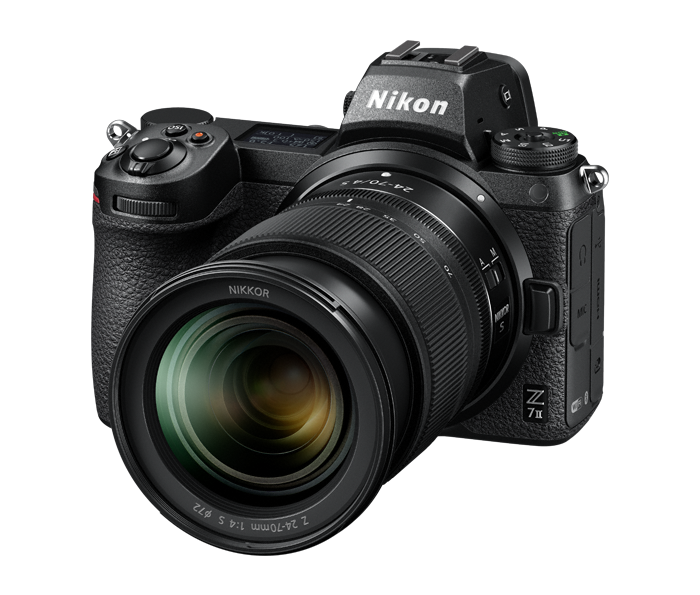
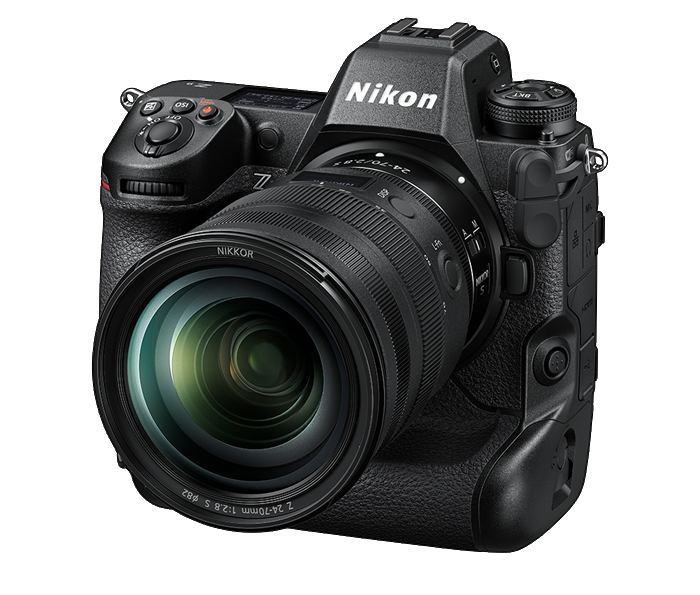
The Nikon Z7 II and Nikon Z9 are two of the most highly regarded models in Nikon's full-frame mirrorless lineup, catering to different segments of photography enthusiasts and professionals. The Z7 II, released in 2020, is an evolution of the Z7, offering a comprehensive feature set aimed at landscape, portrait, and general use photographers. In contrast, the Z9, launched in 2021, represents Nikon's flagship model, emphasizing speed and versatility, making it ideal for sports and wildlife photography. Buyers often find themselves weighing these two options due to their similar megapixel counts and build quality amidst differing capabilities that cater to specific use cases.
Key differentiators between these two models largely revolve around autofocus performance, continuous shooting speeds, video capabilities, and build quality. While both cameras share the same sensor size and resolution, their specialized features and price points dramatically shape their suitability for various photographic pursuits.
Specifications Comparison
Detailed Comparison
Image Quality
Both the Nikon Z7 II and Z9 utilize a full-frame sensor with 46 megapixels, resulting in exceptional image quality with rich detail and vibrant colors. The Z7 II offers an ISO range from 64 to 25600, expandable to 32-102400, allowing for greater flexibility in low-light conditions. Meanwhile, the Z9 maintains an identical megapixel count and full-frame sensor but benefits from its newer processor, potentially translating to better performance at higher ISO settings even if not explicitly stated.
In practical terms, the Z7 II's image quality is broadly lauded for stills in portrait and landscape photography, while the Z9 is designed to not only match but often exceed the Z7 II in fast-paced situations by providing fast readout speeds and advanced processing power. Both cameras benefit from similar weather sealing, ensuring durability in various conditions.
In essence, while there is a similarity in core specifications leading to similar image quality potential, the performance differences can emerge based on fast-moving subjects or challenging lighting. Thus, this category could be viewed as a tie since the images from both cameras are capable of professional-grade outputs, albeit with specialized contexts.
Autofocus System
The autofocus systems in both the Nikon Z7 II and Z9 feature 493 points, providing a comprehensive coverage for focusing flexibility. However, the key difference lies in their performance in practical use. The Z9 includes advanced subject tracking algorithms, including human and animal eye detection, making it superior when it comes to tracking moving subjects. This is particularly beneficial for sports and wildlife photographers who require rapid and accurate focusing under dynamic conditions.
The Z7 II, while capable, may struggle in these fast-paced scenarios compared to the Z9, which can lock on and track subjects with remarkable ease due to its faster continuous shooting capabilities at max fps of 30 compared to Z7 II's maximum of 10 fps. The Z9's autofocus also performs better at higher shutter speeds, making it more suited for action photography.
Therefore, the autofocus system in the Z9 gives it a significant edge when it comes to speed and reliability, skewing the balance in favor of the Z9. The difference in performance under continuous shooting scenarios makes it clear that the superior autofocus system earns the Z9 the win in this category.
Video Capabilities
When it comes to video capabilities, the Nikon Z9 truly excels with support for 4K video at up to 120fps, allowing for high frame rate capture that is invaluable for creating smooth slow-motion sequences. Additionally, the Z9 has more advanced video specs including 8K video recording, making it an outstanding choice for professional videographers seeking the best performance. Conversely, the Z7 II supports 4K video at 60fps, which is still impressive but does not quite match the speed and higher resolution options offered by the Z9.
Both cameras provide high-quality 4K output and electronic stabilization, with the Z9 benefiting from 6 stops, compared to the 5 stops in the Z7 II. This stabilization can make a notable difference in handheld shooting conditions, particularly in video. Furthermore, the Z9 offers better heat dissipation, allowing for longer recording times without risk of overheating, a vital feature for extensive video shoots.
Given the significant disparity in high refresh rate video capabilities and overall video versatility, the Z9 emerges as a clear winner in this category, appealing particularly to those whose primary focus is video production.
Build & Ergonomics
In terms of build and ergonomics, both the Nikon Z7 II and Z9 offer robust weather-sealed bodies suitable for demanding environments. However, the Z9 is larger and heavier, weighing in at 1340 grams compared to the Z7 II's 705 grams. This added weight of the Z9 can provide better stability when using larger lenses, but might be cumbersome for some users during prolonged shooting sessions.
The ergonomics are also enhanced on the Z9 with improved grip design and button layouts optimized for high-speed shooting. The Z9's multi-angle touchscreen gives it versatility for creative shooting angles, whereas the Z7 II features a standard tilting screen. As for handling, many users have noted that the Z9 feels more refined and designed for extended usage, catering specifically to professionals who prioritize comfort in demanding shooting scenarios.
Overall, while both cameras are excellently designed, the Z9's enhancements in ergonomics and build quality cater better to high-end professionals, giving it the advantage in this aspect.
Battery & Storage
The battery life of the Nikon Z9 is notably superior, providing approximately 740 shots per charge compared to the Z7 II's 420 shots. This notable difference can be significant for photographers who are out in the field for extended periods without access to charging facilities. Additionally, the Z9's dual memory card slots support CFexpress cards, which enable faster write speeds that are advantageous for high-resolution video recording and burst photography.
In contrast, the Z7 II uses SD card storage, which while adequate, does not provide the same write speeds that CFexpress can offer. Since the Z9's performance is optimized for fast-paced shooting and video recording, this enhancement becomes crucial for users who require rapid data transfer and buffer performance.
With superior battery capacity and faster storage capabilities, the Z9 secures an advantage in this category, making it a better choice for those who demand extensive shoot times and high-speed performance.
Value for Money
The Nikon Z7 II comes at a price of around $2999, making it a more affordable option for photographers seeking a high-resolution full-frame camera without the extreme features of a flagship model. It provides a compelling feature set for various photography genres, including landscape, portrait, and even some action photography, making it a versatile choice for many users.
On the other hand, the Z9 is priced at $5500, aiming directly at professionals who require cutting-edge technology. The features such as its unmatched autofocus performance, high frame rate video capabilities, and enhanced ergonomics, while justifying the price, narrow its target audience to those who can capitalize on these advanced features.
While the Z9 offers superior performance, it may not represent the best value for those who do not require its high-end features. For general photography needs, the Z7 II stands out as a more cost-effective choice, hence making it the winner for value for money.
Our Verdict
Overall, while the Nikon Z7 II offers excellent image quality and a strong feature set at a more accessible price point, the Z9's advanced features solidify its position as the best option for professional photographers and videographers. The Z9 excels in autofocus performance, video capabilities, and build quality, making it the clear choice for those in demanding shooting environments. However, for enthusiasts or those with budget constraints, the Z7 II remains a fantastic option, providing most of the essentials without the need for high-end performance.