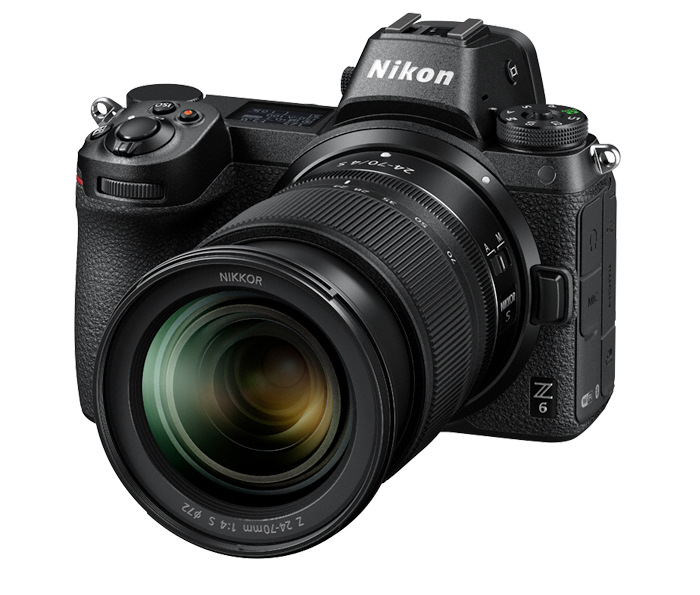

The Nikon Z6 and Sony ZV-E1 are two full-frame cameras that cater to different segments of the photography and videography market. While the Nikon Z6 has been a well-rounded choice for enthusiasts and professionals since its release in 2018, the Sony ZV-E1, launched in 2023, targets content creators seeking advanced video capabilities. Buyers may find themselves choosing between these two models, each offering unique strengths in image quality, autofocus systems, and video features. The key differentiators include the Z6's higher megapixel count and robust build versus the ZV-E1's impressive autofocus points and video performance.
As users consider which camera to invest in, it is crucial to understand their individual needs-such as whether they prioritize still photography or video production. Additionally, price points vary, so budget and desired features will greatly influence the purchasing decision.
Specifications Comparison
Detailed Comparison
Image Quality
The Nikon Z6 features a 25-megapixel full-frame sensor, which allows for producing high-resolution images with excellent detail, suitable for both prints and crop flexibility in post-processing. Its ISO range of 100-51200 (expandable to 50-204800) gives it the ability to perform exceptionally well in low-light conditions, making it an appealing option for night photography and events. In contrast, the Sony ZV-E1 is equipped with a lower 12-megapixel sensor, which can still produce good images, but depth and detail may be compromised in scenarios where cropping is necessary. It boasts a slightly broader ISO range of 80-102400 (expandable to 40-409600), which enhances its low-light capabilities but may not match the clarity of a higher megapixel image from the Z6.
In summary, the Z6's sensor attributes, higher resolution, and excellent low-light performance give it an advantage in still photography, especially for those aiming for professional quality. The ZV-E1, while sufficient for many users and focused primarily on video creators, may not serve well for detailed still imaging needs.
Autofocus System
Autofocus is one of the strongest features in the Sony ZV-E1, equipped with an impressive 759 autofocus points which cover a substantial area of the frame. This allows for quick and accurate focusing even during fast-paced action, making it ideal for content creators who often capture moving subjects. The Z6, while possessing a respectable 273 autofocus points, does not provide the same level of coverage or speed as the ZV-E1 and may require more time focusing in complex scenes.
Though both cameras offer reliable autofocus performance, the ZV-E1's advanced capabilities are particularly beneficial for vlogging and dynamic shooting environments, where precision and adaptability to changing subjects are critical. The Z6's autofocus may still be effective for travel and landscape shooters but falls short in the competition for hybrid shooters who require both video and stills versatility in the same session.
Video Capabilities
When comparing video capabilities, the ZV-E1 clearly outshines the Z6. The Sony camera can shoot in 4K resolution at 60 frames per second, which is essential for those wanting smooth footage in a variety of settings, especially for vlogs, live streams, and social media content. On the other hand, the Z6 is limited to 4K at 30 frames per second, which, while sufficient for general videography, may lack the fluidity that many modern video creators are seeking.
Additionally, the ZV-E1 includes features tailored for video work, such as optimized audio input options and user-friendly settings for vloggers. While both cameras can handle 4K video, the ZV-E1's focus on video-centric features makes it a preferred choice for users who prioritize high-quality video output. As a result, the Z6 may serve better for broader photography-based needs rather than focused videography.
Build & Ergonomics
Both the Nikon Z6 and Sony ZV-E1 offer robust builds with weather sealing, making them suitable for outdoor shoots. However, the Z6, being larger and heavier at 675g, provides a more substantial grip that many photographers may find comfortable for prolonged use, especially when handling larger lenses. Its dimensions (134 x 101 x 68 mm) also give it a slightly more traditional DSLR feel.
In contrast, the ZV-E1 is more compact and lightweight at 483g, with dimensions of 121 x 72 x 54 mm, thereby appealing to those who prioritize portability in their gear, particularly vloggers and those on the move. However, its reduced size may impact ergonomics for users with larger hands or long shooting durations. Ultimately, the choice between the two may come down to personal preference regarding weight and handling during extended use.
Battery & Storage
The battery performance significantly favors the Sony ZV-E1, boasting a lifespan of approximately 570 shots per charge, which is notably superior to the Nikon Z6's 310 shots. This advantage can be crucial for videographers and content creators who may find themselves in situations where recharging isn't feasible during shooting sessions. The greater battery life ensures longer uninterrupted recording, especially vital when producing long-form video content.
In terms of storage, both cameras support dual card slots, but the Z6 employs a CFexpress Type B and SD UHS-II format, which offers versatility, while the ZV-E1 uses dual SD UHS-II cards. This configuration is beneficial for users who may want to shoot in high-bitrate video settings, especially with 4K recording in mind. Collectively, while both cameras offer solid battery and storage solutions, the ZV-E1 takes the lead in practical battery performance.
Value for Money
Pricing plays a significant role in the decision-making process for potential buyers. The Nikon Z6 is priced at approximately $1995, providing solid video and photographic capabilities at a more affordable entry point for full-frame systems. It is a well-rounded camera suitable for photographers wanting a reliable and versatile tool that can handle a variety of shooting disciplines.
Conversely, the ZV-E1 is slightly more expensive at $2200, but it offers advanced video capabilities and an impressive autofocus system, tailored predominantly for digital content creators. For those who primarily drive engagement through video, the added cost may justify the features. Still, for buyers looking for versatility in traditional photography while remaining budget-conscious, the Z6 provides substantial value without the extra financial strain. Knowing the specific use case will inform whether the premium pricing of the ZV-E1 is warranted.
Lens Ecosystem
Nikon and Sony have invested significantly in each of their lens ecosystems. The Nikon Z system is relatively young but steadily expanding, with a good selection of native lenses available, suitable for various photography styles, including portrait, landscape, and macro. However, some users may find the variety to be less than the competition, which might require more adaptability when selecting lenses.
On the other hand, the Sony E-mount ecosystem boasts a vast and diverse selection of lenses, catering to all types of shooters and including options from third-party manufacturers. This breadth allows for more creative flexibility and adaptability over time, especially for those who may want to experiment with different photographic genres. Users seeking an extensive range of native lens options for their camera system will likely lean more towards the Sony system, which has been the industry leader for several years.
Our Verdict
In considering the overall capabilities and specific use cases, the Sony ZV-E1 emerges as the overall winner in this comparison. Its advanced video capabilities, superior autofocus system, and long battery life make it an ideal choice for content creators, vloggers, and those whose primary focus is on video. However, the Nikon Z6 holds its ground with higher resolution imagery, making it more suitable for photographers who need quality images, especially in low-light scenarios. Each camera has its strengths, allowing buyers to choose based on their primary needs, whether it leans toward still photography with the Z6 or dynamic videography with the ZV-E1.
Nikon Z6
Sony ZV-E1
Also Compare
Frequently Asked Questions
Which camera is better for low-light photography?
The Nikon Z6 is preferable for low-light photography due to its higher megapixel count and broader ISO range, making it capable of producing clearer images in challenging light conditions.
Is the Sony ZV-E1 suitable for still photography?
While the Sony ZV-E1 can take still photographs, its primary design is aimed at video content creation; therefore, a dedicated photographer might find the image quality less satisfying compared to the Nikon Z6.
What is the key advantage of the Nikon Z6?
The key advantage of the Nikon Z6 is its strong performance in still photography, high resolution, and better ergonomics for extended shooting periods.
How does the video quality compare between the two?
The Sony ZV-E1 offers superior video quality with 4K at 60 fps, compared to the Nikon Z6's 4K at 30 fps, making it the better choice for video-focused users.
What should I consider when choosing between these two cameras?
Consider your primary use case: if you need a camera primarily for video and social media, the Sony ZV-E1 is ideal. If you're focused on still photography with occasional video, the Nikon Z6 may be more suitable.