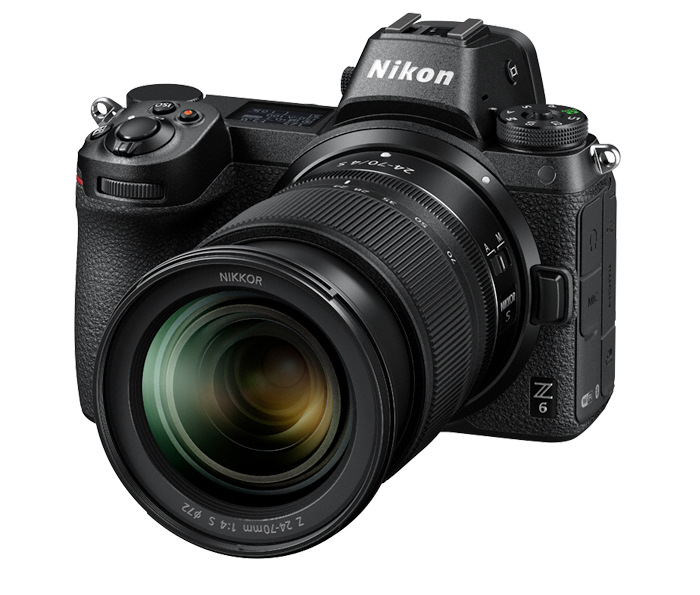

The Nikon Z6 and Sony A7S III are prominent contenders in the full-frame mirrorless camera market, frequently compared by photographers and videographers alike. While both cameras cater to professional users, they have distinct features that make them suitable for different types of photography and videography. The Z6 appeals to all-around photographers looking for good image quality and versatility, whereas the A7S III shines in low-light performance and advanced video capabilities.
Specifications Comparison
Detailed Comparison
Image Quality
The Nikon Z6 boasts a 25-megapixel sensor that strikes an impressive balance between detail and low-light performance. With its ability to expand the ISO range up to 204800, it delivers high-quality images in various lighting conditions. This makes it suitable for a wide range of photography styles, from landscapes to portraits. The sensor's full-frame format allows it to gather more light, enhancing the dynamic range and color accuracy.
On the other hand, the Sony A7S III is designed primarily for video and low-light performance with its 12-megapixel sensor. While the lower resolution may seem limiting for still photography, it excels in capturing phenomenal images in low-light situations due to its broader ISO range that goes up to 409600. This capability allows for greater flexibility when shooting in dark environments, albeit at a trade-off with file size as lower megapixels generally lead to smaller image files.
In real-world usage, the Nikon Z6 may produce sharper images for landscape and high-detail photography, while the A7S III can create stunning footage and stills in challenging lighting. Overall, the choice between the two comes down to specific use cases.
Winner: a
Autofocus System
The Nikon Z6 features a robust autofocus system with 273 focus points, which ensures quick and accurate focusing for stills and decent tracking for moving subjects. Its performance is solid, though it may not be as advanced as some of the top competitors in tracking autofocus in challenging conditions.
In contrast, the Sony A7S III stands out with its impressive 759 autofocus points, which cover a larger area of the frame and allow for fast acquisition and tracking of subjects. This sophisticated hybrid AF system utilizes both phase-detection and contrast-detection, resulting in remarkable accuracy, especially during video recording. Furthermore, the A7S III includes advanced tracking and real-time eye autofocus features that are immensely useful for video creators and portrait photographers.
Thus, while both cameras perform well overall, the A7S III's autofocus system is decidedly superior, particularly for those focusing on dynamic scenes or videography.
Winner: b
Video Capabilities
When it comes to video performance, the Sony A7S III is a clear leader. It captures 4K video at up to 120fps, enabling smooth slow-motion footage and high-quality, 10-bit 4:2:2 internal recording. Additionally, the camera supports various codecs and versatile output options, making it ideal for professional video production.
In comparison, the Nikon Z6 can record 4K at 30fps, which, while suitable for general videography, lacks the frame rate versatility that many videographers seek. The Z6 does offer good image quality and color rendition, but its video capabilities fall short against the A7S III's robust feature set, particularly in fast-paced environments.
For videographers, the choice is clear: the A7S III is built to meet demanding professional standards, whereas the Z6 is a more hybrid-focused choice for those who also value still photography.
Winner: b
Build & Ergonomics
Both the Nikon Z6 and Sony A7S III are well-constructed with weather-sealed bodies, making them suitable for outdoor use in various conditions. The Z6 features a slightly larger grip, which many users find comfortable during extended shooting sessions. Its weight of 675g is relatively light for a full-frame camera, which enhances portability without sacrificing durability.
The A7S III, weighing 699g, incorporates a more compact design but is slightly bulkier due to its added functionality. The layout of buttons and dials on the A7S III is often recognized as more intuitive, which many users appreciate. Additionally, the A7S III's fully articulating touchscreen can be a massive advantage for vloggers and those capturing unique angles.
Ultimately, the preference for one over the other will largely fall to personal ergonomics and the specific needs of photographers and videographers.
Winner: tie
Battery & Storage
The Nikon Z6 offers a battery life of approximately 310 shots per charge, which is a reasonable performance for a full-frame camera; however, it might not be sufficient for all-day shoots without backup batteries. It utilizes an EN-EL15b battery, which is a common standard, allowing for good availability and compatibility with other Nikon models.
The Sony A7S III excels in battery life, achieving around 600 shots per charge, which is particularly advantageous for videographers and those taking long sessions without the option to swap batteries. It employs the NP-FZ100 battery, offering excellent longevity and improved efficiency. This aspect is critical when considering extended shoots.
In terms of storage, both cameras use dual card slots, but the Z6 supports XQD and SD UHS-II cards, while the A7S III offers CFexpress Type A and SD UHS-II slots. The ability to use CFexpress can potentially facilitate faster data transfer rates for higher video quality settings. Overall, the A7S III stands out in battery capacity and flexibility for storage solutions.
Winner: b
Value for Money
With a price point of $1995, the Nikon Z6 presents a compelling value proposition for those looking for a full-frame mirrorless camera equipped with excellent image quality and solid performance in various conditions, including strong still photography capabilities. For general-purpose photography and hybrid use, the price makes it accessible for enthusiasts and professionals alike.
In contrast, the Sony A7S III comes with a higher price tag of $3499, which reflects its advanced video features and superior low-light performance. This investment makes sense for dedicated videographers and filmmakers who require high-quality video output and longer battery life. While it's pricier, those who can leverage its capabilities may find the cost justified.
Ultimately, the value will depend on the user's focus; still photographers may find the Z6 to be more aligned with their budgetary constraints, whereas those specializing in video will likely see the A7S III as a necessary investment for their work.
Winner: a
Our Verdict
Overall, the Sony A7S III wins this comparison due to its superior video capabilities, advanced autofocus system, and exceptional low-light performance, making it an optimal choice for those primarily focused on videography and dynamic shooting scenarios. While the Nikon Z6 holds its ground for still photography and offers excellent value, the specialized features of the A7S III make it stand out for professionals who demand the best from a mirrorless camera.
Nikon Z6
Sony A7S III
Also Compare
Frequently Asked Questions
Which camera is better for low-light photography?
The Sony A7S III is typically better for low-light photography due to its larger ISO range and low pixel count, which enhances light-gathering capabilities.
Is the Nikon Z6 suitable for video work?
Yes, the Nikon Z6 can record 4K video and is capable for general videography, but it lacks the high frame rates and advanced features found in the A7S III.
Which camera offers better battery life?
The Sony A7S III offers better battery life, allowing for approximately 600 shots per charge compared to the Nikon Z6's 310 shots.
How do the autofocus systems compare?
The A7S III has a more advanced autofocus system with 759 points compared to the Z6's 273, making it better for tracking moving subjects.
What is the main advantage of the Nikon Z6?
The main advantage of the Nikon Z6 is its appealing price point and versatility for still photography, making it an excellent choice for hybrid shooters.