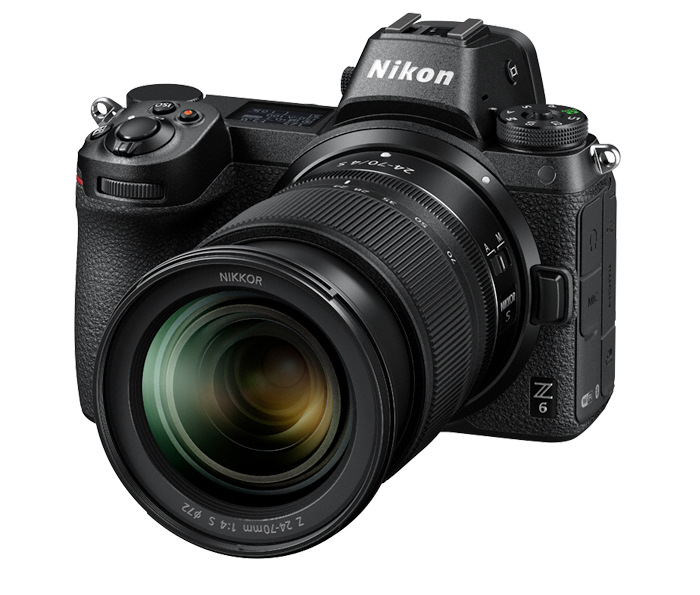
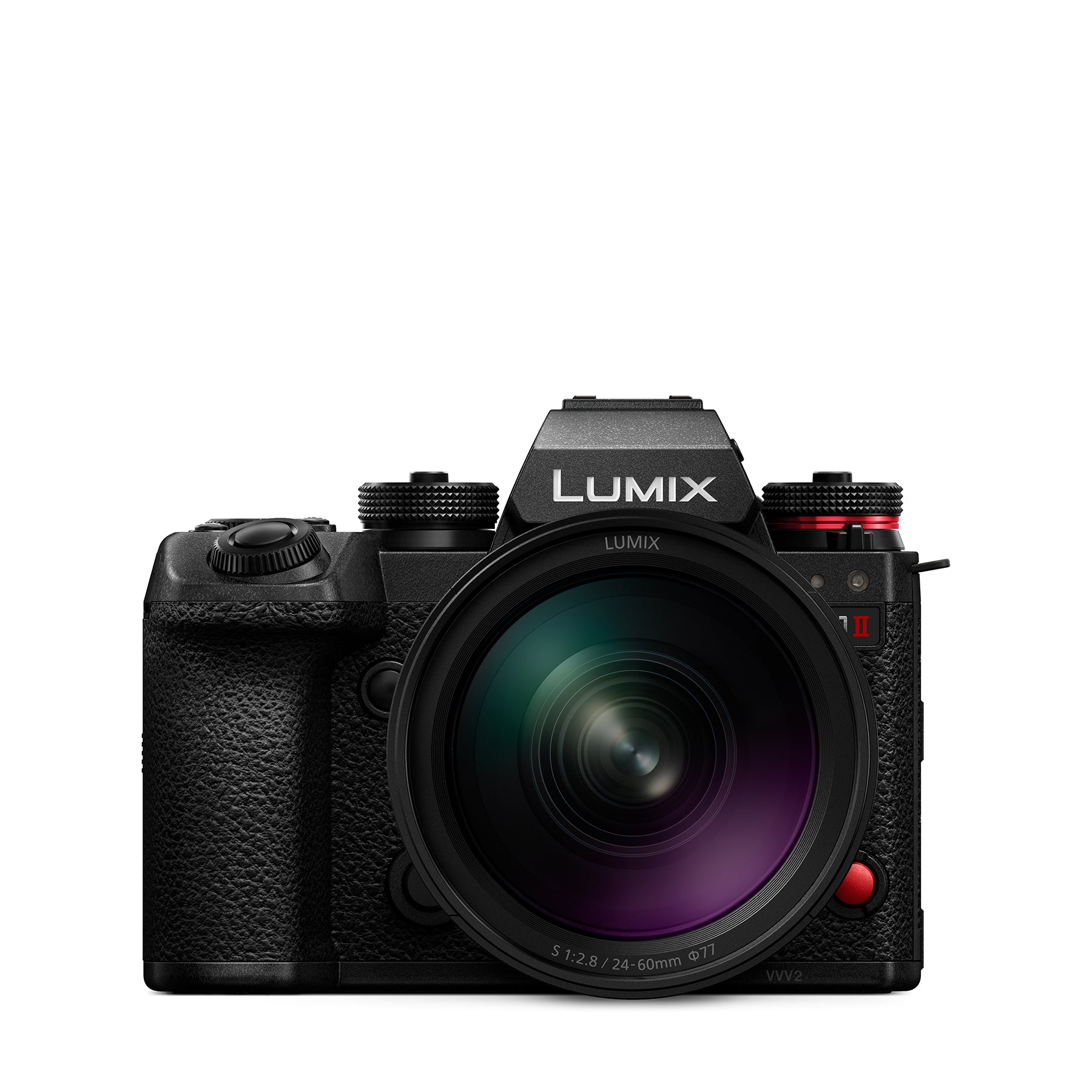
The Nikon Z6 and Panasonic S1 II are both compelling full-frame mirrorless cameras that cater to serious photographers and videographers. The Z6 has gained recognition since its release in 2018 for its well-rounded features, especially in low-light performance and balance between still images and video capabilities. On the other hand, the S1 II, released in 2023, aims to challenge that legacy by offering advanced video features and improved stabilization, making it an enticing option for content creators. Buyers might find themselves weighing the Z6's established reputation against the newer S1 II's innovative offerings, particularly when it comes to video functionalities and in-body image stabilization. The key differentiators include resolution, video performance, stabilization, and overall system ergonomics.
Specifications Comparison
Detailed Comparison
Image Quality
Both the Nikon Z6 and Panasonic S1 II boast full-frame sensors, but their megapixel counts differ slightly. The Nikon Z6 has a 25-megapixel sensor, while the S1 II offers 24.1 megapixels. In practical terms, this difference may not lead to significant variations in image quality for most users. However, the Z6's wider ISO range, from 100 to 51,200 (expandable to 50-204,800), gives it an edge in low-light conditions, offering users more flexibility for capturing images in challenging situations. Moreover, the Z6's established sensor has been noted for its natural color rendition and detail retention, especially when producing high-ISO images.
The colors produced by both cameras can be compelling; however, users often find the Z6's color science to be warmer and more appealing straight out of the camera. The S1 II tends to lean towards a more neutral tone which can require slight adjustments in post-processing to achieve the same level of vibrancy that some users prefer. Overall, while both cameras yield excellent image quality, the Z6, with its superior low-light performance and color depth, may cater better to photographers prioritizing these characteristics.
Autofocus System
The Nikon Z6 features a 273-point phase-detection autofocus system that has been well-regarded for its accuracy and speed, making it a solid choice for capturing fast-moving subjects. The camera performs commendably in both single and continuous autofocus, and its eye-detection autofocus capabilities add to its versatility in portrait photography.
In contrast, the Panasonic S1 II, while benefiting from improvements in its autofocus capabilities, does not specify the exact number of autofocus points. However, Panasonic's Dual I.S. and advanced contrast detection make it competitive in various lighting conditions. Users of the S1 II may find its focus systems more aligned with video work, as it is designed to maintain focus smoothly during recording with a more elaborate tracking system.
Although both autofocus systems have strengths, especially in their respective areas of focus-be it still images for the Z6 or video for the S1 II-the Nikon Z6 generally offers more reliable performance for still photography with its extensive autofocus points and superior low-light capabilities. Thus, for photographers focused on still captures, the Z6 has the upper hand.
Video Capabilities
The Panasonic S1 II shines with its advanced video capabilities, supporting 5.1K video at 60p, which puts it leagues ahead of the Nikon Z6, which can only record 4K at 30p. For videographers, this high-resolution capability coupled with the S1 II's superior in-body stabilization of 8 stops enables smooth recording, even when moving. The S1 II is also designed with more extensive video-oriented features, including V-Log and better color profiles, appealing to professionals requiring robust video tools.
While the Nikon Z6 does support 4K recording and is a competent video camera, it lacks the higher resolution and frame rates that the S1 II provides. That said, many users of the Z6 appreciate its 10-bit HDMI output, which allows for quite an aesthetic visual with suitable external recorders, but overall, the native support in the S1 II gives it the crown for video work.
For users whose primary usage includes high-quality video production, the S1 II clearly surpasses the Z6, delivering a more powerful platform that will please serious videographers looking for extended capabilities.
Build & Ergonomics
Both the Nikon Z6 and Panasonic S1 II feature robust build quality, designed to withstand the rigors of professional use. The Z6 weighs slightly less at 675g, enhancing its portability, particularly during long shooting sessions. Its dimensions (134 x 101 x 68 mm) are user-friendly, providing a comfortable grip that many photographers appreciate.
Conversely, the Panasonic S1 II, being a more recent model, leans into a heavier design while still maintaining weather sealing, essential for outdoor use. Users may feel the S1 II's grip is more pronounced, which could lead to better handling with heavier lenses. However, the weight difference may deter photographers who prioritize a lighter setup.
In terms of usability, both cameras come equipped with electronic viewfinders and high-resolution screens. The Z6 boasts a 3.2-inch display with 2.1 million dots, while the S1 II's modern innovations include a slightly smaller screen paired with usability enhancements ideal for videography. Overall, while the S1 II may edge ahead in some ergonomics for heavier shooting, the lighter and more compact Z6 wins in the versatility and comfort category.
Battery & Storage
When considering battery life, the Nikon Z6 is rated for approximately 310 shots per charge, which is decent but may fall short for all-day shooters. It utilizes the Nikon EN-EL15b battery, common in many Nikon systems, which makes it easy to find replacements. Furthermore, the Z6 supports dual SD UHS-II card slots, vastly increasing its storage capabilities, especially when dealing with high-resolution images or video files.
In contrast, the Panasonic S1 II appears more favorable in this regard, boasting longer battery life and designed for higher endurance with enhanced power management. Although the specific number of shots isn't detailed, users have reported that the S1 II can comfortably endure demanding shooting sessions. It also supports dual SD UHS-II slots, matching the Z6's capabilities.
While the Z6 offers a competent battery life and dual storage, the S1 II's overall better power management may cater more effectively to those needing extended shooting sessions, particularly when recording long videos.
Value for Money
With the Nikon Z6 priced at $1995, it presents a value proposition that is attuned to its capabilities, especially given its reputation and established features in still photography. The camera has proven its worth over time, making it a preferred choice among many professionals who want reliable performance along with exceptional image quality.
The Panasonic S1 II, being a newer entry, is yet to be priced in the same range, but its high-resolution video capabilities align more closely with content creators and videographers who may justify the potentially higher cost based on its advanced features. Its release in 2023 positions it against other premium options with competitive specs, which could be seen as a strong prospect for the future in terms of resale value.
While the Z6 provides a solid foundation for those primarily interested in still photography, the S1 II may offer better long-term value for users focusing on both high-quality video and decent still capabilities, thus appealing to a broader range of hybrid shooters.
Lens Ecosystem
As of now, Nikon's Z mount has developed a decent range of native lenses, providing users with a variety of options from ultra-wide to telephoto, ideal for a vast array of photography styles. The Z6 works extremely well with these lenses, allowing photographers to fully leverage the camera's potential.
In comparison, Panasonic's S series is also building a rich ecosystem, with many native lenses available that cover a wide range of focal lengths. However, panasonic is generally seen as more versatile for hybrid use, offering numerous high-quality lenses that are particularly focused on video functionality.
Both ecosystems have their strengths, but for users wanting not just dedicated lenses for still photography but also those optimized for video quality, the Panasonic lens collection, emerging more lately, might appeal more. That said, those heavily invested in the Nikon lens ecosystem may find it more advantageous to choose the Z6, as they can capitalize on their existing investments.
Our Verdict
Considering the individual strengths outlined in this comparison, especially in video capabilities and battery life, the Panasonic S1 II emerges as the overall winner. It caters exceptionally well to videographers with its advanced features, making it an attractive option for those who require both high-quality video and decent still performance. However, photographers primarily focused on stills, particularly in low-light settings, may find the Nikon Z6 a better tailored choice, emphasizing excellent image quality. Ultimately, the decision hinges on potential buyers' specific needs: if you prioritize video and versatility, the S1 II should be the go-to; if your focus lies heavily on still photography with robust low-light capabilities, the Z6 stands strong.
Nikon Z6
Panasonic S1 II
Also Compare
Frequently Asked Questions
Which camera performs better in low light?
The Nikon Z6 has a wider ISO range, making it superior for low light photography compared to the S1 II.
Is the Panasonic S1 II better for video work?
Yes, the S1 II supports 5.1K video recording at 60p and has stronger in-body stabilization features, making it a better option for videographers.
Which camera has a better autofocus system?
The Nikon Z6 features a more extensive 273-point phase-detection autofocus system, providing greater reliability for still photography.
What is the primary advantage of the Nikon Z6?
The Z6 excels in image quality, particularly in low-light settings, and its established lens ecosystem makes it appealing for still photographers.
How does battery life compare?
The S1 II generally offers better battery life compared to the Z6, making it more suitable for extended shooting sessions.