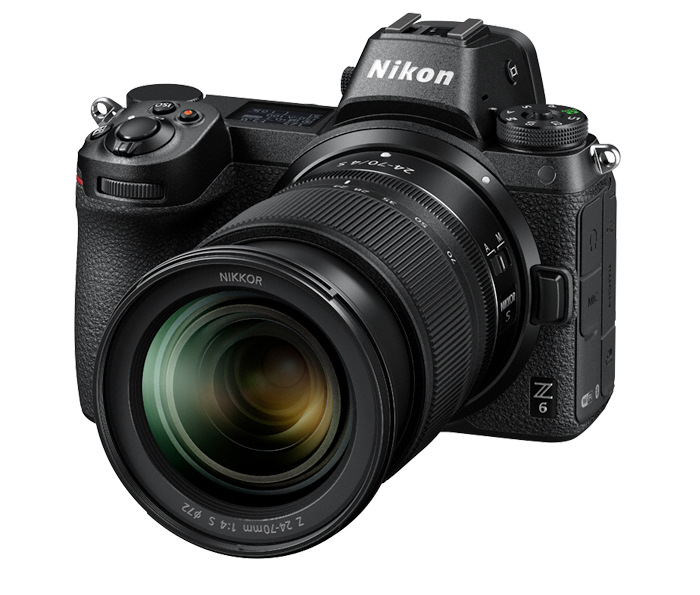
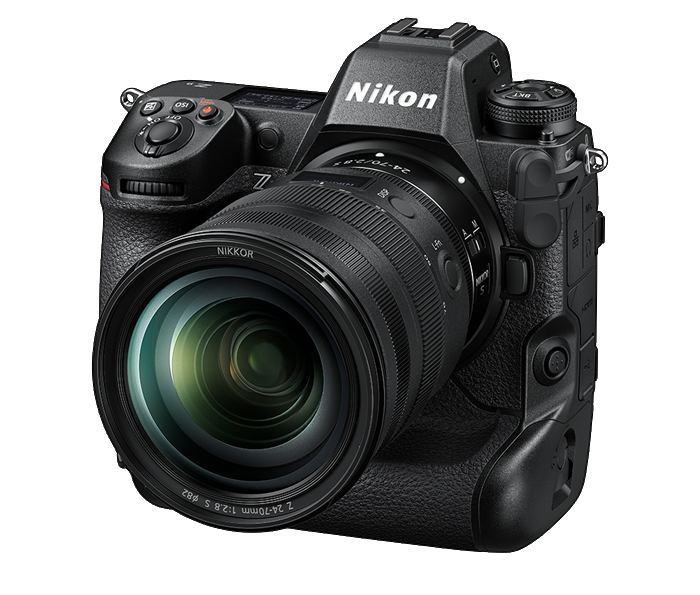
The Nikon Z6 and Z9 are two prominent models in Nikon's mirrorless camera lineup, frequently compared due to their full-frame sensor design and advanced features tailored for both photography and videography. Photographers and videographers alike often find themselves choosing between these cameras based on their specific needs and budget. While the Z6 is aimed at enthusiasts and offers a well-rounded performance, the Z9 targets professionals with enhanced specifications that justify its higher price tag.
Key differentiators between the Z6 and Z9 include megapixel count, frame rate, autofocus capabilities, and video performance. The Z6, released in 2018, provides solid performance for its price, while the Z9, launched in 2021, introduces cutting-edge features that reflect the latest in camera technology and innovation. This comparison aims to clarify the strengths of each model to help buyers make an informed decision.
Specifications Comparison
Detailed Comparison
Image Quality
The image quality between the Z6 and Z9 showcases notable differences primarily due to their respective megapixel counts. The Z6 comes equipped with a 25-megapixel sensor, which is sufficiently powerful for most photography needs, delivering sharp images with good dynamic range at various ISO levels. Users can expect excellent performance from the Z6 in a variety of lighting conditions, especially thanks to its ISO range of 100-51200, which can be expanded to 204800 for extreme low-light situations.
In contrast, the Z9 features a significantly higher 46-megapixel sensor, allowing for larger prints and more detail in images, making it suitable for professional applications where quality is paramount. The increased resolution, paired with its advanced sensor design, provides superb high-ISO performance, bettering low-light shooting capabilities and overall image fidelity. The Z9's ISO performance is excellent, maintaining detail and minimizing noise well into the higher ISO ranges.
Overall, while both cameras offer impressive image quality, the Z9's higher resolution sensor gives it an edge in terms of detail and adaptability in challenging lighting conditions. The Z9 is clearly the winner for photographers who prioritize image quality and detail in their work.
Autofocus System
Autofocus is a crucial aspect for photographers, especially in dynamic shooting situations. The Nikon Z6 features a robust system with 273 autofocus points, providing good coverage and performance for most general photography scenarios. The Z6's autofocus performs admirably in various conditions, capturing fast-moving subjects effectively, but it does have limits when pushed to extremes like action and wildlife photography.
On the other hand, the Nikon Z9 boasts a much more sophisticated autofocus system with 493 focus points. This system not only offers more points but also features advanced tracking capabilities, including eye detection for both humans and animals, making it a preferred option for sports and wildlife photographers. The autofocus in the Z9 is faster and more reliable, giving shooters confidence in fast-paced scenarios.
Given the Z9's superior autofocus capabilities, especially in demanding situations, it triumphs in this comparison, making it the go-to choice for professionals who need cutting-edge tracking features.
Video Capabilities
For videographers, the video specifications of a camera often dictate its usability for professional projects. The Nikon Z6 supports 4K video at 30p, which is satisfactory for general use but lacks some of the more advanced features desired for professional film-making, such as high frame rates and advanced codecs.
In contrast, the Nikon Z9 excels with its ability to record 4K video at an impressive 120p, opening up creative possibilities such as slow-motion filming. The Z9 also supports various codecs and higher bit rates, which enhances the overall video quality and post-production flexibility. With its superlative video performance, the Z9 is far more suited for professional videographers who demand high fidelity and versatility.
Considering this, the Z9 is the clear winner in video capabilities, solidifying its position as a high-end choice for content creators focused on video production.
Build & Ergonomics
When it comes to build quality and ergonomics, both the Z6 and Z9 share weather-sealed bodies, making them suitable for outdoor shooting in adverse conditions. The Z6 weighs 675 grams, which makes it relatively lightweight and easier to manage during extended shoots, appealing especially to traveling photographers or those who prioritize portability.
On the other hand, the Z9 is significantly heavier at 1340 grams, but this is reflective of its robust build quality designed for professional use. The Z9's larger size also accommodates advanced features and improved heat dissipation during intensive video recording sessions. Both cameras feature electronic viewfinders and similar touchscreens, although the Z9's viewfinder offers a slightly improved refresh rate and resolution.
In terms of ergonomics, the Z6 wins for portability and ease of handling, while the Z9 offers enhanced durability and professional-grade design suited for heavy use. This leads to a tie since both cameras are excellent in their specific contexts.
Battery & Storage
Battery life is pivotal for those engaging in long shoots. The Nikon Z6 has a battery life rated at approximately 310 shots, which may be a limitation for extensive shooting sessions especially if no spare batteries are carried. However, its dual SD card slots allow for flexible storage management for photographers.
Conversely, the Nikon Z9 offers a substantially longer battery life, rated at about 740 shots, allowing for extended shooting without the constant need to swap batteries. Additionally, the Z9 employs CFexpress cards that provide faster writing speeds, accommodating high-resolution images and 4K video at high frame rates without buffer issues. This is a significant advantage for professionals who often shoot in bursts or in demanding situations requiring rapid data handling.
Therefore, for battery life and storage capabilities, the Z9 is the evident winner, providing both endurance and efficiency crucial for professional workflows.
Value for Money
In assessing the value for money, the Nikon Z6 is priced at $1995, making it accessible to enthusiasts and advanced amateurs. It delivers excellent performance for its price, meeting the needs of many users without breaking the bank. It presents a good balance of features, making it a compelling option for those who wish to dive into full-frame photography without the premium price tag.
In contrast, the Z9's pricing at $5500 reflects its professional features and capabilities. While it offers superior performance in several areas, such as resolution, autofocus, and video, it may be seen as a steep investment for casual users or those who do not require the advanced specifications. For professionals who need the best performance, however, the expense may be justified.
Considering value for money, the Z6 serves well for users focused on affordability without major sacrifices in quality. Consequently, in terms of broad audience appeal, the Z6 edges ahead as the better value choice.
Our Verdict
In this comprehensive comparison between the Nikon Z6 and Z9, the Z9 ultimately emerges as the overall winner due to its advanced specifications that cater to professional needs in both still photography and videography. While the Z6 provides an excellent entry point into full-frame photography with its affordability and high-quality performance, the Z9 stands out for its exceptional image quality, superlative autofocus system, and advanced video capabilities that make it indispensable for serious content creators. For those who prioritize a compact, affordable option for hobbyist photography, the Z6 remains a fantastic choice. In contrast, professionals willing to invest in top-tier performance and features will find the Z9 to be an invaluable tool that excels in a variety of challenging environments.
Nikon Z6
Nikon Z9
Also Compare
Frequently Asked Questions
Is the Nikon Z6 good for professional photography?
Yes, the Nikon Z6 is capable of professional-level photography, particularly for general use. It offers great image quality and performance, suitable for many situations such as portraits, landscapes, and events.
How does the autofocus performance differ between the Z6 and Z9?
The Z9 has a much more advanced autofocus system with 493 points and superior tracking abilities, making it more effective for fast-moving subjects compared to the Z6's 273 points.
Which camera is better for video work?
The Nikon Z9 is better for video work with its ability to shoot 4K at 120p, advanced codecs, and exceptional autofocus. The Z6 is limited to 4K at 30p.
What is the difference in battery life between the two cameras?
The Z9 offers a significantly longer battery life at approximately 740 shots, compared to the Z6's 310 shots, making it more suitable for extended shoots.
Which camera offers better value for money?
The Nikon Z6 provides excellent value for money, especially for enthusiasts seeking high performance in a full-frame camera without the premium cost associated with the Z9.
Are both cameras weather-sealed?
Yes, both the Nikon Z6 and Z9 are weather-sealed, making them suitable for outdoor shooting in adverse conditions.