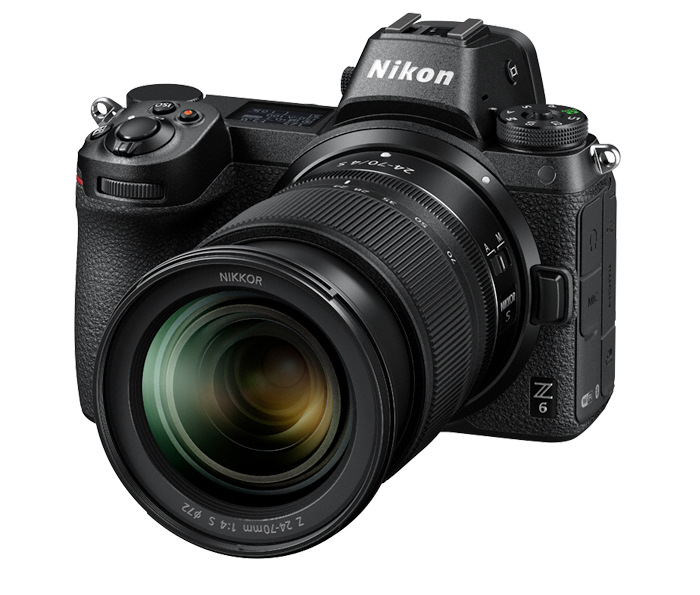
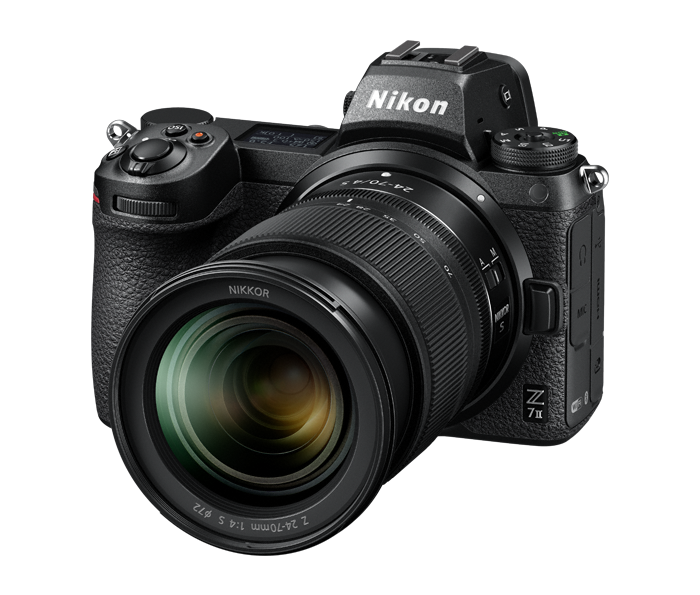
The Nikon Z6 and Z7 II are two of Nikon's flagship mirrorless cameras in the Z series, often compared by photographers seeking excellent image quality and advanced features. Both cameras are particularly appealing to enthusiasts and professionals, with each catering to different photography needs. The Z6 stands out for its versatility and value, while the Z7 II emphasizes higher resolution and enhanced capabilities. Understanding the differences in their specifications and performance will help potential buyers make an informed decision based on their individual requirements.
Specifications Comparison
Detailed Comparison
Image Quality
When it comes to image quality, the Nikon Z7 II significantly outshines its predecessor, featuring a 46 MP full-frame sensor compared to the Z6's 25 MP sensor. This higher megapixel count allows for greater detail and larger print sizes, making the Z7 II an excellent choice for landscape and studio photographers who require high-resolution imagery. Additionally, the Z7 II features an expanded ISO range, enabling better performance in low-light conditions, particularly at the high end (up to 102400). Conversely, the Z6's 25 MP sensor still delivers exceptional image quality, producing images with striking detail and dynamic range. With its lower megapixel count, the Z6 offers faster processing and potentially better performance in burst shooting scenarios, making it more versatile for action and sports photography. However, it cannot match the detail captured by the Z7 II in scenarios where high resolution is critical. While both cameras utilize the same sensor size and have similar color profiles, the Z7 II's edge in image quality, especially in terms of detail and low-light performance, gives it a considerable advantage for photographers who prioritize resolution. Therefore, in the aspect of image quality, the winner is clear.
Autofocus System
The autofocus system is another critical area where the Z7 II excels. It boasts 493 autofocus points, significantly more than the Z6's 273 points. This expanded autofocus coverage allows for more reliable tracking of moving subjects and enhances overall focusing performance, particularly in challenging lighting conditions. Furthermore, the Z7 II features improved subject detection capabilities, making it a more attractive option for wildlife and sports photographers. On the other hand, the Z6's autofocus system is still robust and performs well under most circumstances, with fast acquisition speeds and reliable face/eye detection. However, it falls short in terms of overall point coverage and advanced tracking abilities compared to the Z7 II. For photographers who need precise autofocus in dynamic environments, this discrepancy could be a deciding factor. Overall, while both systems are solid, the Z7 II's superior autofocus offers enhanced versatility and performance, particularly for action-oriented photography, positioning it as the winner in this category.
Video Capabilities
Video performance is another significant distinction between these two models. The Nikon Z6 is capable of recording 4K video at 30 frames per second, providing excellent video quality for content creators and videographers. However, the Z7 II takes it a step further by supporting 4K video at up to 60 frames per second, making it ideal for those seeking smoother motion in their footage. Both models feature 5-axis in-body stabilization, which effectively counteracts camera shake during handheld shooting. This is crucial for producing stable video footage, especially in dynamic environments. Nevertheless, the additional frame rate of the Z7 II, combined with its higher resolution, positions it clearly ahead when it comes to advanced video capabilities. Thus, for videographers who demand the latest features and higher frame rates for their projects, the Nikon Z7 II emerges as the victor in this comparison.
Build & Ergonomics
Both the Z6 and Z7 II feature a robust weather-sealed body that can withstand the rigors of outdoor shooting. They have nearly identical dimensions, with the Z6 being slightly lighter at 675 grams compared to the Z7 II's 705 grams. This marginal weight difference might make the Z6 a preferable choice for those who prioritize portability. In terms of ergonomics and handling, both cameras are well-designed, featuring a comfortable grip and well-placed controls. The buttons and dials are intuitive, catering to both seasoned photographers and newcomers alike. The LCD screens are identical at 3.2 inches with 2,100,000 dots, offering excellent clarity for image review and menu navigation. While both cameras offer similar build qualities, a slight preference may be given to the Z6 for its lighter weight. Therefore, in terms of build and ergonomics, the competition is closely matched, yielding a tie.
Battery & Storage
Battery life is an essential consideration for both the Z6 and Z7 II, especially during extended shooting sessions. The Z7 II provides a greater battery capacity, allowing for approximately 420 shots on a single charge, compared to the Z6's 310 shots. This advantage can be particularly beneficial for event photographers or those in situations where charging options are limited. Both cameras utilize the same CFexpress and SD UHS-II memory card slots, ensuring compatibility with high-speed memory cards that are essential for high-resolution image and video capture. This shared feature allows flexibility in storage options for both models. Given the significant difference in battery life, the Z7 II stands out in this category, making it the winner due to its higher shot capacity.
Value for Money
In terms of price, the Nikon Z6 is positioned as the more affordable option at around $1995, whereas the Z7 II comes in at $2999. The Z6 offers a great balance of features for those looking for capable full-frame performance without breaking the bank. For photographers who don't require the highest resolution or advanced video specifications, the Z6 represents a compelling value proposition. However, for professionals or serious enthusiasts who require superior resolution and performance, the higher investment in the Z7 II may be justified. The extra cost reflects the advanced specifications, including better autofocus, enhanced video capabilities, and improved battery life. Ultimately, the Z6 may be the best option for those on a budget or who prioritize value, making this category closely contested but slightly favoring the Z6.
Lens Ecosystem
Both cameras share the same Nikon Z mount, offering users access to an expanding ecosystem of lenses. Nikon has been steadily adding to its lineup, providing options for both wide-angle and telephoto needs, as well as fast prime lenses that suit various styles of photography. The compatibility across both models ensures that users can make the most of their lens choices, regardless of which camera they select. While opting for either camera, users can benefit from Nikon's FTZ adapter, which allows for the use of F-mount lenses, further expanding versatility. This aspect makes both the Z6 and Z7 II equally appealing for those who may already own Nikon lens investments or prefer a robust selection of glass. Since both cameras feature the same lens compatibility, this category results in a tie, with both offering similar advantages to users looking to build or expand their lens collections.
Our Verdict
Overall, the Nikon Z7 II wins this comparison due to its superior image quality, advanced autofocus system, extended video capabilities, and better battery life, making it an excellent choice for professionals and serious photographers. However, the Nikon Z6 remains a strong contender, particularly for those who are budget-conscious or do not require the utmost resolution and video specifications. If you prioritize value along with solid performance, the Z6 is an ideal choice, whereas the Z7 II is the way to go for those seeking high-end features and image fidelity.
Nikon Z6
Nikon Z7 II
Also Compare
Frequently Asked Questions
Which camera is better for low-light photography?
The Nikon Z7 II has an expanded ISO range making it slightly better for low-light situations, allowing for cleaner images at higher ISO settings.
Is the Z6 still a good choice for video work?
Yes, the Nikon Z6 offers strong 4K video capabilities and is a solid choice for videographers, particularly on a budget.
What is the main advantage of the Z7 II?
The main advantage of the Z7 II is its higher resolution sensor, which provides greater detail and image quality, especially for large prints or cropping.
How do the autofocus systems compare?
The Z7 II has more autofocus points and improved tracking capabilities, making it better for fast-moving subjects than the Z6.
Which camera is more suitable for sports photography?
The Z7 II, with its superior autofocus system and higher frame rate for recordings, is better suited for sports photography.