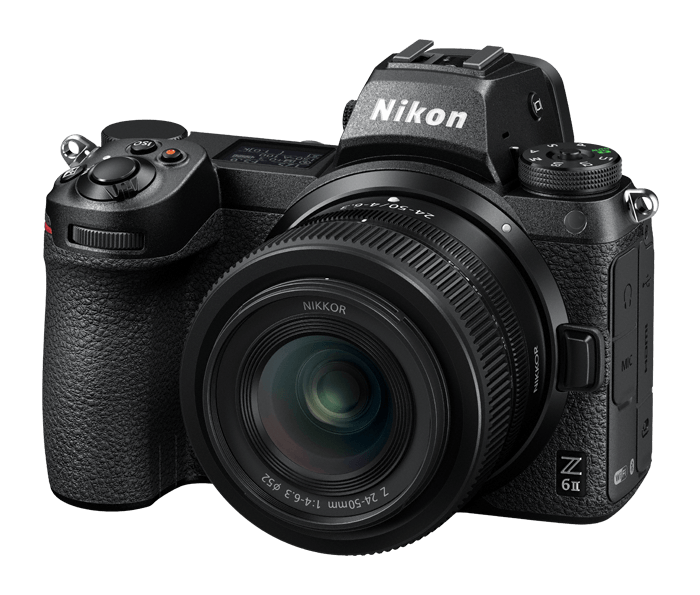
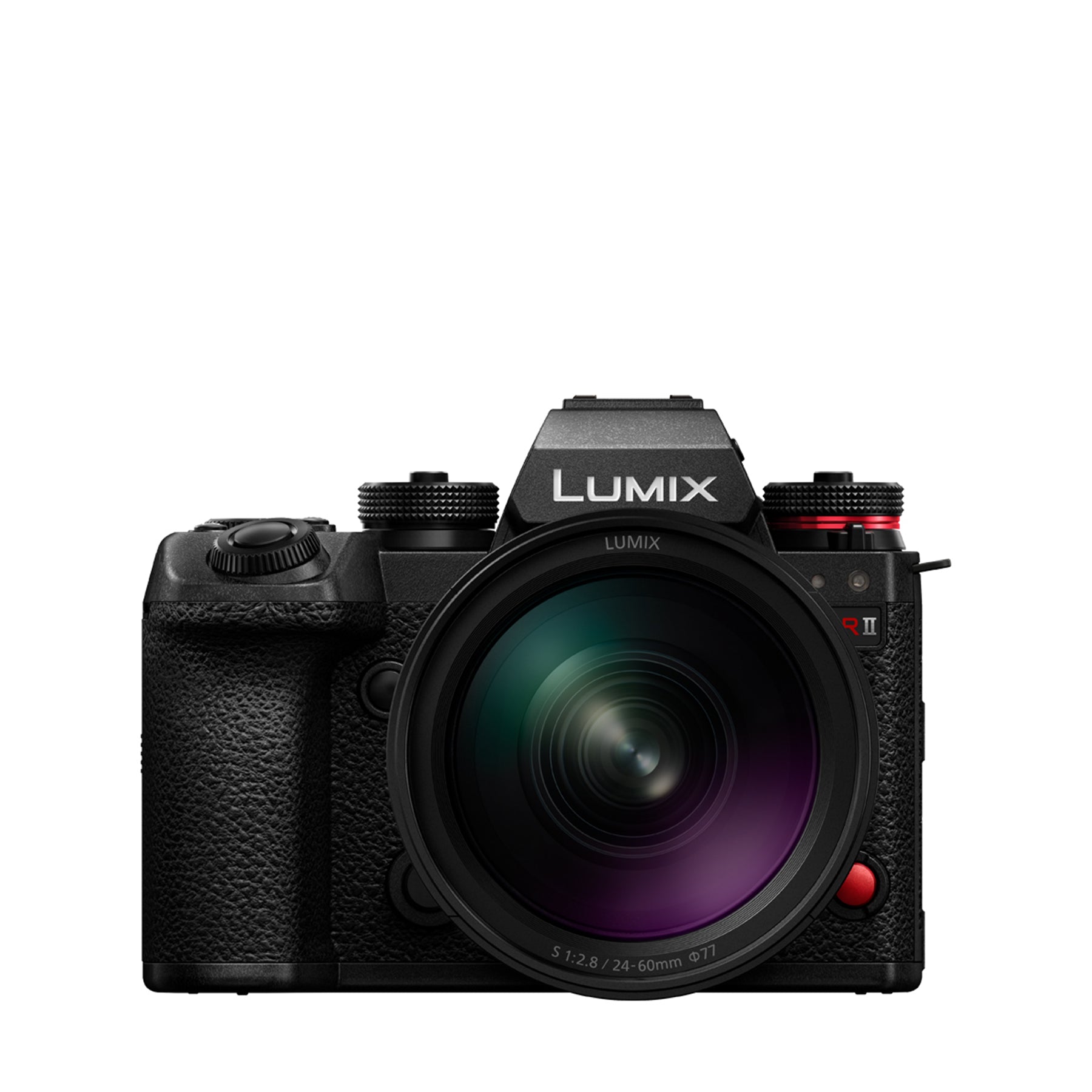
The Nikon Z6 II and Panasonic S1R II are two prominent full-frame mirrorless cameras that attract photographers looking for impressive image quality and advanced features. The Z6 II is known for its balanced performance and versatility, making it a favorite among hybrid shooters, while the S1R II boasts an ultra-high resolution sensor, appealing to landscape photographers and those needing exceptional detail. Choosing between these two models often comes down to specific needs such as resolution requirements, video capabilities, and handling preferences.
Specifications Comparison
Detailed Comparison
Image Quality
The Nikon Z6 II features a 25-megapixel full-frame sensor that strikes a balance between image quality and performance, offering excellent low-light capabilities with an ISO range of 100-51200 (expandable to 204800). This allows photographers to capture vivid images with minimal noise in various lighting conditions. In contrast, the Panasonic S1R II, with its 44.3-megapixel sensor, provides superior resolution, allowing for incredibly detailed images, which is particularly beneficial for large prints and cropping flexibility. The higher pixel count also caters to photographers who prioritize fine details, such as landscape and product photographers.
Both cameras are capable of producing remarkable images, but the Z6 II's sensor design focuses on dynamic range and high ISO performance, suitable for varied shooting scenarios. The S1R II delivers unmatched detail with its high megapixel count; however, it may require careful handling and steadiness due to potential issues with motion blur at lower shutter speeds. In practical terms, the Z6 II offers a well-rounded performance, while the S1R II excels in scenarios demanding the utmost detail.
Autofocus System
The Nikon Z6 II boasts a highly capable autofocus system with 273 focus points, providing comprehensive coverage across the frame. It uses a hybrid system combining phase-detection and contrast-detection methods, ensuring fast and accurate focusing, especially during video capture and in low light. Furthermore, the Z6 II offers reliable eye detection for both humans and animals, making it an appealing choice for portrait or wildlife photographers alike.
On the other hand, the Panasonic S1R II features a contrast-detection autofocus system that can be slower compared to phase detection in dynamic shooting contexts. Although S1R II offers a high-speed burst mode of 40 frames per second, which is impressive, the autofocus performance can struggle with subjects in rapid motion. While its focus system is generally reliable for stationary subjects, the Z6 II's system is better suited for fast action and varying conditions, illustrating the competitive edge Nikon holds in this department.
Video Capabilities
When it comes to video capabilities, the Nikon Z6 II offers solid 4K recording at 30fps, catering to those who need good video quality for social media or content creation. Its 10-bit output via HDMI and 4K capabilities make it versatile for videographers who also focus on high-quality stills.
In comparison, the Panasonic S1R II stands out with its ability to shoot 8K video at 30p, as well as 4K at an impressive 120fps. This makes the S1R II a powerhouse for anyone who prioritizes high-resolution video, giving filmmakers and content creators access to cutting-edge technology. Its higher video resolution and frame rates are significant advantages for projects requiring top-tier footage, solidifying its position as a more video-centric option.
Build & Ergonomics
The Nikon Z6 II is known for its compact design and ergonomic grip, making it comfortable to hold for extended shooting sessions. Its weather-sealed body provides durability against the elements, which is crucial for outdoor photographers. The electronic viewfinder and touchscreen display offer good usability, ensuring that users can navigate settings intuitively.
The Panasonic S1R II, while slightly bulkier and heavier at 1,015g, also features robust weather sealing, appealing to photographers needing a rugged camera. It incorporates a dual-handgrip which makes it more stable when using larger lenses. However, its heft can be a downside for those seeking portability. The button layout and screen functionality on the S1R II are well considered, providing a professional feel, although this camera may require a bit more of a learning curve for new users compared to the Z6 II.
Battery & Storage
The Nikon Z6 II sticks to a decent battery life, rated for approximately 410 shots per charge. It uses the Nikon EN-EL15c battery, which can be supplemented with an optional battery grip for extended sessions. The dual card slots (one CFexpress and one SD UHS-II) lend flexibility to professional photographers needing fast write speeds and reliability in storage.
On the other hand, the Panasonic S1R II also includes dual card slots and supports UHS-II SD cards, providing reliable storage options, particularly for the large files generated by its 44.3-megapixel resolution. The S1R II has a lower rated battery life compared to the Z6 II, which could be a consideration for long shoots without a chance to recharge. Thus, while both cameras have dual slot capabilities, the Z6 II offers slightly better longevity for photographers who need to shoot for extended periods.
Value for Money
The Nikon Z6 II is priced at approximately $1995, offering a comprehensive feature set that balances performance and quality. This makes it a highly competitive option for enthusiasts and semi-professional photographers alike-those looking for versatility in both photography and video without breaking the bank.
In contrast, the Panasonic S1R II, while carrying a higher price tag, typically exceeds $3000. Its premium pricing is justified through superior image detail, robust video capability, and strong build quality. However, this higher cost may deter casual photographers, making it more suitable for professionals focused on high-resolution needs who are willing to invest in their gear. Ultimately, the value offered by the Z6 II makes it a more accessible option for a broader audience.
Our Verdict
Overall, the Nikon Z6 II wins this comparison due to its balanced performance in both photography and video, user-friendly ergonomics, and excellent value for money. It caters well to those who need a capable hybrid camera without experiencing the higher price point of the S1R II. While the Panasonic S1R II excels in image resolution and video capabilities, it is better suited for professionals specializing in high-detail work. For most photographers, especially those seeking versatility and performance within a reasonable budget, the Z6 II is the more practical option.
Nikon Z6 II
Panasonic S1R II
Also Compare
Frequently Asked Questions
Which camera is better for low-light photography?
The Nikon Z6 II is generally better for low-light conditions due to its wider ISO range and excellent performance at high sensitivities, making it suitable for diverse lighting scenarios.
Is the S1R II worth its higher price?
Yes, if you require the highest possible resolution and robust video features, the S1R II could be worth the investment for professional applications. However, for everyday users, the Z6 II provides better value.
How does battery life compare between the two cameras?
The Nikon Z6 II offers a slightly longer battery life of around 410 shots per charge, compared to the S1R II, making it more suitable for extended shooting sessions.
What kind of photography is each camera best suited for?
The Nikon Z6 II is versatile for various genres, including portraits, events, and landscapes, while the Panasonic S1R II is ideal for high-resolution work, such as landscapes and studio photography.
Which camera has better autofocus performance?
The Nikon Z6 II's autofocus system is superior, providing faster and more reliable performance, especially in dynamic situations compared to the S1R II.