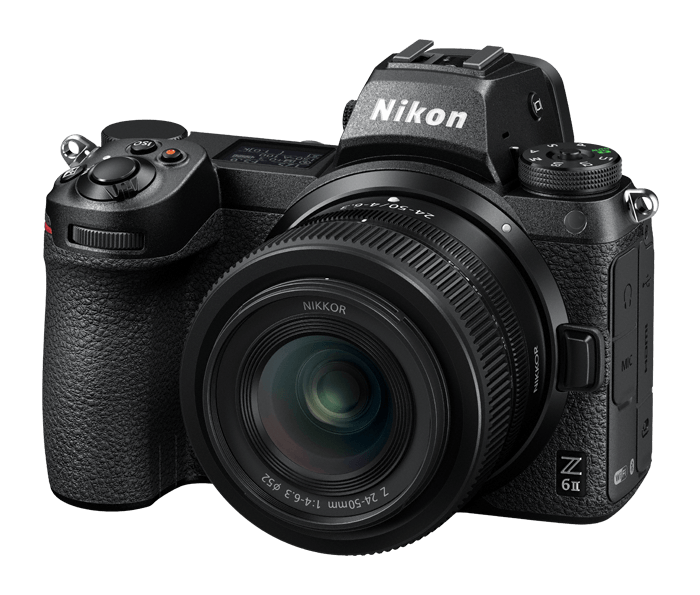
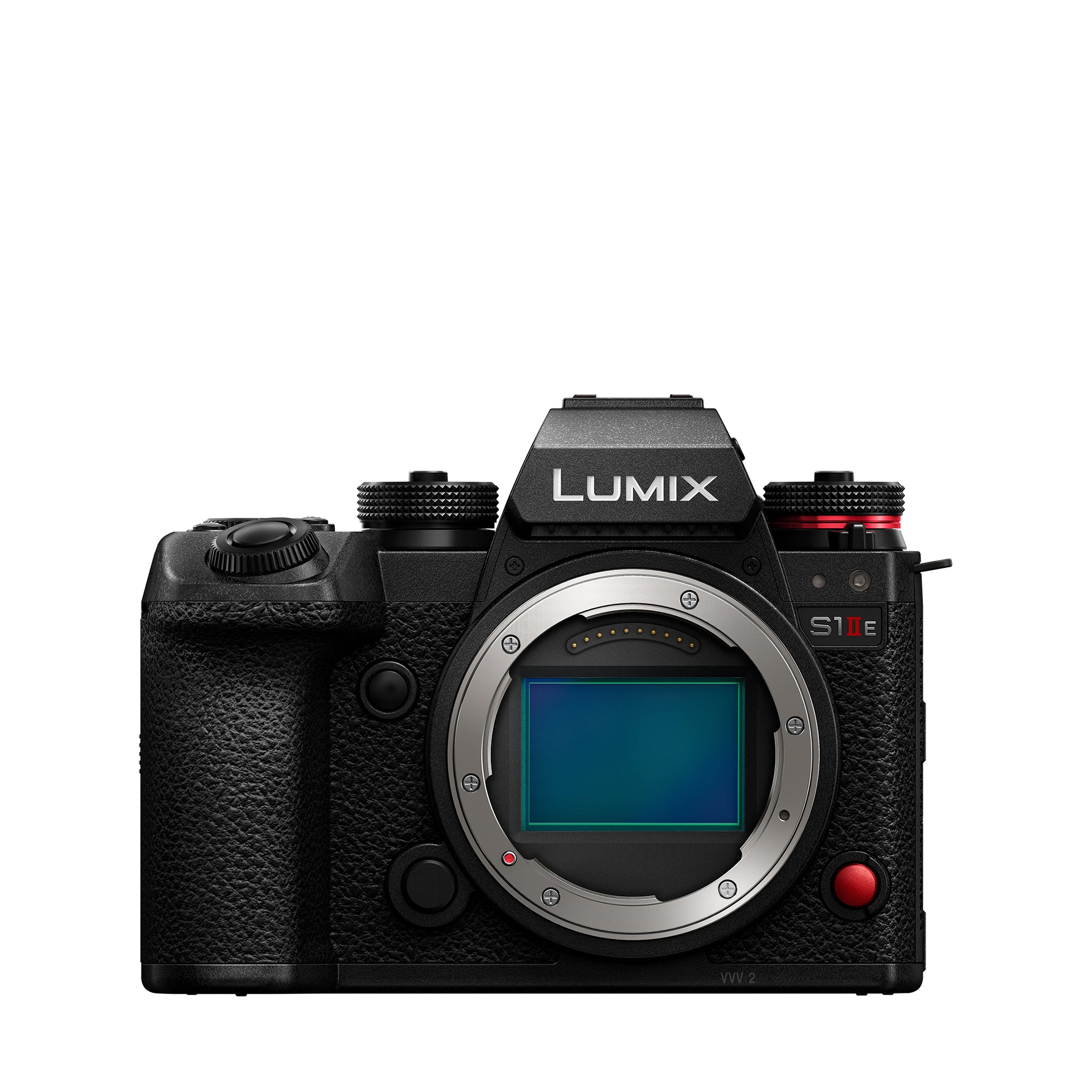
The Nikon Z6 II and Panasonic S1 II E are two formidable full-frame mirrorless cameras that have gained popularity among enthusiasts and professionals alike due to their robust features and image quality. Photographers and videographers often find themselves choosing between these two models, as they both offer excellent performance in various scenarios. The Z6 II is well-regarded for its high ISO capabilities and superb autofocus system, while the S1 II E stands out with its superior video recording and frame rates. Understanding the key differentiators between these two cameras can help buyers make an informed decision tailored to their specific needs.
Specifications Comparison
Detailed Comparison
Image Quality
The Nikon Z6 II features a 25-megapixel full-frame sensor, which, despite being marginally higher in megapixels than the S1 II E's 24.1 megapixels, still delivers stunning image quality and excellent dynamic range. The Z6 II performs exceptionally well at high ISO settings, with a native range of 100-51200 expandable to 50-204800, making it a better choice for low-light photography. On the other hand, the Panasonic S1 II E, with its slight megapixel disadvantage, compensates through impressive color accuracy and rich tonal gradation, especially in bright conditions.
Both cameras feature excellent image stabilization, but the Z6 II offers a 5-stop IBIS system, which can be beneficial for handheld shooting in challenging lighting. In practical terms, this means that users of the Z6 II may achieve sharper results when shooting without a tripod. Both cameras render images that are highly detailed and vibrant, allowing for great editing flexibility.
In conclusion, while both cameras perform remarkably well in image quality, the Nikon Z6 II takes a slight lead due to its superior high-ISO performance and effective image stabilization.
Autofocus System
The Nikon Z6 II is equipped with a hybrid autofocus system comprising 273 focus points, which are well-distributed across the frame. This ensures quick and precise focusing, even in challenging conditions. Moreover, the Z6 II supports eye-detection autofocus for both humans and animals, enhancing its performance for portrait and wildlife photography. Users have reported satisfactory results in both tracking and low-light AF scenarios, leading to a well-rounded autofocus experience.
Conversely, the Panasonic S1 II E does not specify the exact number of autofocus points but employs a sophisticated contrast-detection and phase-detection hybrid system. It is known for its reliable tracking capabilities, particularly for video and fast-moving subjects. However, some users have noted that while it offers good performance, it's not on par with the efficacy and speed of the Z6 II in low-light situations or while tracking moving subjects.
Overall, the Nikon Z6 II's faster autofocus system cements its advantage in this area compared to the S1 II E, making it a more favorable choice for those who prioritize focusing performance.
Video Capabilities
When it comes to video performance, the Panasonic S1 II E takes the lead with an impressive suite of recording options, including 5.9K at 60p, 5.1K at 60p, 4.8K at 60p, 4K at 120 fps, and even 1080p at 240 fps, which positions it as an excellent choice for videographers seeking high-resolution output and slow-motion capability. The S1 II E stands out for its advanced video features, which are catered towards filmmakers and content creators, making it an appealing option for those focused primarily on video.
On the other hand, the Nikon Z6 II supports 4K up to 30 fps, which is commendable, but lacks the higher frame rates offered by the S1 II E. While video quality is good, it may not meet the needs of professionals looking for the latest video technology and flexibility. The Z6 II does offer N-Log and HDR video output, but in terms of raw video specs, the S1 II E clearly has the upper hand.
In summary, the Panasonic S1 II E shines in video capabilities, offering extensive recording options that cater specifically to filmmakers, while the Z6 II is more of a versatile hybrid camera that excels in still photography and general video use.
Build & Ergonomics
Both the Nikon Z6 II and the Panasonic S1 II E are built with professional-grade materials, featuring weather sealing that makes them suitable for diverse shooting conditions. The Nikon Z6 II, at 705 grams, is slightly lighter and more compact with dimensions of 134 x 101 x 70 mm, which can be advantageous for photographers who prioritize portability.
The Panasonic S1 II E has a more robust design and feels heavier in hand, which many users appreciate for its solid and durable build. It typically offers a slightly larger grip, which can provide a more comfortable shooting experience for those using larger lenses. The S1 II E also includes a fully articulating touchscreen, which can prove invaluable for vlogging and creative shooting angles.
When considering ergonomics, the choice may largely depend on personal preference regarding comfort and handling. While the Nikon Z6 II is great for portability, the Panasonic S1 II E offers a sturdier feel and adjustable screen that enhances usability for video and selfies.
In conclusion, both cameras are excellently constructed; however, the choice boils down to whether the user values a lightweight design or a more robust build with practical features like an articulating screen.
Battery & Storage
The Nikon Z6 II has a notable battery life, offering approximately 410 shots, which is decent for a full-frame mirrorless camera. It utilizes the EN-EL15c battery, which can be charged via USB-C, adding convenience for on-the-go shooting. It also supports dual card slots (XQD/CFexpress and SD), giving users versatility in storage options.
In contrast, the Panasonic S1 II E also offers good battery performance and uses the larger and more powerful DMW-BLJ31 battery. While the specific shot count isn't detailed, users commonly report extended usage, especially under heavy video shooting conditions. It is equipped with dual card slots that support both SD UHS-II and CFexpress, catering to professional workflows. This robust dual card support is advantageous for high-speed data transfer during video shooting.
The slightly longer battery life of the S1 II E, alongside its professional storage options, gives it an advantage in scenarios where extensive shooting is required. Thus, photographers and filmmakers looking for longer-running capabilities without frequent battery changes may find the S1 II E a more suitable choice in this department.
In summary, while both cameras offer dual card slots and solid battery performance, the Panasonic S1 II E edges ahead slightly in terms of battery capabilities and storage flexibility.
Value for Money
The Nikon Z6 II is priced at $1995, a solid investment considering its performance in still photography, autofocus, and overall quality. Its blend of features caters well to photographers who value a versatile camera that excels in various situations. Additionally, the lens ecosystem available for Nikon Z mount lenses continues to grow, providing buyers with a wide range of options for any photographic style.
Conversely, the Panasonic S1 II E's price is not explicitly mentioned but generally falls into a similar range depending on lens bundles and promotions. Given its leading-edge video features, the S1 II E presents excellent value for videographers specifically who require high resolution and high frame rates. Ultimately, buyers must consider what they prioritize in their photography or videography. Commercial creatives may justify higher costs in the investment due to the robust video capabilities of the S1 II E, but for those focused primarily on still photography and needing reliable yet effective performance - the Z6 II may represent a more favorable value.
In conclusion, while both cameras are similarly positioned in terms of price, the choice hinges on whether one seeks superior video features or well-rounded photographic performance.
Our Verdict
The Panasonic S1 II E edges ahead in this comparison, particularly due to its superior video capabilities, longer battery life, and flexible storage options. It is an excellent choice for videographers and content creators seeking high-quality video performance. However, the Nikon Z6 II remains a strong contender, especially for photographers who prioritize still image quality and autofocus performance in low-light conditions. Overall, prospective buyers should consider their specific needs - if video is a primary concern, the S1 II E is the better choice, while the Z6 II excels for those focused on stills.