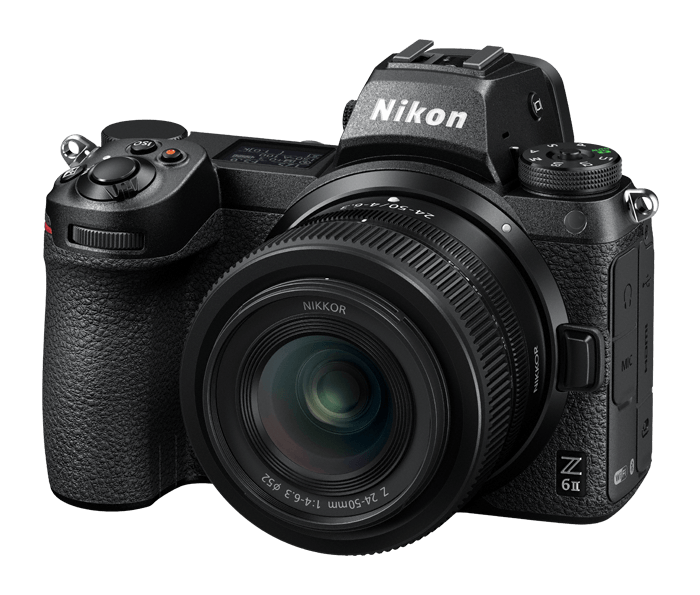
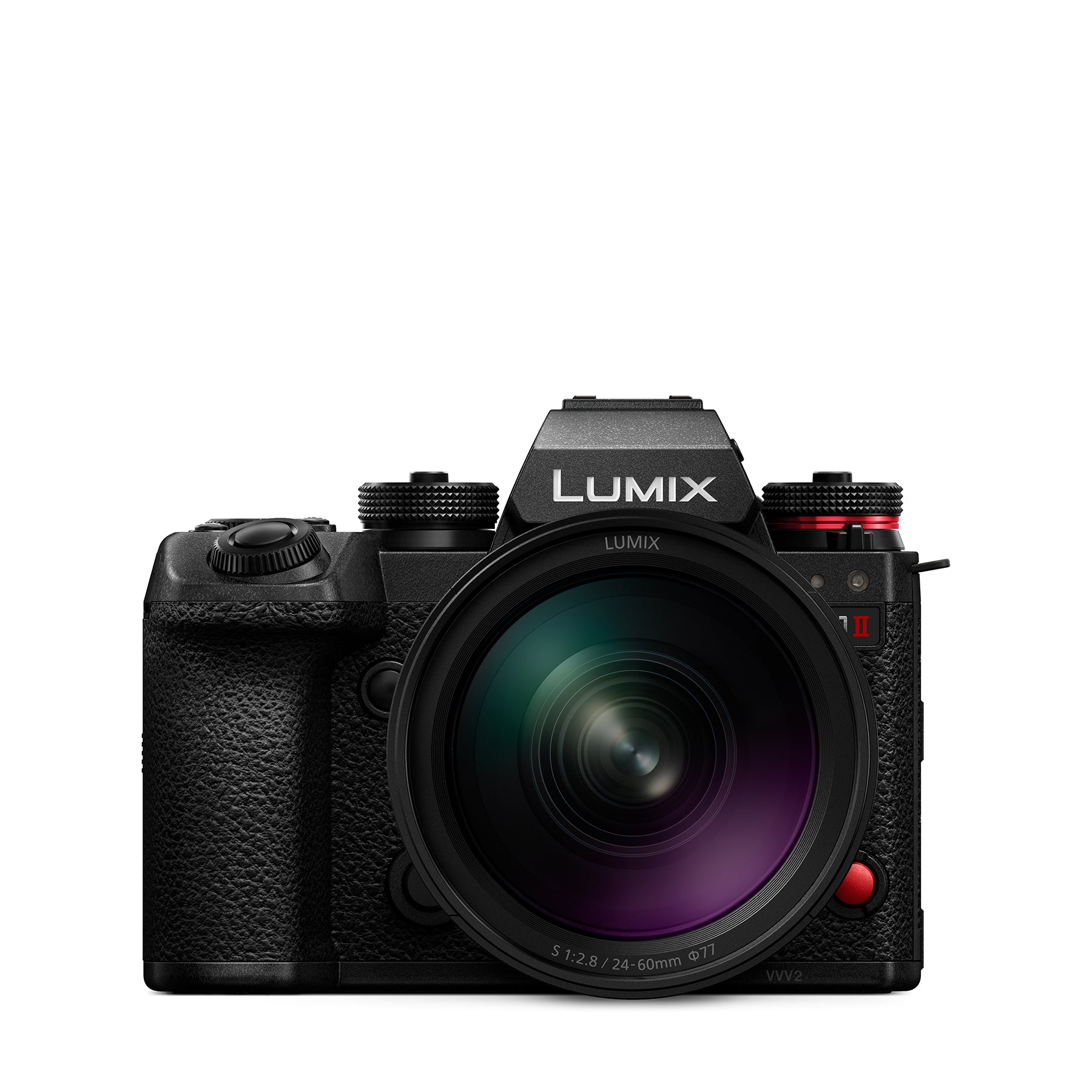
The Nikon Z6 II and Panasonic S1 II are two formidable contenders in the full-frame mirrorless camera market, appealing to both enthusiasts and professionals looking for high-quality imaging and video capabilities. As both cameras offer rich feature sets and robust performance, they are often compared by photographers and videographers seeking the best tool for their specific needs, whether in a studio or an outdoor environment. Key differences include sensor resolution, video capabilities, stabilization systems, and overall usability, which can lead to distinct preferences depending on the type of content being captured.
Specifications Comparison
Detailed Comparison
Image Quality
The Nikon Z6 II features a 25-megapixel full frame sensor, while the Panasonic S1 II sports a slightly lower resolution at 24.1 megapixels. In practical terms, this slight variance often goes unnoticed by average users. Both sensors perform well in low-light conditions, with the Z6 II offering an ISO range that extends from 100 to 51200, which can be expanded further to 204800. Conversely, the S1 II offers impressive image quality, retaining strong detail and dynamic range across its ISO spectrum, although specific values for its ISO limits are not detailed.
When it comes to color science, Nikon is generally known for producing more pleasing skin tones, which can be significant for portrait photography. Panasonic's colors can lean towards a cooler tone but offer flexibility in post-processing. Both cameras provide impressive performance for still photography, and users who prioritize print quality might find the slight edge of the Z6 II beneficial in certain scenarios.
Considering dynamic range, both cameras can capture impressive details in highlight and shadow areas, although anecdotal evidence suggests that the Z6 II edges slightly ahead. Nikon's image processing algorithms have historically excelled in preserving details in challenging lighting conditions. Overall, the image quality from both cameras is excellent, allowing for detailed and vibrant images regardless of the user's skill level.
Autofocus System
Autofocus performance is a critical consideration for both still and moving subjects, and this is one area where both the Nikon Z6 II and Panasonic S1 II shine, albeit with different systems in place. The Z6 II is equipped with 273 autofocus points, which provide considerable coverage across the frame, enabling quick and reliable subject locking. It is known for its face and eye detection capabilities, making it particularly useful for portrait and documentary photography.
On the other hand, the autofocus system in the Panasonic S1 II, while not specified in terms of point count, is renowned for its fast and accurate tracking abilities, particularly for moving subjects in video. Panasonic has historically performed well in video autofocus scenarios, even in challenging conditions. This advantage may appeal to videographers or action photographers who require dependable focusing during dynamic shoots.
While both systems are effective, the Z6 II's additional point coverage and proven performance in still photography give it a slight edge for those primarily focused on stills, while the S1 II might have more appeal for video-centric creators looking to capture fast-moving subjects.
Video Capabilities
In the realm of video, the Panasonic S1 II leads the pack with its ability to shoot in 5.1K at 60p, presenting filmmakers with high-resolution options for stunning footage. This functionality pairs well with its advanced video features, including V-Log support and 10-bit output for enhanced post-production flexibility. As a hybrid camera, the S1 II responds well to various filming conditions and excels in capturing cinematic content.
The Nikon Z6 II, while slightly behind in resolution with a maximum of 4K at 30p, still offers robust video recording capabilities, including in-body stabilization and Log profiles for color grading. Its 4K resolution is more than adequate for most casual consumers and professionals alike, yet it may lack some of the advanced video features found in its Panasonic counterpart.
Both cameras deliver excellent video quality with sharp imagery and good color rendition. However, for serious videographers or creators focused on high-resolution video output, the S1 II's feature set makes it the more compelling choice for dedicated video production.
Build & Ergonomics
Both cameras boast robust builds that are weather-sealed, providing durability for outdoor or challenging shooting conditions. The Nikon Z6 II has more compact dimensions at approximately 134 x 101 x 70 mm and a weight of 705g, making it a bit lighter and easier to handle for longer shoots, particularly ideal for travel photography.
On the other hand, the Panasonic S1 II's build quality is notably solid, offering a slight edge in ergonomics for users who prefer a heftier grip. While it may not be as portable as the Z6 II, its ergonomics can appeal to users who prioritize comfort over compactness during extended shooting sessions. Additionally, its extensive button layout provides excellent access to critical features, meeting the needs of professional users.
While the Z6 II may be more portable, the S1 II provides a comfortable user experience, especially for those using larger lenses or engaging in prolonged usage. Ultimately, personal preference regarding weight and grip size will dictate which camera feels better to each individual user.
Battery & Storage
When considering battery life, the Nikon Z6 II comes with a CIPA-rated battery life of 410 shots, which is competitive for mirrorless cameras, though certainly improved with additional external power solutions. Users can easily swap batteries for longer shoots, reducing the risk of downtime.
Conversely, the Panasonic S1 II generally offers a commendable battery performance as well, although specific ratings may vary depending on the operational settings. In practical use, it delivers solid performance ensuring users can shoot for extended periods without frequently changing batteries. The camera also benefits from dual card slots, allowing for more extensive storage options and flexibility when dealing with larger media files produced by its high-resolution video capabilities.
Both cameras utilize different card storage solutions; the Z6 II with its dual SD card slots, and the S1 II with XQD support which can be beneficial in terms of write speeds, especially for video recording. Considering all aspects, both cameras deliver reasonably comparable battery and storage options, though the added capacity of dual slots and storage speeds of the S1 II may lend it a slight operational advantage for intense video workflows.
Value for Money
The Nikon Z6 II, with a price tag of around $1995 at launch, delivers significant value for photographers focused on a well-rounded mirrorless system. The feature set, particularly its performance in stills and good video capabilities at this price point, is compelling for hybrid shooters who require quality results without venturing into higher-end pricing tiers.
Comparably, while the S1 II offers advanced features and performance, it usually commands a higher price due to its more recent technology and enhanced video capabilities. As such, potential buyers need to consider if the additional investment is justified based on their individual use cases.
Users who prioritize still photography might find more value in the Nikon Z6 II, while videographers needing robust video options may see a better return in their investment with the Panasonic S1 II. Therefore, the ultimate decision often comes down to what aspects of photography or videography each buyer prioritizes according to their needs and budget constraints.
Our Verdict
In the overall comparison, the Panasonic S1 II takes the lead, particularly for video-makers seeking advanced features and higher resolution options. Although both cameras offer excellent performance in photography, the Z6 II remains a stellar choice for stills-focused shooters due to its superior image quality claims and hybrid usability. Depending on the specific needs-if video performance and flexibility are paramount, the S1 II stands out; whereas for those needing solid stills with great overall usability and value, the Z6 II remains a compelling option.
Nikon Z6 II
Panasonic S1 II
Also Compare
Frequently Asked Questions
Which camera is better for video production?
The Panasonic S1 II is a better choice for video production due to its 5.1K resolution and advanced video features, while the Z6 II focuses more on still performance and 4K video capabilities.
Is the Nikon Z6 II better for low-light photography?
Yes, the Z6 II generally performs better in low-light conditions due to its higher ISO range, which can be expanded to handle even more challenging lighting.
Are both cameras weather-sealed?
Yes, both the Nikon Z6 II and the Panasonic S1 II are weather-sealed, making them suitable for outdoor and professional use under various environmental conditions.
What is the price difference between the two cameras?
The Nikon Z6 II is priced around $1995, while the Panasonic S1 II typically comes at a higher price point due to its more modern features and enhancements, necessitating a budget consideration before purchase.
Which has better autofocus for still photography?
The Nikon Z6 II features more autofocus points and is known for its effective face and eye detection, giving it an edge in still photography autofocus performance.