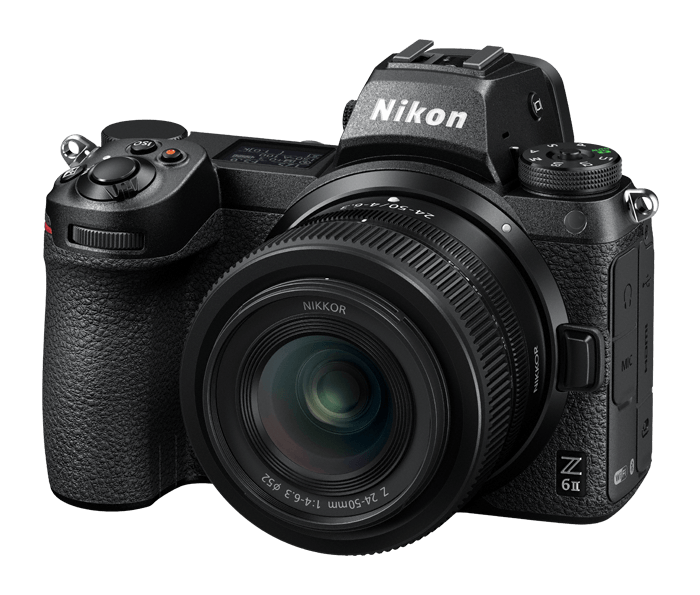
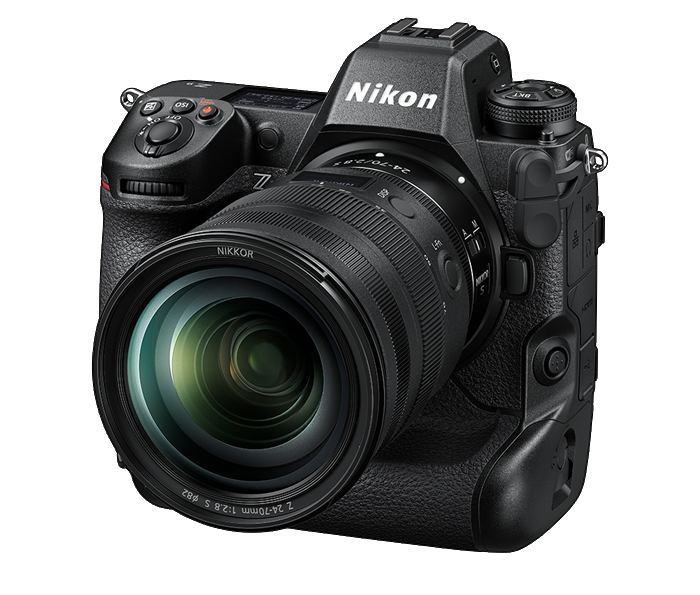
The Nikon Z6 II and Nikon Z9 are two high-end mirrorless cameras that cater to professional photographers and serious enthusiasts. While both cameras share the same Z mount and are capable of delivering exceptional image quality, they target slightly different user needs. The Z6 II, positioned as a versatile all-rounder, offers a compact body, making it a good choice for those who prioritize portability without sacrificing performance. On the other hand, the Z9 stands at the pinnacle of Nikon's mirrorless lineup, designed for professional use, with advanced features and a robust build to handle demanding shooting situations.
Specifications Comparison
Detailed Comparison
Image Quality
When it comes to image quality, the Nikon Z9 excels with its 46 megapixel sensor, delivering highly detailed images that can better accommodate cropping in post-processing. With a native ISO range that extends from 100 to 51200, and the ability to expand to 50-204800, the Z9 provides exceptional low-light performance and dynamic range. The Z6 II, on the other hand, has a lower resolution of 25 megapixels which limits its cropping flexibility. However, it still produces high-quality images with good detail and color fidelity. The full-frame sensors in both models ensure that images are rich and vibrant, but the Z9 offers a clear advantage in terms of resolution and detail retention in challenging lighting conditions.
Autofocus System
The autofocus systems in both cameras are top-notch, but the Z9 takes the lead with its 493 autofocus points compared to the Z6 II's 273. The Z9 features advanced subject detection algorithms that can track moving subjects with high precision, making it ideal for sports and wildlife photography. In contrast, while the Z6 II offers a solid autofocus performance suitable for most general photography scenarios, it may struggle to keep up with fast-moving subjects when compared to the Z9. Overall, for photographers who rely heavily on autofocus capabilities, the Z9 represents a significant advancement in tracking performance.
Video Capabilities
Video capabilities are another area where the Z9 distinguishes itself. It supports 4K video at 120p, allowing for high frame-rate recording and better slow-motion capabilities. The Z6 II limits video recording to 4K at 30p, which may be sufficient for casual videographers but falls short against the more professional needs. Furthermore, the Z9 offers 10-bit video output, which provides greater color depth for post-production work, and supports ProRes RAW recording. While the Z6 II's video features are adequate for many filmmakers, those seeking advanced functionality will likely lean towards the Z9.
Build & Ergonomics
In terms of build quality and ergonomics, both cameras are robust and weather-sealed; however, the Z9 is larger and heavier, weighing in at 1340g compared to the Z6 II's 705g. This added heft can be attributed to the Z9's more advanced components and larger battery. While the Z6 II's compact size makes it easier to carry and handle for extended periods, some photographers may prefer the Z9's solid feel and extra controls for professional shooting. Both cameras feature identical 3.2-inch touchscreens and electronic viewfinders, ensuring a consistent user experience. Ultimately, the choice between weight and durability versus portability will be a key deciding factor for users.
Battery & Storage
The Z9 boasts a superior battery life, rated for approximately 740 shots, which is significantly higher than the Z6 II's 410 shots. This extended battery life can be particularly beneficial during long shooting sessions or while covering events. Additionally, the Z9 supports dual CFexpress Type B cards, enabling faster write speeds and better performance with high-resolution images and 4K video. In contrast, the Z6 II uses dual SD/SDHC/SDXC cards, which, while still efficient, do not match the speed of the CFexpress cards. Photographers focused on high-volume or high-resolution workflows will appreciate the advantages presented by the Z9's storage capabilities.
Value for Money
The Nikon Z6 II, priced at $1995, represents a more accessible option for enthusiasts and pros who need a capable camera without breaking the bank. Its solid performance, including decent video capabilities and good image quality, makes it a great all-rounder for both photography and videography. Conversely, the Z9, at $5500, is targeted primarily at professionals who require the cutting-edge features and performance that justify the higher price point. While the Z9's value is evident for high-demand situations, the Z6 II's more affordable price can attract a broader audience. Therefore, consumers will need to assess their specific needs and budget constraints when evaluating value.
Our Verdict
Overall, while both the Nikon Z6 II and Z9 are impressive in their own right, the Z9 emerges as the clear winner in terms of advanced features and overall performance. It is particularly suited for professional photographers and filmmakers who require high resolution, fast autofocus, and superior video capabilities. On the other hand, the Z6 II remains an excellent choice for enthusiasts and those seeking a capable, versatile camera at a more affordable price. Ultimately, the decision should depend on individual requirements, whether one values cutting-edge technology or a balance of performance and cost.