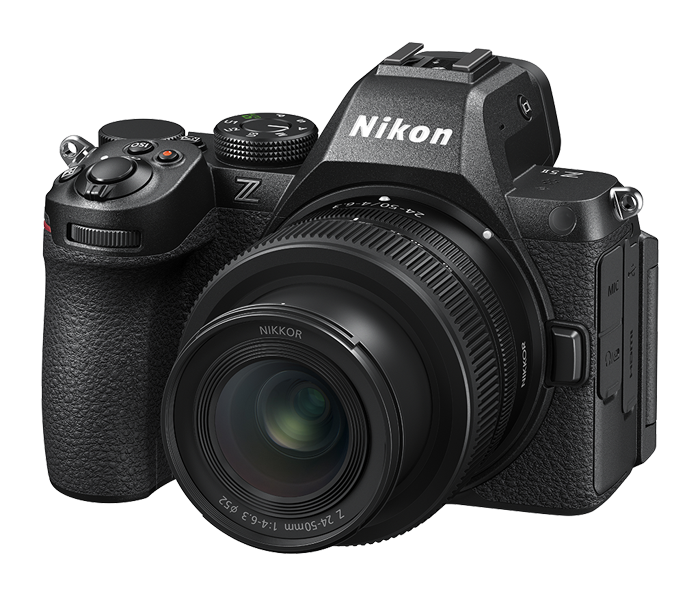

The Nikon Z5II and Sony A9 III are two high-performing full-frame mirrorless cameras that often come up in discussions among both professional and amateur photographers. Particularly, these cameras cater to enthusiasts looking for advanced features in autofocus, video capabilities, and overall imaging performance. Differentiators like frame rates, sensor specifications, and handling can be pivotal in the decision-making process for buyers who may focus on sports, wildlife, or videography.
Specifications Comparison
Detailed Comparison
Image Quality
Both the Nikon Z5II and Sony A9 III feature full-frame sensors, with the Z5II employing a 24 MP sensor and the A9 III offering a slightly higher resolution of 25 MP. In various lighting conditions, both cameras deliver excellent dynamic range and color accuracy. The larger sensor size of the A9 III (36 x 24 mm) can help in achieving marginally better low-light performance and detail reproduction compared to the Z5II's sensor dimensions (35.9 x 23.9 mm). However, on a practical level, the difference in megapixels may not be significantly perceivable for casual users. Overall, both cameras create stunning images, but the A9 III holds a slight edge in image resolution and sensor efficiency due to its newer technology.
Autofocus System
The autofocus systems of both cameras are advanced, but the Sony A9 III clearly stands out with its capability of achieving 120 frames per second (fps) burst shooting along with its 693 phase detection points, allowing for incredibly fast and accurate focusing. The Nikon Z5II features 299 autofocus points and a solid performance in tracking, particularly in less demanding situations. The A9 III is better suited for fast-paced photography like sports or wildlife due to its unmatched AF speed; therefore it boasts significantly improved focus tracking, especially in dynamic scenes.
Video Capabilities
When it comes to video features, the Sony A9 III is hard to beat with its ability to record 4K video at 120 fps, providing filmmakers with high-frame-rate shooting for slow-motion capabilities. In contrast, the Nikon Z5II is also impressive with 4K video but is limited to 60 fps. Both cameras support a range of video recording formats and have electronic stabilization, but the A9 III includes an 8-stop stabilization as compared to the 7.5-stop stabilization found in the Z5II. This makes the A9 III more versatile for videographers looking to achieve smooth, high-quality footage.
Build & Ergonomics
Both models boast robust build quality and weather sealing, making them suitable for professional use in various conditions. The Nikon Z5II is slightly heavier at 700 g compared to the A9 III's 617 g, which may contribute to fatigue during extended shooting sessions. Both cameras feature similar dimensions in terms of screen size-3.2 inches. The Z5II, however, offers a higher resolution of 2,100,000 dots for its display, which can enhance focus accuracy and overall user experience. The A9 III, while a bit bulkier, retains its reputation for an ergonomic grip that feels comfortable in hand, especially important during long shoots.
Battery & Storage
Battery life is an essential factor for any photographer. The Nikon Z5II has a CIPA-rated battery life of approximately 330 shots, which is adequate for a day of shooting but may leave some users wanting more during extensive sessions. The A9 III, on the other hand, benefits from advancements in battery technology that provide better longevity. Moreover, the storage options for both include dual slots, but the Z5II's implementation can be more advantageous in terms of file management and redundancy. However, considering extensive shooting performances in the field, the A9 III pulls ahead with better battery endurance.
Value for Money
The Nikon Z5II is priced at $1699, which is competitive given its feature set and performance. It appeals to those looking for a full-frame camera without breaking the bank, especially given its quality build and nice ergonomics. While the Sony A9 III is a powerhouse at a higher price point, its cost can be justified for professional users who require superior autofocus, faster burst rates, and greater video capabilities. Overall, the Z5II represents a better value for enthusiasts or those not needing the extreme performance of a camera like the A9 III. When considering budget constraints, the Z5II emerges as a stronger choice for value.
Our Verdict
In a head-to-head comparison, the Sony A9 III consistently outperforms the Nikon Z5II in critical aspects like autofocus speed, video capabilities, and overall performance for high-action scenarios. While the Z5II provides excellent image quality and better value for average users, the A9 III is tailored for professionals who need cutting-edge specifications and reliability. Therefore, for photographers focused on sports, wildlife, or high-speed shooting, the A9 III is the clear winner, while those seeking a cost-effective solution with top-notch imaging may find the Z5II to be an appealing option.
Nikon Z5II
Sony A9 III
Also Compare
Frequently Asked Questions
Which camera is better for action photography?
The Sony A9 III is superior for action photography due to its faster autofocus, higher burst rate of 120 fps, and advanced tracking capabilities.
Is the Nikon Z5II good for videography?
Yes, the Nikon Z5II is capable of recording 4K video at 60 fps, making it suitable for videographers, although it lacks the higher frame rates offered by the A9 III.
How do these cameras perform in low light?
Both cameras perform well in low light situations, but the Sony A9 III may exhibit slightly better performance due to its latest sensor technology and optimizations, despite the marginal difference in megapixels.
Can the Nikon Z5II be considered a professional camera?
Absolutely, the Nikon Z5II is a professional-grade camera that provides high-quality images and solid performance, making it suitable for serious photographers.
Which camera has better battery life?
The Sony A9 III generally offers better battery life compared to the Nikon Z5II, which may be a crucial factor for long shooting sessions.