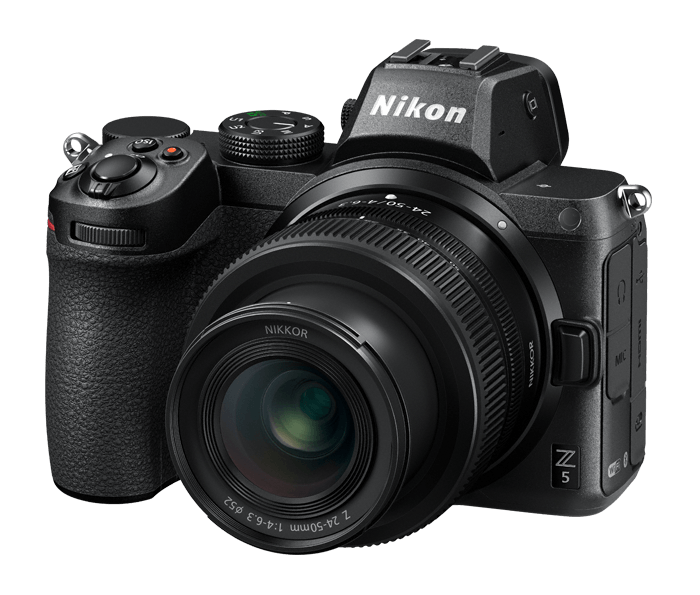

The Nikon Z5 and Sony A9 II are two full-frame mirrorless cameras that are frequently compared by photography enthusiasts and professionals alike. Both models offer a solid blend of quality, performance, and advanced features, which makes them appealing for different user bases. The Nikon Z5 is often targeted towards photographers looking for high-quality images at a more accessible price point, while the Sony A9 II is aimed squarely at professional and sports photographers who require high-speed performance and advanced autofocus capabilities. Understanding their differences will help prospective buyers choose the right camera for their specific needs.
Specifications Comparison
Detailed Comparison
Image Quality
Both the Nikon Z5 and Sony A9 II boast 24-megapixel full-frame sensors, delivering excellent image quality in various lighting conditions. The Z5 has an ISO range that includes the ability to expand down to 50 and up to 102400, making it versatile for low-light scenarios. In contrast, the A9 II has a slightly broader expansion up to 204800, which may provide better performance in extreme low-light conditions. While both sensors produce sharp images with good dynamic range, the A9 II benefits from Sony's advanced processing technology, likely resulting in slightly better color accuracy and noise control, particularly at high ISO levels.
Additionally, the Z5 features a 5-stop image stabilization system, while the A9 II offers 5.5 stops, giving it a slight edge in handheld shooting, especially for longer exposures. Overall, both cameras perform admirably, but subtle differences in processing could make the A9 II preferred for professional applications where image quality under varying conditions is critical.
Autofocus System
When it comes to autofocus, the Sony A9 II stands out significantly with its 693 phase detection points compared to the Nikon Z5's 273 points. This vast difference allows the A9 II to track subjects more accurately and quickly, making it particularly suited for fast-paced photography such as sports and wildlife. Sony's Real-Time Eye autofocus technology is also advantageous, providing quick focusing on eyes of subjects, making it ideal for portrait and action photography.
In contrast, although the Z5's autofocus system is competent for everyday photography and casual shooting, it may struggle with fast-moving subjects in comparison to the A9 II. The autofocus performance improves significantly for still subjects or controlled environments, but for those needing top-notch speed and tracking efficiency, the A9 II is the clear winner here.
Video Capabilities
Both cameras offer 4K video resolution at 30 frames per second (fps), which meets the needs of most videographers. However, the A9 II has an advantage in terms of more advanced video features, including better heat management and higher bitrate recording, which are essential for extended shooting sessions. The Z5, while capable, is more of an entry-level video solution with fewer professional video features, which may limit its appeal to those in the cinematic market.
Moreover, the A9 II's autofocus for video is also superior due to its advanced tracking capabilities. This means that even during video recording, focusing on moving subjects remains accurate and reliable. Therefore, while both options are suitable for 4K video, the A9 II is tailored more for professional videography, giving it the edge in this category.
Build & Ergonomics
In terms of build quality, both the Nikon Z5 and Sony A9 II are weather-sealed, providing durability and resilience in challenging environments. The Z5 weighs 675 grams, slightly lighter than the A9 II's 678 grams. The dimensions of the Z5 (134 x 101 x 70 mm) give it a slightly bulkier feel, while the A9 II (129 x 96 x 76 mm) is more compact.
Both cameras feature electronic viewfinders, but the A9 II has a higher resolution viewfinder (3.69 million dots vs. 1.04 million dots in the Z5), providing a more detailed preview during shooting. The screens have notable differences too; the A9 II has a higher resolution screen, which can enhance user experience while composing images. Overall, both cameras offer solid ergonomics, but the enhancements in the A9 II's display and viewfinder give it the edge in this aspect.
Battery & Storage
The Nikon Z5 is rated for approximately 470 shots per charge, whereas the Sony A9 II boasts a slightly better battery life of around 690 shots. This can make a significant difference during lengthy shooting sessions. Both cameras utilize similar battery technologies but will perform differently in real-world usage scenarios, especially under heavy load such as continuous shooting.
Regarding storage, both cameras accept dual card slots; however, the A9 II supports CFexpress Type A cards in addition to SD cards, allowing for faster write speeds-beneficial for high-speed continuous shooting and 4K video recording. The Z5, while capable with SD cards, does not offer the same level of speed efficiency, further showcasing the A9 II as the better option for professionals needing robust performance.
Value for Money
The Nikon Z5 is priced around $1399, making it a more approachable option for amateur photographers or those seeking a capable full-frame camera without breaking the bank. It delivers impressive image quality and usability, particularly for still photography. On the other hand, the Sony A9 II, priced at approximately $4500, is a significant investment aimed at professionals who demand the highest performance, especially for high-speed and action photography.
While both cameras have their strengths, the Z5 offers excellent value for its price, especially considering its robust features for still photography and video. In contrast, for those who require superior autofocus, build quality, and advanced video features, the A9 II justifies its high price tag through professional-grade capabilities. For cost-conscious buyers, the Nikon Z5 is undoubtedly appealing.
Lens Ecosystem
Both Nikon and Sony offer a robust lineup of lenses for their respective systems, but availability and variety can be uneven. The Nikon Z system is still relatively new, but it has an expanding lineup of native lenses that cater to a range of photographic genres, from wide-angle to telephoto.
Conversely, the Sony E-mount has a more established ecosystem with a broader selection of lenses, including many third-party options from brands like Sigma and Tamron. This makes it easier for photographers to find specific glass that suits their needs, particularly for professional applications. The A9 II thus benefits from a more mature lens ecosystem that can enhance its performance further.
Our Verdict
Overall, the Sony A9 II emerges as the winner in this comparison, primarily due to its superior autofocus capabilities, build quality, and battery life. Its advanced features are tailored to meet the demands of professional photographers, particularly in high-speed situations. The Nikon Z5, while it excels in terms of value for money and provides excellent still photography results, is better suited for enthusiasts or semi-professional users who may not require the top-tier features of the A9 II. The choice ultimately depends on the user's specific needs; the Z5 is ideal for those seeking quality without the hefty investment, while the A9 II is the go-to option for professionals who prioritize speed and versatility.
Nikon Z5
Sony A9 II
Also Compare
Frequently Asked Questions
Which camera is better for sports photography?
The Sony A9 II is better suited for sports photography due to its superior autofocus system and high continuous shooting speed of 20 fps.
Is the Nikon Z5 good for beginners?
Yes, the Nikon Z5 is a fantastic option for beginners looking for a full-frame camera that offers excellent image quality at a more affordable price.
How does low-light performance compare?
The Sony A9 II has superior low-light capabilities, especially at high ISO settings, making it better for nighttime or low-light conditions.
Which camera has better battery life?
The Sony A9 II offers better battery life, rated for about 690 shots, compared to the Nikon Z5's 470 shots.
What about lens availability for each camera?
The Sony E-mount has a more extensive range of lenses available, including many third-party options, while the Nikon Z system is still growing but still offers essential lenses for various disciplines.