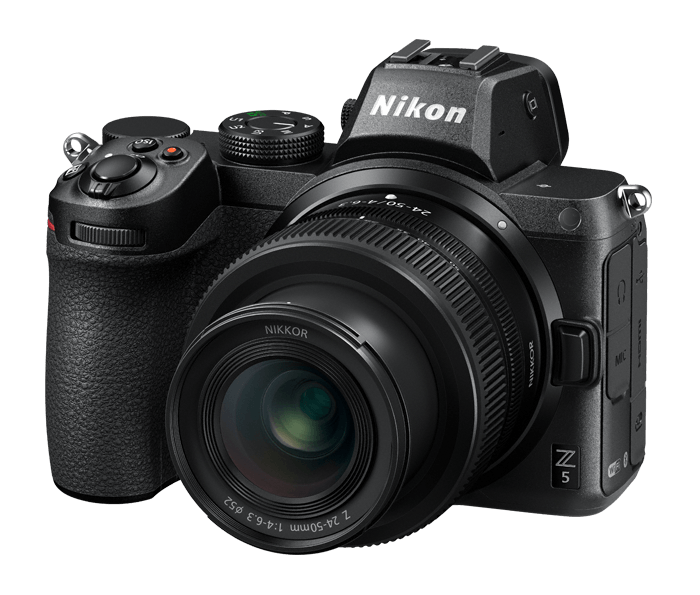
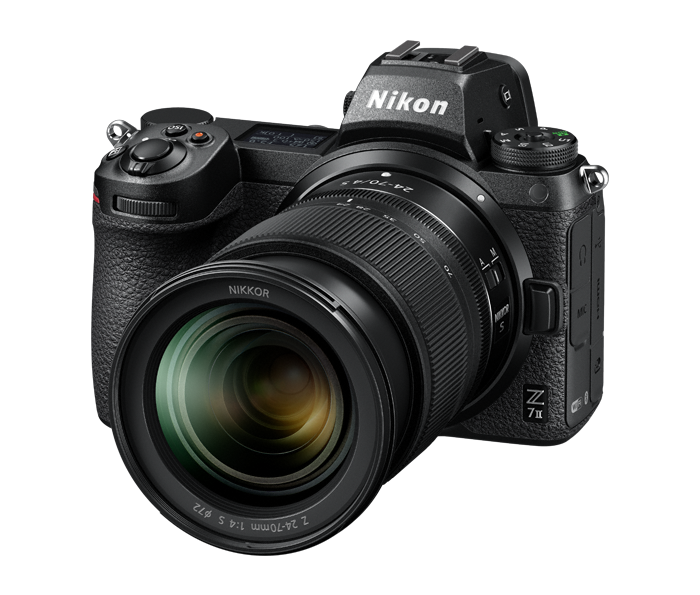
The Nikon Z5 and Z7 II are two prominent full-frame mirrorless cameras from Nikon that often draw comparison due to their similar appearances and features tailored towards both enthusiasts and professionals. Photographers looking to invest in either of these cameras frequently weigh the decision between the more budget-friendly Z5 and the high-resolution Z7 II, which offers advanced specifications for more demanding applications. The primary differentiators between these models include sensor resolution, autofocus capabilities, video performance, and price point, making them suitable for different user needs.
Specifications Comparison
Detailed Comparison
Image Quality
The Nikon Z5 features a 24-megapixel full-frame sensor, while the Z7 II packs a whopping 46 megapixels, offering higher resolution for those who require extensive detail. This difference becomes noticeable when printing large images or cropping into photos. The Z7 II's higher resolution enables fine detail capture, which is ideal for landscape or commercial photographers looking for maximum quality. In contrast, the Z5 produces excellent image quality as well, thanks to its sizable sensor and lower pixel count, which may aid in reducing noise at higher ISO settings.
In low-light scenarios, the Z5 may have an edge due to its larger pixel size, resulting in better noise control and dynamic range. However, both cameras exhibit impressive image quality overall. RAW files from both models can be manipulated significantly in post-processing, and both perform well in various lighting conditions. Overall, while both systems have their strengths, the Z7 II excels in resolution, making it the better choice for detail-oriented tasks.
Winner: b
Autofocus System
When it comes to autofocus, the Z7 II offers a more advanced experience with 493 autofocus points compared to the Z5's 273 points. This larger number provides greater precision and coverage across the frame, giving users added confidence in fast-moving subjects such as wildlife or sports photography. The Z7 II's advanced technology allows for better subject tracking, making it an ideal choice for dynamic shooting scenarios.
On the other hand, the Z5, while having fewer autofocus points, still performs admirably for most purposes and may suffice for casual photography or specific applications where high-speed tracking is not crucial. Both models incorporate face and eye detection, enhancing portrait photography capabilities. However, for users who prioritize autofocus performance-especially for action or wildlife-the Z7 II stands out as the more robust option.
Winner: b
Video Capabilities
The video performance varies significantly between the two cameras. The Nikon Z5 supports 4K video at 30 frames per second (fps), while the Z7 II boasts an impressive 4K video capability at 60 fps. This higher frame rate on the Z7 II allows for smoother motion and more professional-grade video shooting, appealing to videographers looking to create engaging content. Additionally, the Z7 II supports more advanced video features, which can be important for filmmakers.
However, the Z5 remains an excellent choice for those who primarily shoot stills but wish to incorporate a bit of 4K video into their repertoire. The video quality on both cameras is commendable, though the Z7 II's extended capabilities firmly place it ahead for serious videographers.
Winner: b
Build & Ergonomics
Both the Nikon Z5 and Z7 II feature a similar aesthetic and design, showcasing sturdy construction that is weather-sealed for durability under varying conditions. The dimensions are identical, measuring 134 x 101 x 70 mm, and the weight of the Z5 at 675g versus the Z7 II at 705g is minimal, providing a comparable level of portability.
Each camera includes an electronic viewfinder and a 3.2-inch LCD, but the Z7 II offers a higher resolution screen at 2,100,000 dots compared to the Z5's 1,040,000 dots, resulting in sharper image previews. In terms of handling, both cameras are comfortable, although the added resolution on the Z7 II might enhance user experience slightly. However, ergonomics and handling are largely subjective-individual preferences may ultimately dictate which feels better in hand.
Winner: tie
Battery & Storage
When considering battery performance, the Z5 edges out the Z7 II, offering a respectable battery life of approximately 470 shots versus the Z7 II's 420 shots per charge. For users who shoot extensively, this can make a notable difference, especially during long sessions without the ability to recharge.
Both cameras use similar storage solutions (dual SD card slots in the Z7 II versus a single card in the Z5), but the Z7 II's dual slots allow for greater flexibility, such as backup recording or segregating RAW and JPEG files. For those shooting large files, especially with the Z7 II's higher resolution, the capacity to manage storage more efficiently can be an important factor.
Winner: a
Value for Money
In terms of pricing, the Nikon Z5 is significantly more affordable at $1,399 compared to the $2,999 for the Z7 II. This price differential positions the Z5 as an appealing option for aspiring photographers or those conscious of budget constraints, while still delivering excellent performance and image quality for a full-frame camera.
The Z7 II, with its advanced features and higher resolution, caters more to professionals who require top-tier performance for demanding applications. Those who need the extra functionality and are willing to invest more will find value in the higher price point of the Z7 II. Ultimately, the decision here hinges on the user's intended use and whether the additional features justify the price difference.
Winner: a
Our Verdict
Overall, the Nikon Z5 emerges as the more balanced option for photographers seeking quality at a reasonable price, especially for casual shooting, travel, and daily use. Its solid performance in image quality, coupled with excellent battery life and cost-effectiveness, makes it a compelling choice for enthusiasts. Conversely, the Z7 II, while pricier, is geared towards professionals needing superior resolution, enhanced autofocus, and more advanced video capabilities. Each camera excels in its respective scenarios, catering to different user preferences and requirements.
Nikon Z5
Nikon Z7 II
Also Compare
Frequently Asked Questions
Which is better for professional photography?
For professional photography, the Nikon Z7 II is the better choice, thanks to its higher resolution and advanced autofocus features, which are essential for detail-oriented work.
Is the Nikon Z5 good for beginners?
Yes, the Nikon Z5 offers user-friendly features and excellent image quality at an affordable price, making it a great choice for beginners.
How does each camera perform in low light?
Both perform well in low light, but the Z5 may have an advantage due to its larger pixels, resulting in better noise control in high ISO settings.
Can I shoot 4K videos with both cameras?
Yes, both cameras can shoot 4K video, but the Z7 II offers higher frame rates, making it more suitable for videography.
What is the difference in weight between the two?
The Nikon Z5 is slightly lighter at 675g compared to the 705g of the Z7 II, but the difference is minimal and may not significantly affect overall handling.