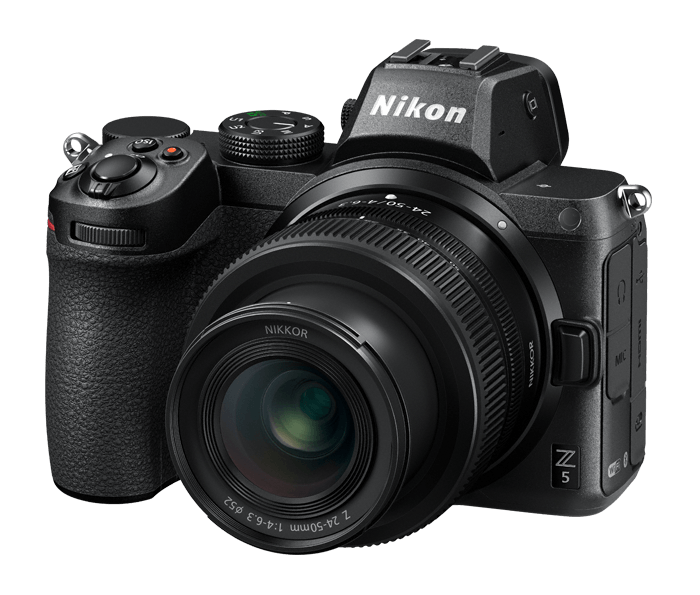

The Nikon Z5 and Sony A7S III are two compelling full-frame mirrorless cameras that have generated significant interest among photographers and videographers alike. These cameras cater to different user needs and are commonly compared due to their positions in the same price range within the full-frame ecosystem. Buyers may find themselves choosing between the Z5's well-rounded features that appeal to general photography and the A7S III's specialized capabilities focused on video performance and low-light conditions. The choice ultimately comes down to the specific needs of the user, whether they prioritize image quality in various settings or advanced video features.
Specifications Comparison
Detailed Comparison
Image Quality
The Nikon Z5 features a 24-megapixel full-frame sensor, providing a higher resolution image that yields more detailed photographs. This pixel count is beneficial for landscape and portrait photographers who require extensive detail in their prints. On the other hand, the Sony A7S III, while having a lower resolution at 12 megapixels, excels in dynamic range and low-light performance, making it an ideal choice for event photography and videography in dimly lit environments.
In terms of ISO range, the Z5 operates between 100-51200 (expanding to 50-102400), while the A7S III starts at 80 and expands to an impressive 40-409600. This flexibility in ISO gives the A7S III an edge in darker settings. However, for applications where resolution matters-such as product photography or large prints-the Z5 stands out.
Autofocus System
The autofocus systems on both cameras are robust, but they cater to slightly different use scenarios. The Sony A7S III offers 759 autofocus points compared to the Nikon Z5's 273, providing a more comprehensive coverage and faster focusing capabilities, especially useful in fast-paced shooting scenarios like sports or wildlife photography. Additionally, Sony's Eye-AF technology is renowned for its effectiveness in tracking subjects, making it a reliable choice for portrait photographers.
However, the Z5 has its strengths with face and eye-detection features that work well, particularly for general photography. While both systems are dependable, for those who focus heavily on subject tracking and quick autofocus, the A7S III holds a significant advantage.
Video Capabilities
Video performance is a critical differentiator between these two models. The Sony A7S III shines with its ability to shoot 4K video at up to 120 frames per second, allowing for stunning slow-motion footage and greater flexibility in post-production. It also excels in managing high dynamic range and is specifically designed for video professionals, featuring advanced video codecs and customizations.
In contrast, the Nikon Z5 offers 4K video at 30 frames per second, which is competent for general videography but does not provide the same level of advanced filming capabilities as seen in the A7S III. For filmmakers, the A7S III is the clear winner while the Z5 serves well for casual video recording.
Build & Ergonomics
Both cameras are built with durability and comfort in mind, sporting weather sealing which ensures resilience against challenging environmental conditions. The Z5 measures 134 x 101 x 70 mm and is slightly heavier at 675 grams, while the A7S III has a more compact profile at 129 x 97 x 81 mm and a weight of 699 grams. Though the Z5 is physically larger, its ergonomics are noted for being user-friendly with a comfortable grip that suits prolonged use.
Conversely, the A7S III slightly edges out in terms of intuitive interface and button layout, favored by videographers who make frequent adjustments while shooting. Users may appreciate the customization options of both, but for traditional photography, the Z5's grip and feel may appeal more to photographers who prefer a more substantial body.
Battery & Storage
The battery life is a vital consideration for any user, particularly for those planning longer shooting sessions. The Nikon Z5 boasts a solid battery life rated for approximately 470 shots, while the Sony A7S III performs slightly better at around 600 shots per charge. This additional battery life can be crucial for event photographers who cannot afford to change batteries frequently.
Both cameras utilize similar SD card types; however, the A7S III is compatible with CFexpress Type A cards, offering faster write speeds that are particularly beneficial during high-bitrate video recording. For photography only, the Z5's performance is adequate, but the A7S III's added storage flexibility and better battery endurance provide a considerable advantage.
Value for Money
The Nikon Z5 is priced at $1399, making it significantly more accessible compared to the Sony A7S III, which retails at $3499. For users who may just be starting out or those who require a versatile camera that can handle both photo and casual video, the Z5 offers excellent value with its high resolution and features suitable for travelers and general photography.
On the other hand, the A7S III, while considerably more expensive, targets serious video creators and professionals who require the best performance in terms of low-light video and frame rates. Therefore, while the Z5 presents a better value for most hobbyists, the A7S III justifies its price point for professionals dedicated to high-quality film production.
Our Verdict
While the Nikon Z5 excels in image quality and offers excellent value for photographers focused on general use, the Sony A7S III provides unmatched video capabilities and superior autofocus performance, making it the preferred choice for serious videographers. The decision ultimately hinges on the user's needs: those who prioritize high-resolution stills and a lower price point may favor the Z5, while filmmakers requiring advanced features will find the A7S III to be worth the investment.
Nikon Z5
Sony A7S III
Also Compare
Frequently Asked Questions
Which camera is better for low-light photography?
The Sony A7S III is superior for low-light photography due to its larger pixel size and expansive ISO range, allowing for cleaner images in darker environments.
Can both cameras shoot in 4K?
Yes, both the Nikon Z5 and Sony A7S III can shoot 4K video, but the A7S III offers 4K recording at up to 120 fps, making it more suitable for advanced video needs.
Is the Nikon Z5 good for beginners?
Yes, the Nikon Z5's user-friendly interface and solid performance make it a great choice for beginners looking to explore full-frame photography without a hefty investment.
How do the batteries compare in both models?
The Sony A7S III has a higher battery life rated for around 600 shots, compared to the Nikon Z5's 470 shots, making it a better choice for extended shooting sessions.
What about lens compatibility?
The Nikon Z5 uses the Z-mount system, while the A7S III utilizes the Sony E-mount. Both brands have a solid lineup of lenses, but considerations for specific lenses may sway your decision.