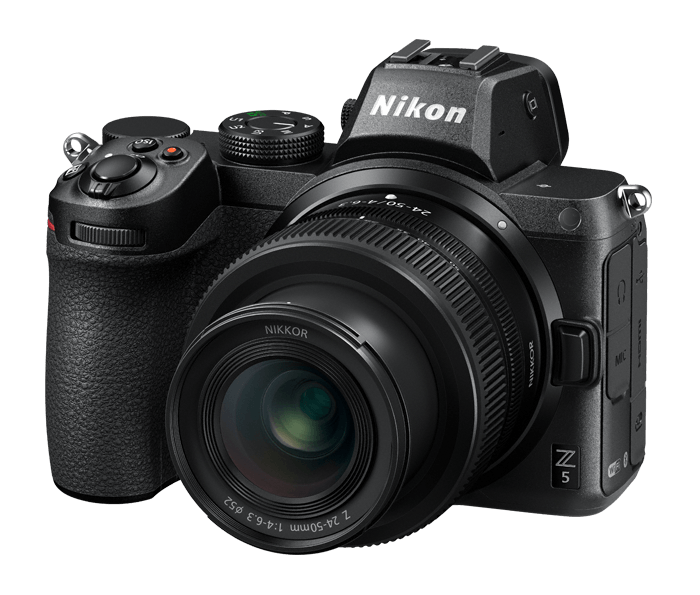
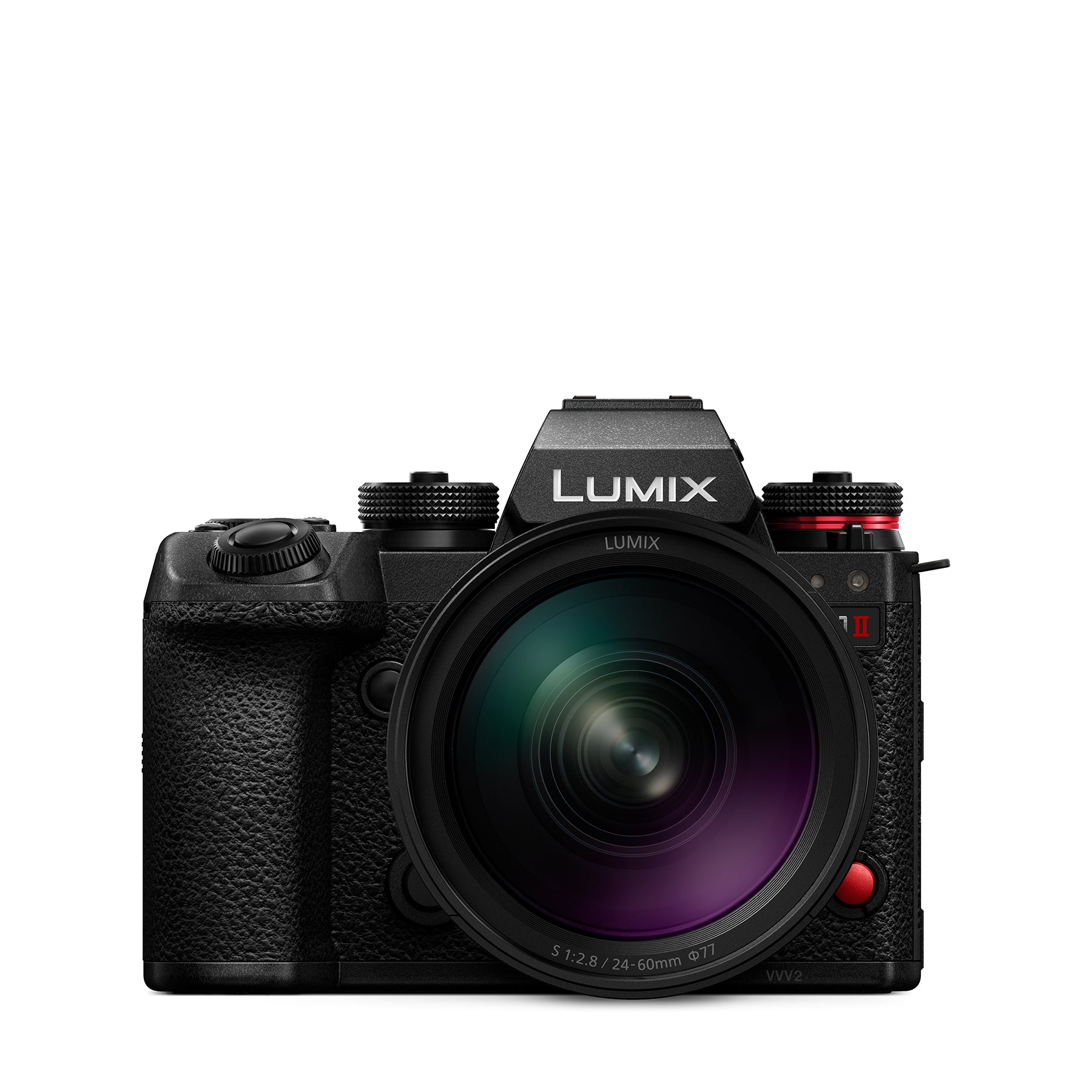
The Nikon Z5 and the Panasonic S1 II are both popular choices among photography enthusiasts looking for full-frame mirrorless cameras. Often compared due to their similar market positioning and feature sets, these models serve a diverse range of users-from hobbyists to professional photographers. The key differentiators that potential buyers should consider include sensor performance, video capabilities, stabilization technology, and overall ergonomics, each catering to specific user preferences.
Specifications Comparison
Detailed Comparison
Image Quality
Both the Nikon Z5 and Panasonic S1 II boast impressive image quality, thanks to their full-frame sensors. The Z5 features a resolution of 24 megapixels, while the S1 II edges slightly ahead with 24.1 megapixels. In practical terms, this minor difference is largely negligible. However, the Z5 offers an ISO range of 100-51,200 (expandable to 50-102,400), ensuring versatility in low-light conditions. In comparison, while the S1 II's low-light performance is commendable, specific ISO specifications have not been disclosed, making it hard to draw direct comparisons based solely on that aspect.
The Z5 includes Nikon's renowned color science, delivering pleasing skin tones and vibrant colors. Meanwhile, the S1 II is known for its more filmic look, which some users find preferable, particularly for video work. If shooting in extreme lighting conditions, the Z5's expansive ISO range might give it an edge. Thus, while both cameras yield excellent image quality, the Nikon Z5 slightly excels in low-light versatility.
Autofocus System
The Nikon Z5 features 273 autofocus points, which cover a significant portion of the frame and utilize phase-detection technology for quick focusing speeds. It's noted for its reliability in both single and continuous AF modes, making it suitable for still photography as well as tracking moving subjects to an extent. The dual focus modes present in the Z5 add versatility, although it is not at the cutting edge of autofocus technology when compared to its competitors.
Contrastingly, the Panasonic S1 II implements an advanced autofocus system that is particularly effective in video scenarios. It includes a more sophisticated contrast-detection AF, which delivers sharp focus even in challenging lighting. While the number of focus points in the S1 II is not specified, anecdotal evidence suggests it performs well in real-world settings. Given the significant requirements from varying user profiles, the S1 II pushes the envelope with better performance in continuous video recording scenarios. Hence, while the Z5's autofocus system is solid, the dynamic and versatile autofocus system of the S1 II slightly leads in overall performance.
Video Capabilities
In terms of video capabilities, the Nikon Z5 is limited to a maximum resolution of 4K at 30p, which suffices for many casual videographers but may not meet the demands of professional filmmakers. It does, however, incorporate useful features like N-Log for color grading, with HDMI output allowing for external recording. Its video specs might be a strong consideration for stills-focused photographers who prioritize video only occasionally.
Conversely, the Panasonic S1 II takes the lead with more advanced video capabilities, offering resolutions up to 5.1K at 60p. This high-definition feature is tremendously beneficial for filmmakers seeking to produce high-quality content. The S1 II also includes various video-centric features, such as V-Log, allowing for greater dynamic range and color correction. Given these advancements, it caters well to those looking for a robust video solution alongside photography, making it significantly more appealing for the video-centric audience.
Build & Ergonomics
When considering build quality and design, both cameras offer robust, weather-sealed bodies that can withstand challenging shooting environments. The Nikon Z5 has a solid feel while being slightly heavier at 675 grams, which may appeal to users who prioritize sturdiness. Its dimensions make it feel comfortable in hand, thanks to its grip design, although it is slightly bulkier than the S1 II.
The Panasonic S1 II, released in 2023, incorporates ergonomics that align with modern user expectations, being slightly lighter and designed for prolonged use. It features a well-placed grip and a larger, high-resolution screen that enhances user experience. The S1 II is relatively better suited to extended shooting sessions-especially for videographers-due to its lighter weight and modern design aspects. Both cameras present rugged designs but the S1 II edges slightly ahead with its ergonomic considerations.
Battery & Storage
The Nikon Z5 provides impressive battery life, with around 470 shots per charge, making it a reliable choice for those who find themselves shooting for long periods without the need to swap batteries frequently. This makes the Z5 an excellent option for event photographers or those working in environments where access to power is limited. Additionally, the Z5 supports dual card slots, providing flexibility for storage-ideal for high-volume shooters.
On the other hand, the Panasonic S1 II's battery specifications are less explicitly detailed, but it is designed to perform similarly, appealing to professional users as well. Additionally, it supports CFexpress and SD cards, enhancing read and write speeds which is crucial for photographers dealing with high-resolution imagery and video. While both cameras feature respectable battery lives and dual card slots, the Z5's established performance in this area solidifies its lead.
Value for Money
At a retail price of $1399, the Nikon Z5 provides an excellent value ratio for its features, especially considering its impressive image quality and solid build. It suits both newcomers to full-frame photography as well as experienced shooters looking for a dependable second body at a reasonable price point. Its features are well-optimized for still photography, prioritizing quality and usability over cutting-edge specifications in video and autofocus.
In contrast, the Panasonic S1 II, being a newer model with a focus on advanced video capabilities, is likely to be priced higher, although exact US pricing has not been stated. The added value of superior video performance and the latest technology might justify a higher price for those specifically targeting videography. Consequently, while the S1 II may appeal to a niche market willing to invest in state-of-the-art specifications, the Z5 overall presents a greater value proposition for a wider audience.
Our Verdict
In conclusion, while the Nikon Z5 takes the lead in aspects like image quality, battery life, and value for money, the Panasonic S1 II triumphs in video capabilities and autofocus innovation, making it a preferred option for users prioritizing video work and advanced features. Photographers who primarily focus on stills may find the Z5 as a more balanced choice due to its price and capability, while those leaning towards videography should definitely consider the S1 II's advantages.
Nikon Z5
Panasonic S1 II
Also Compare
Frequently Asked Questions
Which camera is better for beginners?
The Nikon Z5 is generally better for beginners due to its more straightforward interface, excellent image quality, and competitive pricing, making it great for those new to full-frame photography.
Is the Nikon Z5 suitable for videography?
While the Nikon Z5 offers 4K video capabilities, it is not designed primarily for videography, making the Panasonic S1 II a more robust option for serious videographers.
How do these cameras perform in low light?
The Nikon Z5 has an extensive ISO range making it quite versatile in low-light conditions, while the S1 II also performs well, though exact specifications are less clear.
What kind of lenses can I use with these cameras?
Both cameras have their respective ecosystems, with the Z5 being compatible with Nikon Z-mount lenses and the S1 II supporting L-mount lenses, providing a wide range of lens options for various photographic styles.
Do both cameras have weather sealing?
Yes, both the Nikon Z5 and the Panasonic S1 II offer weather sealing, making them suitable for shooting in adverse weather conditions.