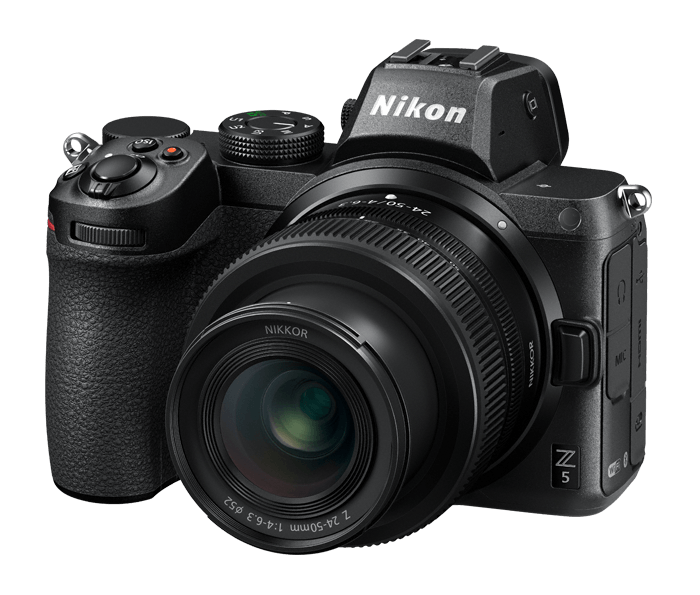
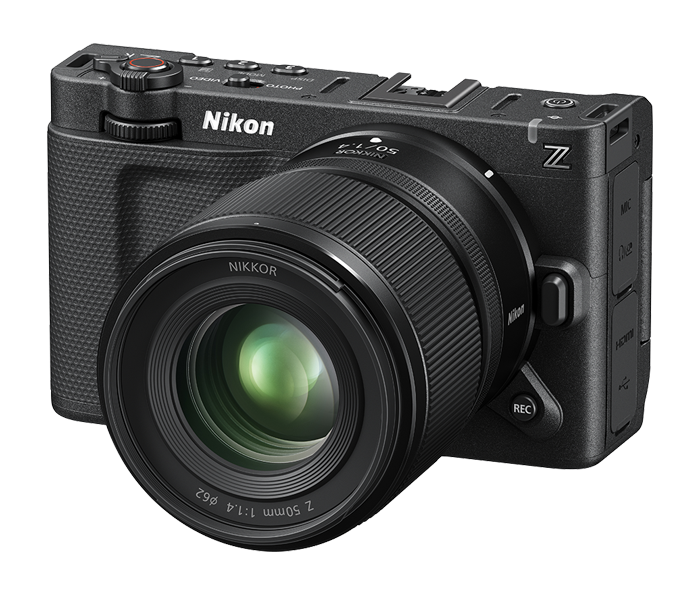
The Nikon Z5 and Nikon ZR are both fantastic full-frame mirrorless cameras that cater to different segments of the photography market. The Z5, released in 2020, is an entry to mid-level full-frame option that offers a balanced mix of performance, quality, and price. On the other hand, the ZR, launched in 2025, targets enthusiasts and professionals with enhanced specifications and features, making it a compelling choice for more serious photographers. Buyers often find themselves comparing these models, particularly due to their overlapping features and differing capabilities. Understanding the distinctions between them is crucial for making an informed decision.
Specifications Comparison
Detailed Comparison
Image Quality
The Nikon Z5 is equipped with a 24-megapixel sensor, which is excellent for producing high-quality images suitable for various photography genres. It has a substantial ISO range of 100-51200, allowing for versatility in low-light conditions, and it can be expanded to 50-102400, though the quality at higher settings may be questionable. The overall image rendering is sharp and vibrant, suitable for both amateur and professional use.
In contrast, the Nikon ZR boasts a slightly higher 25-megapixel sensor. This minor increase can result in better detail in large prints and may appeal more to professionals who prioritize resolution. Its ISO range of 100-64000, while not as expansive as the Z5, is still sufficient for low-light photography. Both cameras offer impressive image quality, yet the ZR edges slightly ahead in resolution and may perform better in certain low-light situations due to its advanced sensor technology.
In practical terms, both cameras are capable of delivering stunning results; however, the ZR's higher pixel count and optimized performance can make it the preferred choice for photographers needing the best image quality possible, especially in demanding scenarios.
Autofocus System
Both the Nikon Z5 and ZR feature an impressive autofocus system, with 273 autofocus points providing ample coverage and accuracy. This makes both models highly capable for tracking subjects, whether in still photography or video. The Z5, being an earlier model, might lack some advanced autofocus features and refinements found in newer camera technologies. However, it still reliably performs under various conditions.
Conversely, the ZR's autofocus system brings additional enhancements that may include improved subject tracking and speed, making it more suitable for fast-paced situations such as wildlife or sports photography. The advanced algorithms built into the ZR allow for quicker focusing times, which can be a significant advantage in challenging shooting scenarios.
Both systems, while robust, serve slightly different needs. The ZR takes the lead due to its advancements in autofocus technology, resulting in superior performance in fast or challenging environments.
Video Capabilities
Video features are essential to many modern photographers and content creators. The Nikon Z5 allows for 4K recording at 30p, which is robust for many users looking to create high-resolution video content. It provides decent video performance and makes it suitable for casual videography and some professional projects.
On the other hand, the Nikon ZR offers significantly enhanced video capabilities, supporting higher frame rates and better video quality overall. While specific video resolutions are often detailed in product releases, it's reasonable to expect the ZR to handle 4K recording more efficiently, possibly extending its frame rates beyond 30p. This superior performance will be particularly appealing to videographers looking for high-quality footage with greater flexibility.
In conclusion, the ZR seems to have the upper hand in video capabilities, appealing to a more professional audience who prioritizes high-quality video output.
Build & Ergonomics
When it comes to build quality, both the Nikon Z5 and ZR are weather-sealed, a crucial characteristic for outdoor photographers. The Z5 weighs in at 675 grams, which is slightly heavier than the ZR's 630 grams, making the latter a little more convenient for extended handheld shooting sessions. The dimensions of the Z5 are also larger in all aspects compared to the more compact ZR, which represents a design philosophy catering towards portability without sacrificing functionality.
The Z5 features a 3.2-inch touchscreen display with a resolution of 1,040,000 dots, which delivers good usability. However, the ZR improves significantly upon this, sporting a larger 4-inch screen with an impressive resolution of 3,070,000 dots, enhancing clarity, detail, and overall user experience.
Both cameras are built to last, but in terms of portability and display quality, the ZR takes the edge, making it favorable for photographers seeking higher build quality and better ergonomics during extended use.
Battery & Storage
Battery life is a vital consideration for photographers, particularly when shooting long sessions. The Nikon Z5 boasts a commendable battery life of approximately 470 shots, which can cover most day-to-day shooting scenarios without the need for frequent recharges. This performance is quite competitive for its class.
The Nikon ZR's specifications do not state an exact battery life yet, but given its advanced features and likely increased power demand, users might expect it to perform similarly or slightly lower than the Z5. Both cameras can use similar storage options, providing versatility in terms of media and the number of stored images.
For overall battery performance during a shoot, the Z5 likely offers a more dependable choice due to its established millage, making it preferable for long persists in the field. However, if the ZR can maintain comparable battery life, it will still be a consideration worth evaluating based on usage habits and specific photographic adventures.
Value for Money
The pricing of these cameras demonstrates a significant leap from the Z5 to the ZR. The Z5 is priced at $1399, making it an attractive choice for those transitioning to a full-frame system without breaking the bank. It offers a solid collection of features that cater to both enthusiasts and semi-professionals.
In comparison, the ZR is priced at $2200, reflecting its advanced capabilities and features aimed at more dedicated users. While it may provide superior image quality and better video specs, the higher price might deter casual photographers or those who are just entering the full-frame market.
Ultimately, value hinges on the user's needs and experience level. Those who require cutting-edge technology and extra performance will find the ZR justifiable, while the Z5 stands as a cost-friendly alternative that still delivers excellent results without the additional financial burden.
Our Verdict
In the final analysis, while the Nikon ZR excels in image quality, autofocus performance, and video specifications, the Nikon Z5 remains the superior choice overall due to its value for money, decent battery life, and robust performance for aspiring and intermediate photographers. The Z5's lower price point combined with its versatile specifications makes it particularly appealing for those who want excellent imaging capabilities without overspending. The ZR, however, is best suited for professionals or those who prioritize having the latest technology and superior features, making it a worthwhile investment for serious shooters.