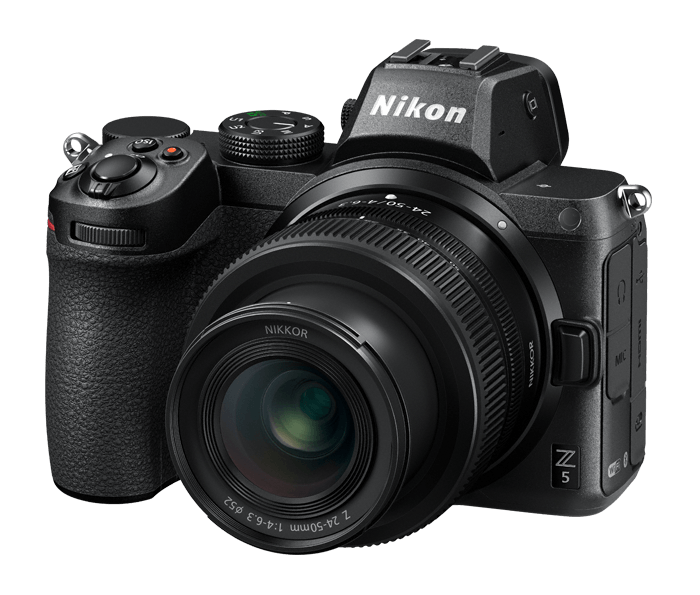
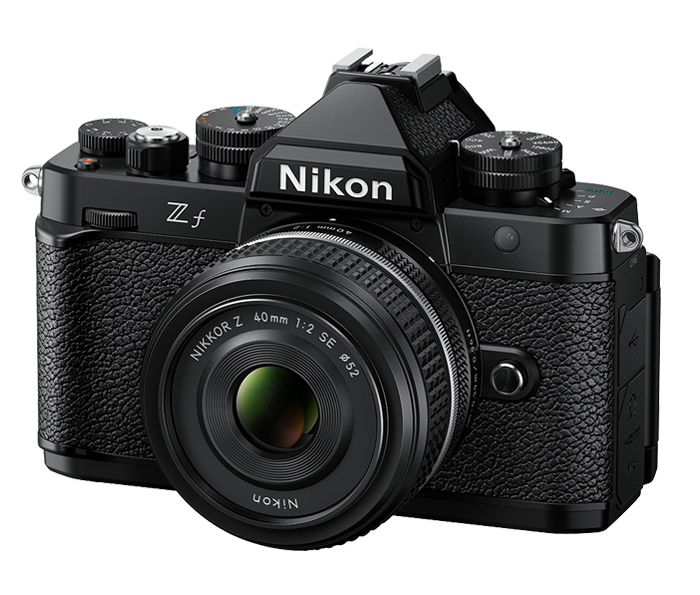
The Nikon Z5 and Nikon Zf are two full-frame mirrorless cameras that often come up in discussions among both enthusiasts and professionals looking to invest in a solid camera system. Each model serves different needs and preferences, making them appealing options in the Nikon lineup. Buyers typically consider factors such as image quality, autofocus capabilities, video specifications, and overall ergonomics when choosing between these two models. The key differentiators between the Z5 and Zf include their sensor capabilities, autofocus performance, video resolution, and additional features like in-body stabilization and handling design.
Specifications Comparison
Detailed Comparison
Image Quality
Both the Nikon Z5 and Zf utilize a full-frame sensor size of 35.9 x 23.9 mm, which is standard for high-quality imaging. The Nikon Z5 offers 24 megapixels, providing excellent resolution for most photography needs. In contrast, the Zf slightly edges out with a 25-megapixel sensor, allowing for marginally more detail in images. This increase may be particularly beneficial in scenarios involving heavy cropping or large-format printing, albeit the difference in real-world applications may not be substantial for typical users.
Moreover, both cameras exhibit impressive low-light performance with ISO ranges that cater to various lighting conditions. The Z5's ISO range runs from 100 to 51,200, expanding further to 50-102,400, while the Zf's range is similar but proves more effective at managing noise at higher ISO settings. The image quality in general, especially with the Zf, benefits from better internal processing and refinement thanks to the newer model.
In practical terms, while both cameras deliver professional-grade images, the slight advantage in megapixels and low-light performance from the Zf cannot be overlooked, leading us to favor it in this category.
Autofocus System
The autofocus systems on both the Z5 and Zf include 273 focus points, a configuration that offers extensive coverage across the frame for capturing both stills and action shots. The Z5, with its 4.5 frames per second (fps) shooting speed, works well for everyday photography and situations where fast autofocus is not a premium feature. However, for sports and wildlife photography, the Zf's impressive 14 fps and enhanced autofocus algorithm provide an obvious advantage, allowing photographers to capture fast-moving subjects with much greater accuracy.
Additionally, the Zf comes equipped with advanced autofocus features like Eye AF, which is particularly useful for portrait photographers, ensuring that the subject's eyes are always in focus.
Given these significant enhancements in the autofocus capabilities of the Zf, particularly in terms of speed and precision during high-velocity shooting, this section clearly favors the newer model.
Video Capabilities
For videographers, the Nikon Z5 supports 4K video resolution at 30p, which is suitable for most practical video applications. However, the Zf goes a step further by offering 4K up to 60p. This higher frame rate is particularly advantageous for achieving smoother footage and more cinematic results, making it a better choice for serious videographers or content creators.
Moreover, the Zf features advanced video functionality, including improved compression and color profiles. The Z5 lacks some of these higher-end features, placing it more in the realm of novice filmmakers or casual use.
Given the advanced video resolution and capabilities of the Zf, it clearly prevails in this category.
Build & Ergonomics
Both cameras have a solid construction and a weather-sealed body, which is essential for outdoor photography and ensures durability in various conditions. However, the dimensions differ slightly: the Z5 is more compact and lighter, coming in at 675 grams compared to the Zf's 710 grams. This slight weight difference could be a factor for photographers who prioritize portability.
In terms of design, both models share a similar 3.2-inch screen, but the Zf's screen boasts a higher resolution at 2,100,000 dots compared to Z5's 1,040,000 dots, which translates to a clearer and sharper viewing experience. The physical controls on the Zf are also touted for being more intuitive, especially with upgraded dials and buttons that enhance usability.
Despite the Zf being slightly bulkier, the inherent improvements in screen quality and ergonomics make this category a close contest, as usability can depend heavily on individual preferences.
Battery & Storage
Battery life is crucial for any photographer, and in this respect, the Z5 has a notable advantage, offering around 470 shots on a full charge, compared to the Zf's 380 shots. This extended battery life can be indispensable during prolonged shooting sessions or when an external power source is not readily available.
Both cameras utilize the same Nikon Z mount and are compatible with SD card storage, but the Zf may require larger and faster cards due to its higher video quality outputs and burst photography capabilities. Users should consider the potential cost of storage if they choose the Zf for its advanced video features.
While the Zf boasts superior performance in various areas, the Z5's battery longevity can be a deciding factor for photographers prioritizing longer use without interruption. In this category, the clear winner remains the Z5.
Value for Money
Price plays a significant role when comparing the Nikon Z5 at $1,399 to the Nikon Zf at $1,999. The Z5 offers a competitive price point, making it an appealing option for those entering the full-frame market or for enthusiasts who desire high-quality performance without breaking the bank. It provides a comprehensive package of features that meets most photographers' needs without excessive expenditure.
Conversely, the Zf presents a higher price tag, reflecting its enhanced features such as improved video capabilities, faster autofocus, and better resolution. For professionals who require the latest technology or for those who plan to utilize advanced video functionalities, the relatively higher investment may justify the additional features.
For general value, especially for hobbyists and those on a budget, the Z5 stands out, while professionals looking for more advanced performance will find the Zf worth the extra cost. This consideration leads us to determine the Z5 as the better choice for value in a broader audience.
Our Verdict
Overall, the Nikon Zf emerges as the superior choice primarily due to its advanced features tailored for both photography and videography, including superior autofocus and video capabilities. While the Z5 offers exceptional value and battery life, making it an excellent entry-level full-frame camera, the Zf's enhancements in image resolution, speed, and usability cater to those looking for top-tier performance. Ultimately, if you prioritize cutting-edge technology and are willing to invest a bit more, the Zf is likely the better option. However, if you're more budget-conscious and require solid performance from a reliable camera, the Z5 will still serve you admirably.
Nikon Z5
Nikon Zf
Also Compare
Frequently Asked Questions
Which camera is better for low-light photography?
While both cameras perform well in low-light conditions, the Nikon Zf has a slight edge due to its enhanced processing and higher megapixel count, leading to less noise at elevated ISO levels.
Do both cameras support the same lenses?
Yes, both the Nikon Z5 and Zf use the Nikon Z mount system, allowing the same range of lenses to be used on either body.
Is the Nikon Zf worth the extra cost over the Z5?
If you need advanced features like higher frame rates for video and superior autofocus for fast action, the Zf's extra cost can be justified. For more casual photography, the Z5 is very capable at a lower price point.
How does the battery life compare between the two cameras?
The Nikon Z5 offers longer battery life at approximately 470 shots per charge, while the Zf provides around 380 shots, making the Z5 a better choice for extended shooting without frequent battery changes.
What type of users will benefit most from the Nikon Zf?
Professional photographers and videographers who require fast autofocus, higher video frame rates, and greater overall performance will benefit the most from the Nikon Zf.