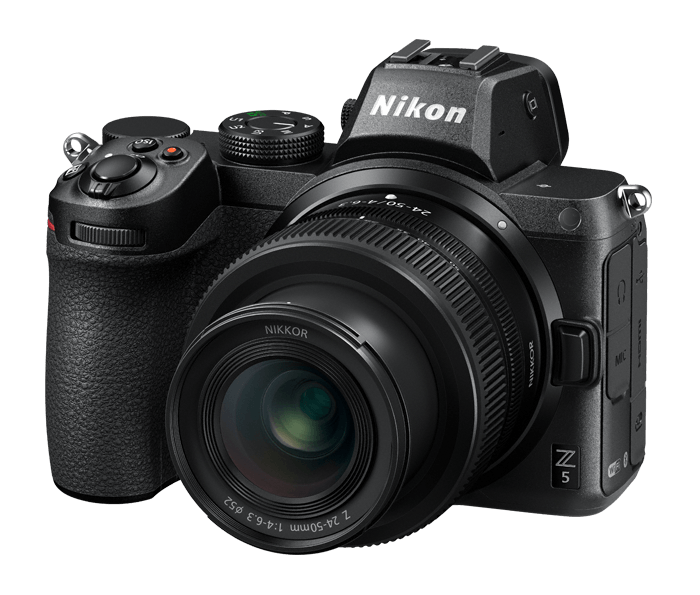
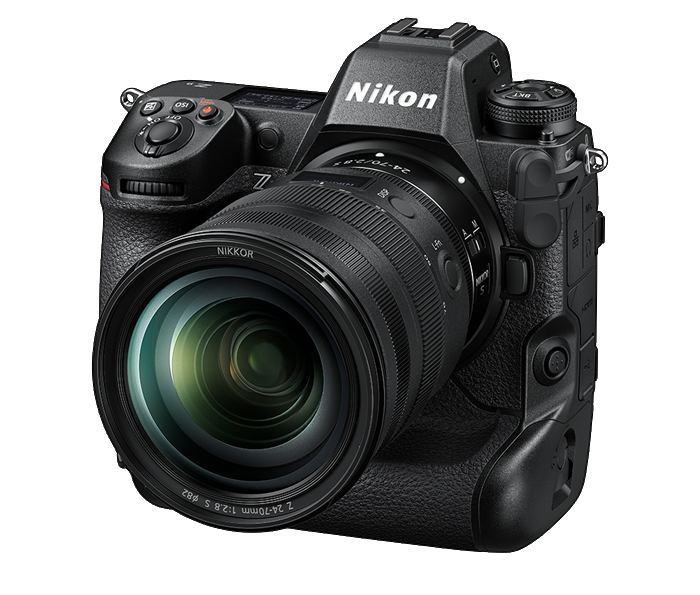
The Nikon Z5 and Nikon Z9 are two exemplary offerings from Nikon's mirrorless camera lineup, often compared by photography enthusiasts and professionals seeking to determine the best fit for their needs. The Z5, aimed at entry-level and semi-professional users, provides a solid set of features that experience a perfect entry into the full-frame mirrorless market. In contrast, the Z9 is a flagship model designed for professionals demanding top-of-the-line specifications and features for high-speed, high-resolution shooting. This comparison focuses on key differentiators like image quality, autofocus performance, video capabilities, build quality, battery life, and overall value to guide potential buyers in their decision-making process.
Specifications Comparison
Detailed Comparison
Image Quality
The Nikon Z5 features a 24-megapixel full-frame sensor, which offers excellent image quality suitable for most photography needs, including landscapes and portraits. Its ISO range from 100 to 51,200 (expandable to 50-102,400) allows for decent low-light performance, making it versatile for various shooting conditions. While the Z5's image quality is commendable, it does not match the detail capture of the Z9.
On the other hand, the Nikon Z9 boasts a significantly higher resolution of 46 megapixels, allowing for exceptionally detailed images, which is beneficial for large prints or extensive cropping in post-processing. The Z9 also maintains impressive ISO performance, making it suitable for low-light situations while reducing the noise typically associated with high ISO settings.
When comparing image quality, the Z9's larger megapixel count and enhanced low-light capabilities make it the superior choice for professionals and serious enthusiasts. However, the Z5 still produces stunning images that meet the needs of many photographers.
Autofocus System
The Z5 features 273 autofocus points, which provides decent coverage for various shooting scenarios, allowing for reliable focus during most situations. While it performs adequately for stills and moderate-action photography, it may fall behind with very fast-moving subjects when compared to its more advanced counterpart.
In contrast, the Z9's autofocus system, with 493 points, excels in tracking moving subjects with remarkable speed and accuracy. It incorporates advanced subject detection features and improved algorithms that adapt to the subject type, whether it's humans or animals. The Z9's autofocus system is particularly suited for sports and wildlife photographers who require split-second focusing.
Overall, the Z9 offers advanced autofocus capabilities that significantly outperform the Z5, making it a preferred choice for action-oriented photographers.
Video Capabilities
The Nikon Z5 offers 4K video recording at 30 frames per second, which is suitable for many casual vloggers and content creators. However, its limitations in frame rates mean that it may not satisfy users wanting high-performance video for gaming or high-paced subjects.
Conversely, the Z9 elevates video capabilities with 4K recording at up to 120 frames per second, allowing for smooth slow-motion playback. Additionally, it offers features like 10-bit 4:2:2 internal recording and the flexibility of 8K video, which is invaluable for high-end video production. The Z9 is designed with dual card slots that support CFexpress, providing speedy data transfer necessary for high-bitrate video recording.
In terms of video performance, the Z9 is clearly the winner, catering to professional videographers and filmmakers seeking top-tier specifications.
Build & Ergonomics
The Nikon Z5 is lightweight at 675 grams, making it more portable and easier to handle for long shooting sessions. Its dimensions, while compact, still offer good ergonomics with a comfortable grip, which is essential for extended usage. Additionally, it is weather-sealed, providing protection in challenging environments, making it a robust choice for casual outdoor photography.
On the other hand, the Z9, coming in at a hefty 1340 grams, is built like a tank. It is designed with a larger grip for enhanced comfort, especially when using heavier lenses. The Z9's robust weather-sealing adds confidence for professional photographers working in extreme conditions. Its additional features, including dual card slots, further improve usability for serious professionals.
While the Z5 excels in portability, the Z9's enhanced build quality and ergonomics make it the preferred choice for professionals.
Battery & Storage
The Nikon Z5 has a commendable battery life of about 470 shots per charge, which is suitable for typical day-to-day photography sessions. It uses an EN-EL15c battery that allows for charging in-camera through USB-C, providing convenience for on-the-go charging. However, for extensive shoots or events, this battery life may be limiting for certain photographers.
In comparison, the Z9 showcases a long-lasting battery life capable of approximately 740 shots, which gives professionals the endurance needed for all-day shoots, critical in high-demand environments such as weddings or sports events. Also, the Z9's dual CFexpress card slots facilitate faster data management and storage capabilities, essential for high-resolution images and 8K video.
When it comes to battery life and storage, the Z9 holds a clear advantage, offering more reliable performance for serious users.
Value for Money
The Nikon Z5 is priced at $1399, making it an attractive option for entry-level and semi-professional photographers who want a full-frame experience without a hefty investment. Its capabilities, such as good image quality and solid build, offer compelling value for those not requiring extreme specifications.
On the other hand, the Z9 is priced at a premium of $5500, which reflects its advanced features, including high-resolution imaging, superior autofocus, and extensive video capabilities. While it is an investment, it is aimed at professionals who will leverage these features in their work.
While the Z5 provides significant value for enthusiasts, the price of the Z9 may be justified for professionals seeking the absolute best performance, though it might be considered overkill by casual users.
Our Verdict
Overall, the Nikon Z9 emerges as the winner in this comparison due to its superior image quality, autofocus capabilities, video performance, and overall build quality, making it ideal for professional photographers and videographers who need the best equipment to meet their demands. However, the Nikon Z5 presents an excellent value for hobbyists and those entering the world of full-frame photography, offering enough capabilities to satisfy their needs without breaking the bank. For individuals starting out or those needing an affordable yet high-quality option, the Z5 is highly recommended, while the Z9 is better suited for those committed to high-end professional work.
Nikon Z5
Nikon Z9
Also Compare
Frequently Asked Questions
Is the Nikon Z5 suitable for professional use?
Yes, the Nikon Z5 can be suitable for certain professional use cases, especially for portrait, landscape, and general photography. However, it may lack some advanced features essential for high-speed or high-resolution work, which are better suited by the Z9.
What are the video recording limitations of the Z5?
The Z5 is limited to 4K recording at 30 frames per second, which may not meet the needs of content creators looking for high frame rates or special features like 10-bit recording found in the Z9.
How much does the weight differ between the two cameras?
The Nikon Z5 weighs 675 grams, comparably lighter than the Z9, which weighs 1340 grams. This difference could impact portability and prolonged handling comfort.
Which camera is better for sports photography?
The Nikon Z9 is the better choice for sports photography due to its faster autofocus system, higher frame rates, and overall advanced features tailored for capturing dynamic action.
What is the primary advantage of the Z9 over the Z5?
The primary advantage of the Z9 is its high-resolution 46-megapixel sensor, superior autofocus system with 493 points, and advanced video functionality, appealing to professionals demanding top-notch performance.