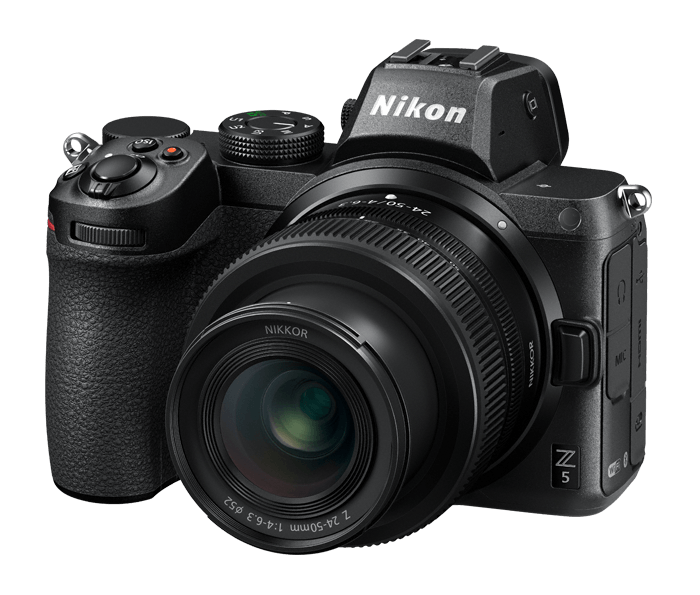
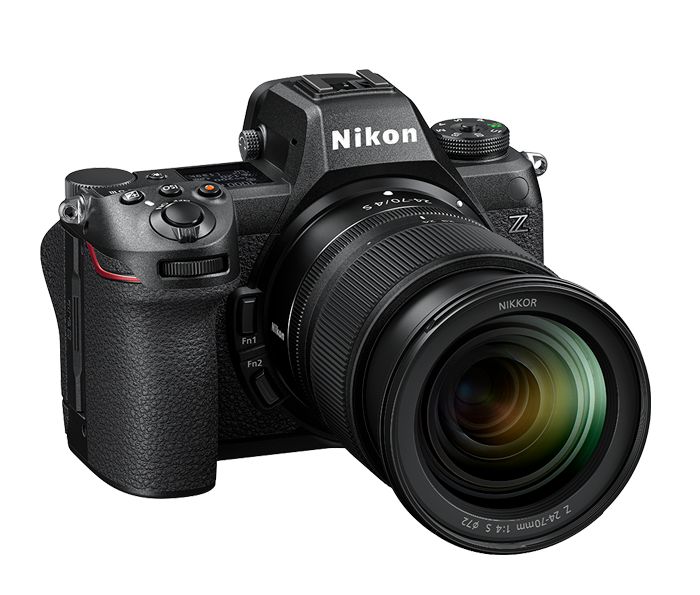
The Nikon Z5 and the Nikon Z6III are two full-frame mirrorless cameras that often attract the attention of both amateur and professional photographers. The Z5, released in 2020, is viewed as a more budget-friendly entry point into the full-frame realm, while the Z6III, launched in 2024, is aimed at more advanced users seeking high performance and versatility. This makes them common alternatives for enthusiasts deciding on their next significant camera investment. Key differentiators often lie in their resolutions, autofocus capabilities, video features, and overall usability, making the choice dependent on the specific needs and budgets of prospective buyers.
Specifications Comparison
Detailed Comparison
Image Quality
Both the Nikon Z5 and Z6III utilize a full-frame sensor, but the Z6III has a slight edge with its 25 MP resolution compared to the 24 MP of the Z5. Although this difference in megapixels may seem minimal, it can lead to slightly finer detail capture in the Z6III, especially noticeable when cropping images or making large prints. Additionally, while the Z5 boasts an impressive ISO range of 100-51200 (expandable to 50-102400), the Z6III has a native range of 100-64000. This results in the Z6III often producing cleaner images at high ISO settings, providing better performance in low-light situations and enhancing overall image quality.
Autofocus System
Both cameras feature the same number of autofocus points at 273; however, the Z6III's advanced processing allows for faster and more accurate focusing capabilities. This improvement makes it particularly effective for tracking moving subjects, a decisive factor for wildlife or sports photography. Additionally, the Z6III includes enhanced subject detection and face/eye tracking features, which elevate its autofocus performance during challenging shooting scenarios compared to the more basic autofocus system of the Z5.
Video Capabilities
Video enthusiasts will favor the Nikon Z6III thanks to its capabilities that exceed those of the Z5. While the Z5 can record video at 4K 30p, the Z6III supports a higher frame rate that can go up to 4K 60p, accommodating more dynamic shooting styles such as slow motion. Furthermore, the Z6III allows for more extensive video formats and profiles suitable for different types of content creation, placing it several steps ahead in terms of versatility for videographers. The enhanced video functionalities are vital for professionals who need reliable and high-quality video production.
Build & Ergonomics
In terms of build quality, both cameras share a rugged design with weather-sealing, making them suitable for outdoor environments. However, the Z6III is slightly bulkier and weighs more at 760g, compared to the Z5's 675g, which may affect portability for some users. Ergonomically, both cameras are designed thoughtfully with comfortable grips, but the Z6III's viewfinder offers a higher resolution at 2,100,000 dots versus the Z5's 1,040,000 dots, providing a clearer and more detailed preview of scenes. This can enhance user experience, particularly when composing images in bright conditions.
Battery & Storage
When it comes to battery life, the Z5 shines with a rating of 470 shots per charge, compared to the Z6III's 380 shots. This aspect makes the Z5 more suitable for extended shooting sessions without the immediate need to recharge. Both cameras utilize the same type of batteries; however, due to the Z6III's advanced capabilities, users might engage in more energy-consuming activities such as high frame rate video shoots which could shorten effective battery life. Storage requirements may also vary, with the Z6III benefiting from faster write speeds due to newer technology, especially beneficial when recording high-resolution video.
Value for Money
The Z5, priced at $1399, presents an appealing option for photographers who are relatively new to full-frame systems or anyone who prioritizes value for everyday use. With its solid feature set, it represents a more affordable entry into high-quality photography without compromising on essential capabilities like weather-sealing and reasonable autofocus performance. By contrast, the Z6III, at $2500, is targeted toward serious enthusiasts and professionals who require advanced features for pro-level work, making it a better value proposition for users focusing on video capabilities or who appreciate having slight advantages in image and autofocus quality. Overall, the Z5 provides better value for those who see the camera as an essential tool without all the frills.
Our Verdict
Overall, the Nikon Z6III edges out the Z5 primarily due to its superior image quality, better autofocus performance, and enhanced video capabilities, making it the preferred choice for serious photographers and videographers. However, the Z5 remains an excellent option for those on a tighter budget who still wish to enter the full-frame market, offering solid performance, superior battery life, and remarkable value. Buyers should consider their specific needs, whether professional-grade versatility in the Z6III or great value and ease of use with the Z5.