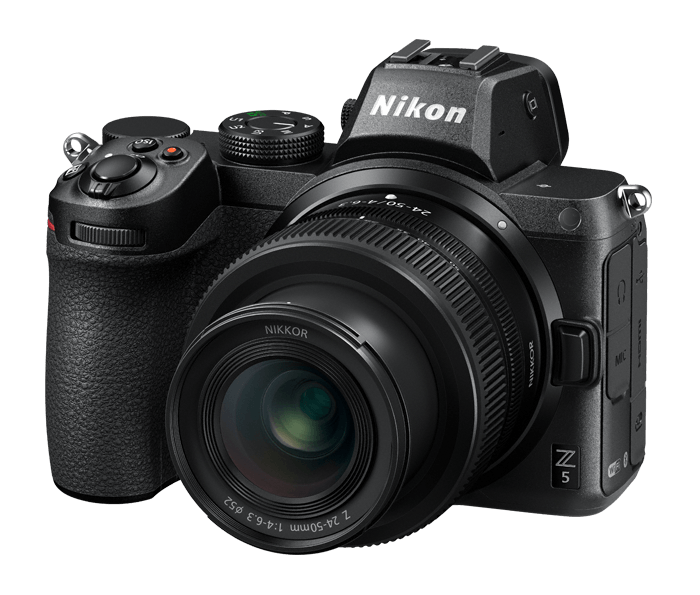
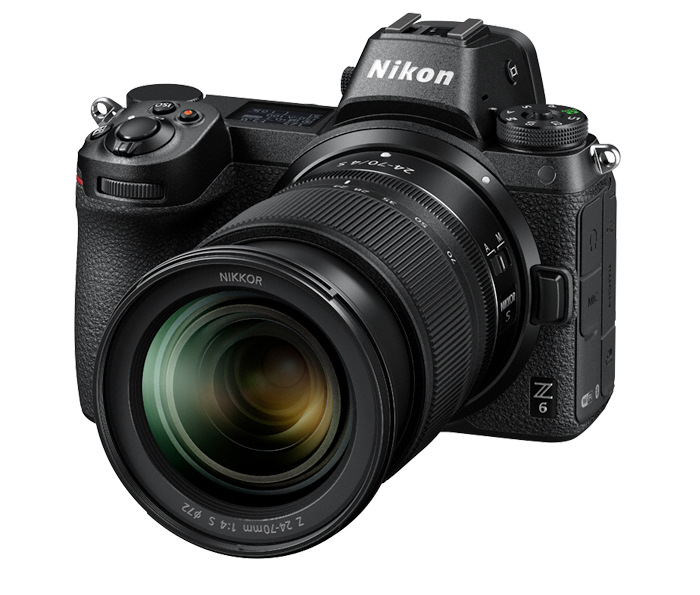
The Nikon Z5 and Z6 are often compared as they both represent Nikon's foray into the full-frame mirrorless camera market, catering to both enthusiasts and semi-professionals. They share many similarities, including their full-frame sensor format and electronic viewfinder, making them common contenders for anyone looking for a capable camera in this segment. However, they do have distinct features and performance capabilities that may influence a buyer's decision depending on their needs, such as dynamic range, autofocus performance, and pricing.
Photographers who are undecided between the Nikon Z5 and Z6 often consider factors like maximum burst speed, video capabilities, and low-light performance. While both cameras excel in various areas, distinctive specifications such as megapixel count, ISO performance, and frame-per-second rates can make one model more appealing than the other, depending on a user's specific requirements or shooting style. In this comparison, we will examine various aspects, including image quality, autofocus systems, video capabilities, build quality, battery life, and value for money.
Specifications Comparison
Detailed Comparison
Image Quality
Both the Nikon Z5 and Z6 feature full-frame sensors, but the Z6 has a slight edge with 25 megapixels compared to the Z5's 24 megapixels. This difference may not be significant in most scenarios but can provide slightly better detail in high-resolution work. When it comes to ISO performance, the Z6 offers an expanded ISO range of 50-204800, whereas the Z5 expands to 50-102400. This gives the Z6 a potential advantage in low-light situations where pushing the ISO is necessary. Additionally, the Z6 is likely to perform better at higher ISOs due to its design choice and calibration for low-light performance.
In practice, both cameras deliver excellent image quality, but the Z6's superior high-ISO performance can produce cleaner images in challenging lighting conditions, a recurring scenario for many photographers. The slight increase in megapixels may also impact cropping options slightly, allowing Z6 users more flexibility without losing detail. Despite these differences, both models are capable of producing stunning images suitable for professional use.
Autofocus System
Both the Nikon Z5 and Z6 utilize an identical autofocus system with 273 focus points, providing fast and accurate focusing capabilities. However, the Z6's superior processing power allows it to achieve faster burst shooting speeds of up to 12 frames per second compared to the Z5's 4.5 frames per second. This can make a significant difference for action photographers or anyone shooting fast-moving subjects, where capturing the perfect moment is crucial.
Moreover, the Z6 benefits from advanced autofocus features like Eye AF, which can be particularly useful in portrait photography. While the Z5 also has reliable autofocus performance, the overall speed and advancements in the Z6's capabilities make it more suitable for dynamic shooting scenarios. The Z5 does, however, maintain strong autofocus adequacy for general use and mixed lighting situations, appealing to a wide audience of photographers.
Video Capabilities
Both the Z5 and Z6 are capable of recording 4K video at 30p. However, the Z6 has some advantages in terms of video performance features. While the Z5 offers a decent feature set for video recording, the Z6 provides advanced features such as N-Log for enhanced dynamic range and full HD recording at higher frame rates. Also, due to the higher processing capabilities, the Z6 can handle more demanding video tasks and offers better performance with external recording setups.
For filmmakers and content creators, the choice between these two cameras may hinge on the advanced video features offered by the Z6. The Z5 offers solid video capabilities and is likely more than sufficient for amateur videographers or casual users, but for those looking to produce high-quality cinematic content or engage in more complex video work, the Z6 is the better fit.
Build & Ergonomics
Both the Nikon Z5 and Z6 share a similar build quality, featuring weather-sealed bodies that stand up well against the elements, making them durable for outdoor shooting environments. The Z5's dimensions are slightly bulkier, while the Z6 is a bit thinner but maintains the same weight, which means neither camera is significantly heavier or larger than the other. However, the Z6's design is considered more refined ergonomically, potentially offering a more comfortable grip for extended shooting sessions.
Both cameras are equipped with a 3.2-inch screen; however, the Z6's screen has a higher resolution at 2,100,000 dots compared to the Z5's 1,040,000 dots. This increase in pixel count provides a clearer and more detailed view for composing shots and reviewing images. As photographers often prioritize body feel and handling, this differentiation can play a role in how users perceive the overall usability and comfort during repetitive shooting tasks.
Battery & Storage
The Nikon Z5 boasts a significantly longer battery life, rated at approximately 470 shots, compared to the Z6's 310 shots. This can be a crucial factor for photographers who shoot for extended periods without access to charging facilities, such as during weddings or outdoor events. Beyond the battery life, both cameras accommodate the same type of storage cards, offering dual card slots in the Z6 for users looking for added reliability in their storage strategy, a feature that the Z5 lacks.
Value for Money
With a price tag of $1,399, the Nikon Z5 offers an attractive entry point into the full-frame mirrorless market, especially for burgeoning photographers or hobbyists looking for a capable yet affordable option. The Z6, priced at $1,995, does come with advanced features like better autofocus and improved video capabilities, justifying its higher cost for professionals who require those upgrades.
While the Z5 provides a fantastic value for its price, especially with its weather-sealing and solid performance, the Z6 serves as a worthwhile investment for those who see themselves utilizing the advanced specifications it offers in the long term. Ultimately, it boils down to how much a buyer is willing to pay for performance enhancements, where the Z5 might be seen as the more practical option for many.
Our Verdict
Overall, the Nikon Z6 distances itself as the superior option due to its enhanced image quality, superior autofocus system, and robust video capabilities. It is a more fitting choice for professionals and enthusiasts who require higher performance and versatility in fast-paced shooting environments. However, the Nikon Z5 emerges as a formidable contender, offering exceptional value with longer battery life and solid performance for those who prioritize price and ease of use. For casual users and those on a tighter budget, the Z5 is a perfectly viable option, while the Z6 will undoubtedly serve those with ambitions of more serious photography or videography better in the long haul.
Nikon Z5
Nikon Z6
Also Compare
Frequently Asked Questions
Is the Nikon Z5 good for video shooting?
Yes, the Nikon Z5 is capable of recording 4K video at 30p and includes basic features suitable for casual videography. However, the Z6 offers more advanced video features, making it the better choice for more serious video work.
What type of photography is each camera best suited for?
The Nikon Z5 is ideal for general photography, such as landscapes and portraits, while the Z6 excels in action photography and low-light conditions due to its superior autofocus and ISO performance.
Does the Z5 have a dual card slot?
No, the Z5 features a single card slot, whereas the Nikon Z6 has dual card slots, offering more flexibility and redundancy for storage.
What's the main advantage of the Nikon Z6 over the Z5?
The Z6 has a higher burst speed, better low-light performance, and more advanced autofocus features, making it more suitable for professional photographers and certain high-action settings.