
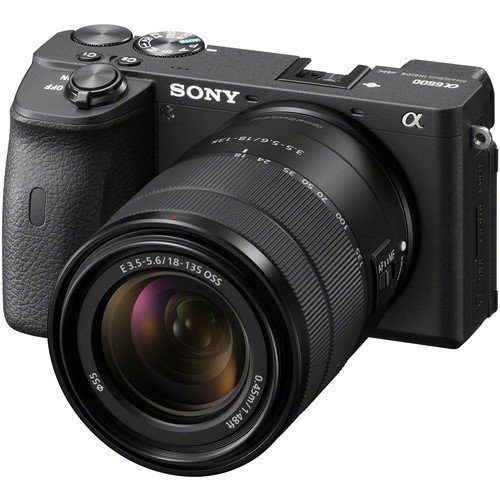
The Fujifilm X100VI and the Sony A6600 are two highly regarded cameras in the APS-C segment, appealing to photographers who value image quality, compactness, and versatility. Commonly compared, these cameras cater to different user preferences: the X100VI, with its classic fixed lens design, is aimed at street and travel photographers, while the A6600 offers a more flexible interchangeable lens system, appealing to both amateur and professional photographers alike. Key differentiators include sensor performance, autofocus capabilities, and handling ergonomics, making the choice between these two models dependent on specific needs and shooting styles.
Specifications Comparison
Detailed Comparison
Image Quality
The Fujifilm X100VI features a 40-megapixel APS-C sensor that provides exceptional detail and a wide dynamic range. The sensor's larger resolution allows for more significant cropping ability without sacrificing image quality. In comparison, the Sony A6600's 24-megapixel sensor may not convey the same level of detail in ultra-high-resolution prints, but it still delivers sharp and vibrant images suitable for most applications. Both cameras excel in low-light conditions, with the X100VI having an ISO range of 125-12,800 (expandable to 64-51,200) and the A6600 ranging from 100-32,000 (expandable to 102,400). While both perform admirably, the A6600's sensor is generally perceived to handle noise slightly better at higher ISO settings due to its effective noise management algorithms.
Autofocus System
Both cameras utilize advanced autofocus systems featuring 425 points for precise subject tracking, which is particularly beneficial for action photography. The Fujifilm X100VI's autofocus performance is excellent for still photography, especially in bright conditions, but it may exhibit slower performance in low light compared to the Sony A6600. The A6600 also benefits from Sony's Real-Time Eye AF technology, which excels in tracking moving subjects, particularly useful for portrait and wildlife shooting. While both cameras can achieve focus quickly, the A6600 presents a slight edge in dynamic situations, making it more reliable for diverse shooting environments.
Video Capabilities
When it comes to video, the Sony A6600 offers 4K 30p recording with full pixel readout, making it a fantastic choice for videographers looking to capture high-quality video without cropping. In contrast, while the X100VI supports 4K video, it lags behind with limited options compared to the dedicated video features of the A6600. The A6600 also provides various frame rates and greater versatility in video recording settings, including S-Log profiles for color grading. As such, for users prioritizing video production, the A6600 stands out as the more capable option.
Build & Ergonomics
The Fujifilm X100VI's design is retro-inspired, with a classic rangefinder look, and emphasizes tactile controls that appeal to enthusiasts. It also features a hybrid viewfinder which allows users to choose between an optical or electronic viewfinder, enhancing shooting experiences in different environments. On the other hand, the Sony A6600's build is more utilitarian but is equipped with weather sealing, making it more resilient in adverse conditions. The A6600 is also lighter and more compact, making it an excellent choice for on-the-go photography. In terms of user preferences, the X100VI caters to those who appreciate traditional aesthetics, while the A6600 is more about functionality.
Battery & Storage
The Fujifilm X100VI offers a battery life of approximately 450 shots, which, while decent, is outperformed by the Sony A6600, which boasts around 810 shots per charge. This extended battery life can be particularly advantageous for users who shoot extensively without the opportunity for frequent recharging. Additionally, both cameras use SD cards for storage, but the A6600 supports faster UHS-II cards, enabling quicker write speeds beneficial for high-burst shooting scenarios. Therefore, for reliability during longer shoots, the A6600 presents a significant advantage.
Value for Money
In terms of pricing, the Fujifilm X100VI retails for approximately $1,599, which positions it as a premium offering, justified by its features and image quality. However, the Sony A6600, at $1,400, provides a more versatile package with interchangeable lenses and superior video capabilities for a lower price point. While the X100VI's unique design and image quality may appeal to enthusiasts, the A6600 demonstrates better overall value for users seeking flexibility and more extensive shooting options. Cost considerations can also play a significant role in a buyer's decision.
Our Verdict
In conclusion, while the Fujifilm X100VI offers stunning image quality and a delightful shooting experience with its fixed lens and hybrid viewfinder, the Sony A6600 emerges as the overall winner in this comparison. Its superior autofocus system, extended battery life, versatile video capabilities, and better value proposition make it suitable for a broader range of photography and videography needs. For street photographers and those who appreciate aesthetics, the X100VI remains a formidable choice; however, for those who seek a more versatile and robust solution, the A6600 is likely the better investment.