
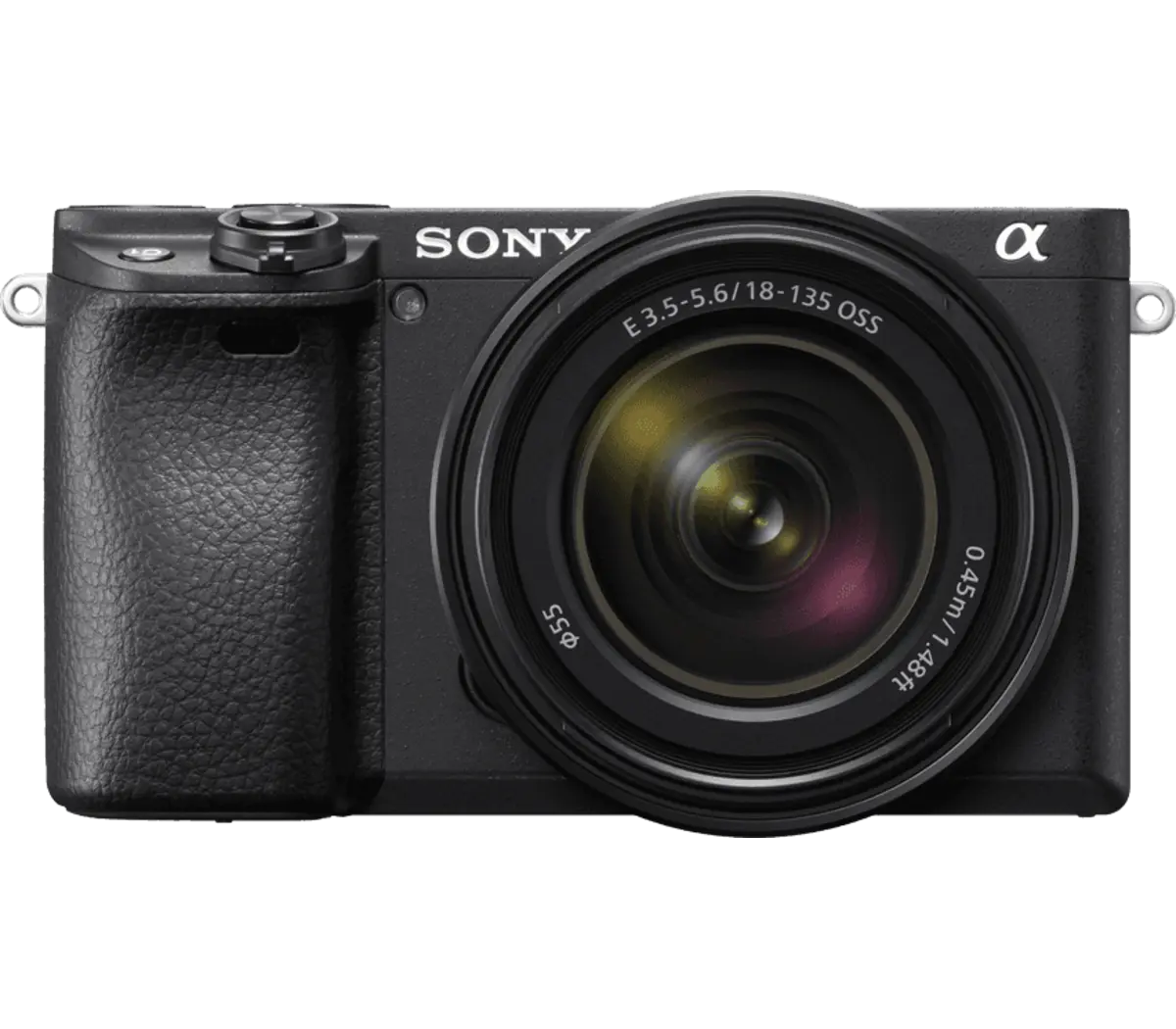
The Fujifilm X100VI and the Sony A6400 are both popular APS-C cameras, often topping the lists for enthusiasts and advanced amateurs looking for high-quality imaging in compact bodies. Despite belonging to different categories-the X100VI as a premium fixed-lens compact and the A6400 as an interchangeable lens mirrorless-both serve photographers who prioritize portability and image quality without the weight and complexity of larger full-frame systems.
Potential buyers commonly compare these two because they are priced in adjacent brackets, both boast APS-C sensors, and offer strong autofocus and burst shooting capabilities. Key differentiators include the lens ecosystem (fixed vs. interchangeable), sensor resolution, in-body stabilization, video features, and design philosophy. The choice generally comes down to whether a user values the flexibility of interchangeable lenses (A6400) or the refined shooting experience and unique design of the X100VI.
Specifications Comparison
Detailed Comparison
Image Quality
The Fujifilm X100VI stands out with its 40-megapixel X-Trans APS-C sensor, which is among the highest resolution in this sensor size. This additional resolution provides greater flexibility for cropping, more detail in landscapes, and better performance in large prints. Fujifilm's color science and film simulations further enhance its output for JPEG shooters, producing appealing colors straight out of the camera. The fixed 23mm f/2 lens is sharp and versatile, though users are limited to this focal length (with optional wide/tele adapters).
The Sony A6400 utilizes a 24-megapixel APS-C sensor. While not as high-resolution as the X100VI, this sensor delivers very good detail, dynamic range, and noise performance. Sony files are generally neutral, making them flexible for post-processing, but may require more effort to match Fujifilm's out-of-camera looks. The big advantage is the ability to choose from a wide range of Sony E-mount lenses, making the A6400 a strong option for specialized photography like wildlife, sports, or portraiture.
In terms of ISO, both cameras cover similar native ranges (ISO 125-12800 for X100VI, 100-32000 for A6400) and are similar in real-world low-light performance, though the Fujifilm has a slight edge thanks to the newer sensor. However, the X100VI's extra megapixels will only matter if you consistently print large or crop extensively. Users prioritizing color rendering and high detail will prefer the X100VI; those seeking lens versatility might prioritize the A6400 despite its lower resolution.
Autofocus System
Both cameras feature class-leading autofocus with 425 phase-detection points, promising reliable subject tracking and fast focus acquisition. The X100VI benefits from Fujifilm's updated AF algorithms, inherited from their flagship models, which have improved tracking and face/eye detection, performing exceptionally well in both stills and moderate action shots. The integration of subject detection (including animal, vehicle, and more) further enhances its versatility.
The Sony A6400 is well-known for its real-time Eye AF and real-time tracking, which are highly responsive and effective for both humans and animals. Sony was an early leader in this area and their AF system is particularly trusted by sports and event photographers. In continuous AF and video, the A6400 delivers smooth and sticky subject tracking, making it one of the best in its class even several years after launch.
Both systems are fast, reliable, and sophisticated. The main difference is that the A6400 may offer a marginal edge in continuous tracking, especially when using compatible Sony lenses, while the X100VI closes the gap with its subject detection modes. Overall, AF performance is very close; the choice depends on preferred shooting scenarios and lens options.
Video Capabilities
The Sony A6400 was designed with vloggers and content creators in mind, featuring 4K video up to 30p, a tilting screen ideal for self-recording, and advanced autofocus during video. Its video quality is crisp, with minimal rolling shutter, and it offers profile options like S-Log for more serious grading. The lack of in-body stabilization does mean users may need stabilized lenses or gimbals for handheld shots, but overall, the A6400 is a strong hybrid camera at its price point.
By contrast, the Fujifilm X100VI offers video features but does not prioritize this mode to the same degree. While it introduces some improvements over earlier X100 models-including IBIS, 4K recording, and subject detection AF-the fixed wide-angle lens, absence of a mic input, and more limited video ergonomics make it less appealing for frequent videographers. Its IBIS does help steady handheld footage, but the camera's primary focus remains still images.
Content creators who want flexible, high-quality video will find the A6400 superior for this purpose, thanks to its lens selection, flip screen, and mature video features.
Build & Ergonomics
The Fujifilm X100VI continues the iconic, retro-inspired design for which the X100 series is famous. It features high-quality materials, tactile controls, and a unique hybrid optical/electronic viewfinder, which appeals deeply to street and documentary photographers. The X100VI now includes weather resistance (when using the optional filter), and its in-body stabilization ensures steadier shots for both stills and video. The build quality feels premium and is geared toward the enthusiast who enjoys a classic shooting experience.
On the other hand, the Sony A6400 sports a more utilitarian design, constructed with an alloy chassis and a deep grip considering its small size. It is also weather sealed, making it adaptable to different environments and lens combinations. The tilting screen is useful for vlogging and awkward shooting angles, though the electronic viewfinder is lower in resolution than the X100VI's, and overall handling can depend heavily on lens choice.
The X100VI weighs in at 521g, heavier than the A6400's 403g, but much of that comes from its solid construction and built-in lens. Photography purists and those desiring physical controls may prefer the X100VI's tactility and hybrid viewfinder. For those who favor flexibility and lighter carry with small prime lenses, the A6400 has the edge.
Battery & Storage
The Fujifilm X100VI offers a CIPA-rated battery life of 450 shots per charge, which is respectable for a compact camera-especially considering its high-resolution sensor and IBIS. The single SD card slot is standard for cameras this size, though it lacks the charge while using (USB-PD) options seen on some recent bodies. Real-world usage often yields better results than CIPA ratings, and the X100VI's efficiency is improved over prior generations.
The Sony A6400 is rated for 410 shots per charge, somewhat less than the X100VI but generally still sufficient for a full day of casual or travel shooting. The single SD card slot is the norm for this class. One advantage is that the A6400 can charge over micro USB, and with smaller, more affordable batteries, it's easy to carry a spare for longer outings.
Overall, the differences are minor. Both offer similar endurance for their respective sensor sizes. The X100VI edges ahead with slightly longer battery life, but the A6400's batteries are smaller, lighter, and less costly.
Value for Money
At $1599, the Fujifilm X100VI is a premium offering, targeting enthusiasts who value unique design, shooting experience, and top-tier imaging quality in a fixed-lens package. The cost reflects the craftsmanship and high-end features such as IBIS and hybrid viewfinder, but the lack of interchangeable lenses limits versatility in the long run. For photographers who appreciate the X100 shooting ethos, the price is often seen as justified.
The Sony A6400 comes in at $900 (body only), making it substantially more affordable. It offers similar core performance (sensor size, burst rate, and AF), excellent video features, and access to a huge ecosystem of lenses at every budget level. For most users, especially those just starting out or seeking flexibility for growth, the A6400 provides a stronger value proposition.
While the X100VI justifies its price for its intended audience, the A6400 is an extremely cost-effective entry point (and upgrade path) into high-quality interchangeable lens photography.
Lens Ecosystem
The Fujifilm X100VI features a fixed 23mm f/2 lens (35mm equivalent), which is sharp and versatile for everyday and documentary shooting, but limits users to one focal length unless using optional wide or teleconverters. This design makes it a deliberate creative tool, focusing the photographer's vision and decreasing decision fatigue, but restricts genre flexibility.
The Sony A6400, by contrast, uses the versatile Sony E-mount system. This opens access to dozens of native Sony lenses-ranging from ultra-wide zooms to super-telephotos, macros, portrait primes, and third-party options. The system gives photographers the freedom to customize their kit to any style or subject and is widely considered one of the most comprehensive APS-C mirrorless ecosystems available. This flexibility is a major advantage for anyone who wishes to experiment with multiple genres or grow their system over time.
For pure versatility and expansion, the A6400's interchangeable lens system is the clear winner.
Our Verdict
Overall, the Sony A6400 edges out the Fujifilm X100VI based on a tally of practical advantages: lens flexibility, more affordable pricing, and superior video capabilities appeal to a broad array of photographers and videographers. For users who desire a system to grow with-covering genres from landscape to portrait, macro to sports-the A6400's interchangeable lens system and extensive lens ecosystem make it the logical choice. It remains one of the most accessible ways to enter high-quality mirrorless photography. However, the X100VI carves a unique niche. It offers best-in-class image quality among APS-C compacts, tactile controls, in-body stabilization, and the desire for a photographic experience grounded in simplicity and premium craftsmanship. The X100VI excels for those who prefer a one-camera, one-lens approach-especially for travel, street, or everyday photography. Despite its higher price, it delivers unmatched character and satisfaction to users who appreciate its constraints. Choose the Sony A6400 if flexibility and value matter most, or the X100VI if you desire a premium, all-in-one camera that inspires you to shoot.