
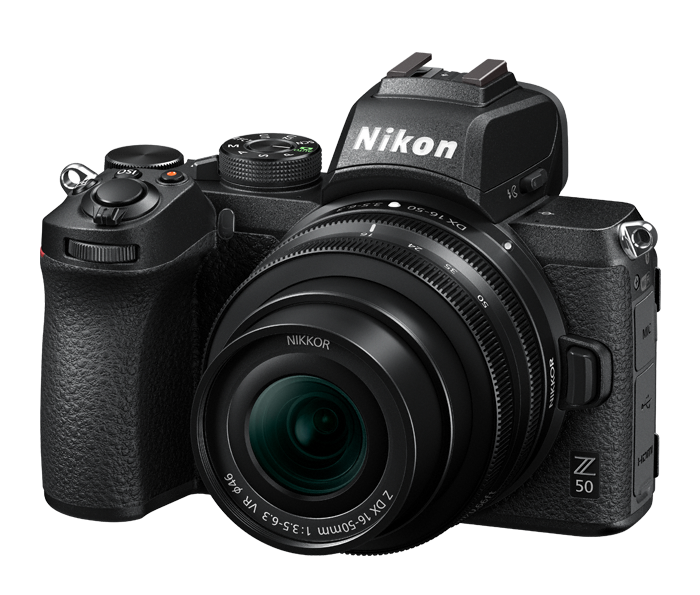
The Fujifilm X100VI and the Nikon Z50 are two popular APS-C camera systems that cater to different types of photographers. The X100VI is a compact, high-quality camera known for its exceptional image quality and unique hybrid viewfinder, making it a favorite among street and travel photographers. In contrast, the Z50 is an entry-level mirrorless camera that provides a solid balance between size, usability, and capability, appealing more to beginners and those who prioritize versatility and a broader lens ecosystem. Choosing between these models often comes down to a photographer's needs regarding portability, image quality, and preferred shooting style, as each camera excels in different areas and offers distinct features.
Specifications Comparison
Detailed Comparison
Image Quality
The Fujifilm X100VI features a 40-megapixel APS-C sensor which captures incredibly detailed images, making it ideal for those who need high-resolution output. The larger pixel count also aids in quality during tight cropping situations, while its expanded ISO range allows for low-light shooting with commendable noise performance. When you compare this to the Nikon Z50's 21-megapixel sensor, the difference in resolution is significant, especially for photographers who prioritize detail in their work. Additionally, the X100VI benefits from Fujifilm's advanced film simulation modes, which provide unique color profiles that can enhance aesthetic qualities in images. Conversely, while the Z50's image quality is quite respectable due to its 21-megapixel APS-C sensor, it may not match the level of detail or unique color rendering provided by the X100VI. The Z50 holds its own, particularly for general-purpose photography, but the X100VI's superior sensor gives it a clear edge in image quality overall.
Autofocus System
Auto-focusing capability is crucial for capturing fast-moving subjects or spontaneous moments. The Fujifilm X100VI offers 425 autofocus points, providing a dense and responsive focusing grid that ensures quick and accurate focus acquisition even in challenging lighting situations. This feature is vital for street photographers who often work quickly and in dynamic environments. On the other hand, the Nikon Z50 has 209 autofocus points, which may sound limiting compared to the X100VI, but it still offers reliable performance for most shooting scenarios. The Z50 is designed with a good autofocus system that works efficiently for general photography and includes face-detection features, making it user-friendly, especially for beginners. However, for advanced users, the X100VI's dense array of focus points delivers a more precise autofocus experience.
Video Capabilities
In the realm of video, the Nikon Z50 shines with its 4K 30p capability, catering to vloggers and content creators who need quality video alongside still images. Although the Z50 lacks in-body stabilization, its compactness and built-in microphone port offer considerable appeal for video work. Additionally, the Z50 employs electronic and continuous autofocus during video recording, enhancing the usability for moving subjects. Contrarily, the Fujifilm X100VI does not emphasize video capabilities as it is primarily positioned as a photography-centric camera. While it does support video recording, its strengths truly lie in still photography. Therefore, for users who prioritize video alongside stills, the Z50 is the clear victor, although the X100VI remains competent for casual video shooting.
Build & Ergonomics
When it comes to build quality, the Fujifilm X100VI offers a premium feel with its metal body and extensive user customization options, making it an attractive choice for enthusiasts who appreciate tactile controls. Its hybrid viewfinder provides versatility for both optical and electronic viewing, enhancing the shooting experience. Moreover, the X100VI's compact dimensions make it an ideal travel companion. In contrast, the Nikon Z50, while lighter at 450g, features a weather-sealed body which offers peace of mind for outdoor shooting in various conditions. The larger grip is ergonomic and provides comfort during extended use, particularly for novices who may still be developing their shooting techniques. Both cameras are solid in terms of build, yet the X100VI's premium design feels more substantial, while the Z50's weather-sealing and grip may serve photographers better in rigorous environments.
Battery & Storage
In terms of battery life, the Fujifilm X100VI holds the advantage with approximately 450 shots per charge, which is beneficial for long shooting days without the need to recharge frequently. This can be especially advantageous for street or travel photographers who may find themselves in locations where access to power is limited. The Nikon Z50 has a shorter battery life at around 320 shots, which may necessitate carrying extra batteries depending on usage patterns. Moreover, the Z50 features dual SD card slots that provide flexible storage options, while the X100VI includes just one card slot. For photographers who value extended shooting without interruptions, this aspect could sway preference towards the Z50 despite its shorter battery life.
Value for Money
The Fujifilm X100VI is priced at $1599, which reflects its premium build quality, advanced features, and superb image quality. While it is a more substantial investment, its performance targets serious enthusiasts or professionals who require higher specifications. The exceptional imaging characteristics and film simulation options found in the X100VI enhance its perceived value within its niche market. On the other hand, the Nikon Z50 is priced at $859, representing a compelling option for beginners or casual enthusiasts seeking a capable mirrorless system. At this price point, users get functional capabilities, including 4K video and an interchangeable lens mount, which expands their photographic possibilities significantly. The sheer difference in price makes the Z50 an attractive value for those starting their photography journey or seeking a more accessible system.
Lens Ecosystem
The Fujifilm X100VI features a fixed lens, which might limit flexibility for some users but emphasizes the camera's compactness and specific shooting style, making it perfect for street, travel, and candid photography. The camera's lens, designed with exceptional quality, is optimized for the camera's sensor and produces remarkable results, but users cannot swap for alternative focal lengths or styles. In contrast, the Nikon Z50 utilizes the Nikon Z mount, opening up a variety of Nikkor Z lenses for creative versatility. This lens ecosystem allows photographers to choose from wide-angle to telephoto options, making the Z50 suitable for various photography genres and adaptable to different user needs over time. For those who seek flexibility in their shooting approach, the Z50's interchangeable lens system is a significant advantage.
Our Verdict
In conclusion, the Fujifilm X100VI emerges as the overall winner for photographers who prioritize image quality, ergonomics, and unique features like its hybrid viewfinder and advanced autofocus system. It excels in street and travel photography contexts where compactness and high-resolution output are essential. Conversely, the Nikon Z50 provides great value for money, offering a robust entry into the world of mirrorless cameras, suitable for beginners or those looking for a versatile system focused on video and a broad lens ecosystem. Ultimately, the choice depends on the user's specific needs; if it's high-quality photography and a premium feel, the X100VI stands out, while budget-conscious or beginner photographers may find the Z50 more appealing.
Fujifilm X100VI
Nikon Z50
Also Compare
Frequently Asked Questions
Is the Fujifilm X100VI better for street photography?
Yes, the Fujifilm X100VI's compact size, high-resolution sensor, and excellent autofocus make it ideal for street photography, allowing for quick captures and stunning image quality.
Can the Nikon Z50 handle 4K video?
Absolutely, the Nikon Z50 can shoot 4K video at 30 frames per second, making it a suitable choice for content creators and vloggers.
Which camera has better battery life?
The Fujifilm X100VI offers longer battery life with approximately 450 shots per charge, compared to the Nikon Z50's 320 shots, making it better for extended shooting sessions.
Does the Fujifilm X100VI have interchangeable lenses?
No, the Fujifilm X100VI has a fixed lens. This design is aimed at those who prefer a compact camera system without the need for changing lenses.
Which camera is better for beginners?
The Nikon Z50 is more suited for beginners due to its user-friendly interface, interchangeable lens mount, and generally lower price point, offering a wider range of options as one develops their skills.