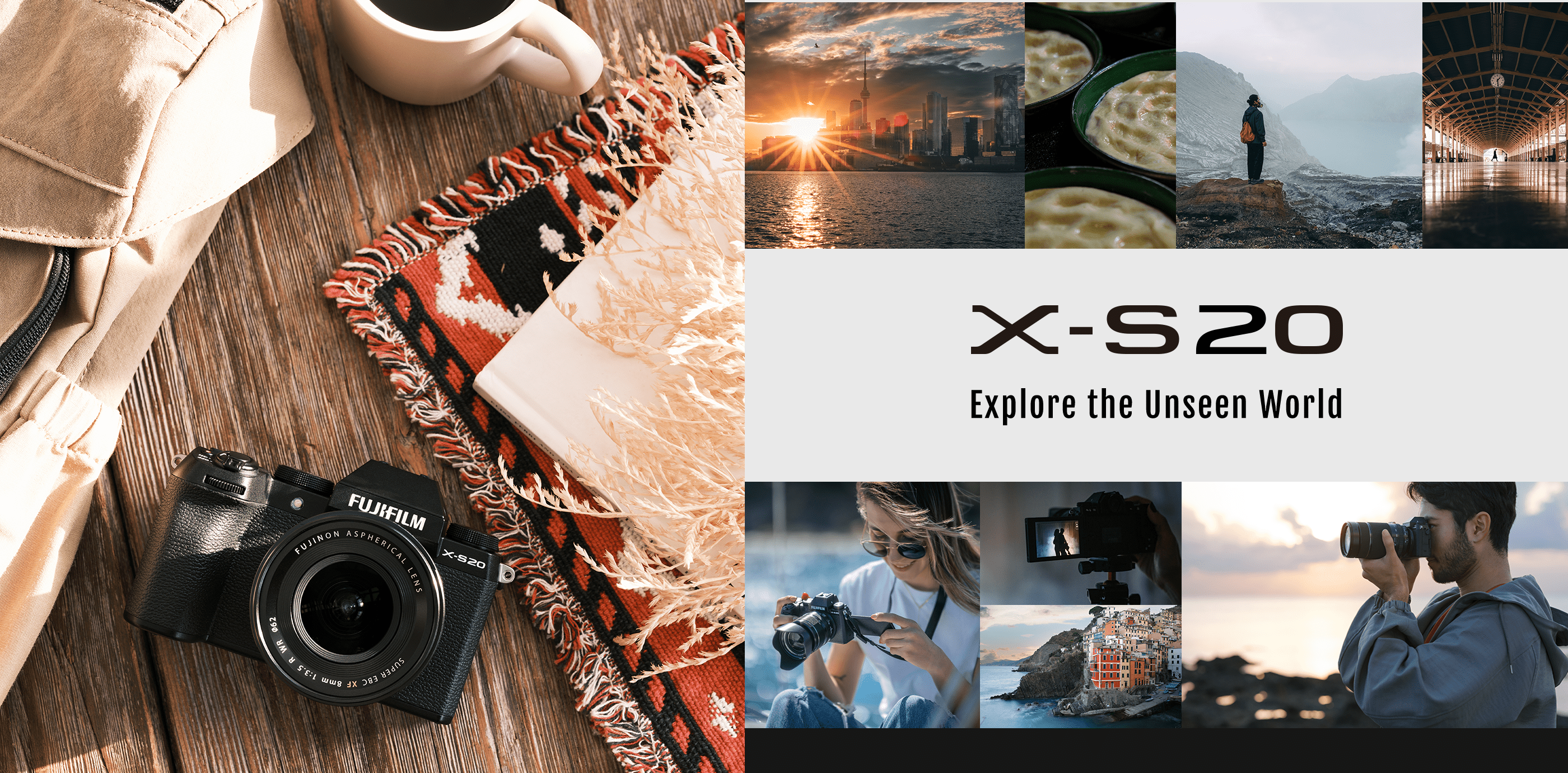
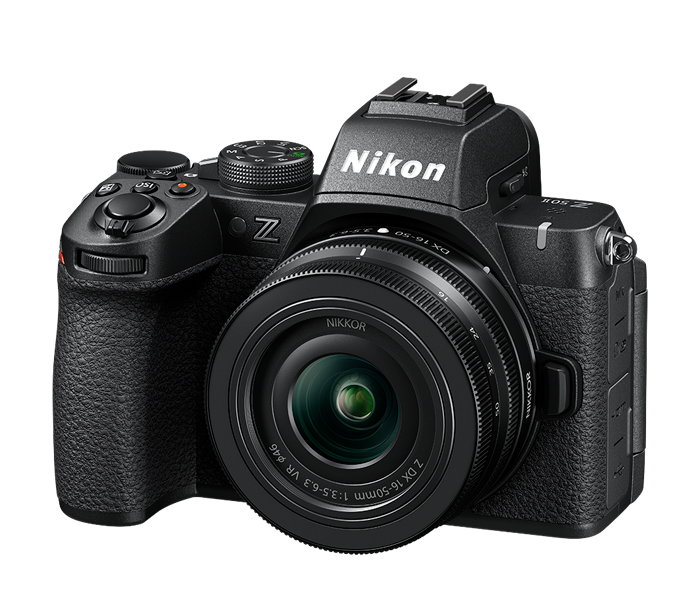
The Fujifilm X-S20 and Nikon Z50II are two compelling mirrorless cameras in the APS-C segment, often compared by photography enthusiasts looking for a versatile and high-performing camera body. Both models cater to a similar audience, including travelers, vloggers, and casual photographers who strive for impressive image quality and user-friendly features. The key differentiators lie in their specifications and intended user experience, notably in their autofocus systems, video capabilities, and overall build quality.
Specifications Comparison
Detailed Comparison
Image Quality
When it comes to image quality, both cameras offer a solid performance thanks to their APS-C sensors. The Fujifilm X-S20 boasts 26 megapixels, which delivers finer details and more flexibility in cropping compared to the Nikon Z50II's 21 megapixels. Additionally, the X-S20's ISO range is commendable, extending from 160 to 12,800 (expandable to 80-51,200), allowing for better performance in low-light situations. Meanwhile, the Z50II has a slightly wider native ISO range of 100 to 51,200 (expandable to 204,800), which may provide marginal benefits in extreme low-light scenarios. However, the X-S20's higher pixel count typically results in better detail clarity, making it a favorable choice for detailed landscape and portrait photography.
Furthermore, Fujifilm is renowned for its film simulation modes, which can produce visually appealing JPEGs straight out of the camera. The X-S20 excels in color reproduction, providing rich and contrasty images. In contrast, while the Z50II also produces high-quality images, it may not match Fujifilm's filmic aesthetics. Therefore, in terms of image quality, the X-S20 holds a slight edge over the Z50II.
Autofocus System
Autofocus performance is crucial for capturing fast-moving subjects, and here, the Fujifilm X-S20 significantly outperforms the Nikon Z50II. With 425 autofocus points, the X-S20 has a more advanced and extensive AF system that can quickly and accurately lock onto subjects, making it well-suited for action photography and dynamic shooting scenarios. On the other hand, the Z50II's autofocus system, featuring 231 points, can struggle in comparison, especially in rapidly changing environments.
Moreover, the X-S20 utilizes cutting-edge AI-driven subject detection, allowing for better tracking of various subjects like people and animals, which is essential for wildlife or sports photography. The Z50II's autofocus, while competent and reliable for general use, lacks the same level of AI sophistication. This difference could be a decisive factor for users prioritizing fast and reliable autofocus capabilities in their shooting styles.
Video Capabilities
Video recording capabilities are vital for content creators, and the Fujifilm X-S20 stands out with a maximum video resolution of 4K at 60p, allowing for high-quality, smooth footage. This feature makes it an attractive option for vloggers and filmmakers who require high frame rates for dynamic scenes. The X-S20 also benefits from its 7-stop image stabilization, minimizing shakes and allowing for more stable video capture even when shooting handheld.
In contrast, the Nikon Z50II supports 4K video but is limited to a maximum of 30p, which may not suffice for those looking to produce high-frame-rate content. Additionally, the absence of in-body stabilization could hinder its performance for videographers, particularly in situations requiring mobility. Thus, for users focused on video performance and stabilization, the Fujifilm X-S20 is the clear winner.
Build & Ergonomics
Both cameras feature a robust construction with electronic viewfinders, but the ergonomics and build quality present some distinctions. The Fujifilm X-S20, while slightly lighter at 491g, still feels sturdy and comfortable in hand thanks to its compact design. However, the Z50II offers a slightly larger 3.2-inch screen, which can provide a better viewing experience during playback and menu navigation, although it has a lower resolution of 1,040,000 dots compared to the X-S20's 1,840,000 dots.
Another significant factor is that the Z50II is weather-sealed, lending it an advantage for outdoor photographers who may encounter various environmental conditions. This feature allows for greater versatility, particularly for travel and adventure photographers. Therefore, while both cameras have their merits, the Z50II offers superior durability, whereas the X-S20 excels in display quality and weight.
Battery & Storage
Battery life is another essential consideration, particularly for users who shoot for extended periods. The Fujifilm X-S20 offers a battery life rated for approximately 750 shots, which significantly outperforms the Z50II's 250 shots. This advantage allows for longer shooting sessions without the hassle of constantly changing batteries, particularly beneficial for events or travel.
In terms of storage, both cameras utilize SD cards, but the X-S20's higher capacity for continuous shooting although it supports more advanced card formats than the Z50II. Given that the battery performance is a crucial determinant for many photographers, especially during long events or outdoor shoots, the X-S20 has a clear advantage in this category.
Value for Money
As per current market pricing, the Fujifilm X-S20 retails at approximately $1,299 while the Nikon Z50II is slightly lower-priced but offers less in terms of specifications. The X-S20 provides features that cater more towards advanced users, including higher megapixels, superior autofocus, and enhanced video capabilities, which can justify its price point. The extra cost may make a better investment for those focused on high-quality images, versatile video production, and dependable performance.
The Z50II, while overall a good value for those on a tighter budget, does not match the level of performance offered by the X-S20. Users prioritizing advanced features over price may lean towards the X-S20, making it a better value overall despite being slightly more expensive. Therefore, in terms of overall performance and features aligned with price, the X-S20 comes out as the more valuable option.
Our Verdict
Overall, the Fujifilm X-S20 is the clear winner for its superior image quality, advanced autofocus capabilities, and impressive video features. It excels in scenarios where image detail and dynamic shooting are crucial, making it a favored choice among serious photographers and content creators alike. On the other hand, the Nikon Z50II invites users who value weather sealing and a robust build while not requiring the high-end features of the X-S20, catering to those with more generic photography needs.