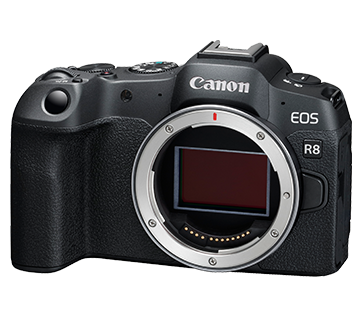

The Canon EOS R8 and Sony A9 III are two compelling full-frame mirrorless cameras aimed at different segments of the photography market. Both launched in 2023, these cameras are commonly compared by enthusiasts, professional photographers, and videographers who are looking for high-performance options with advanced features. The EOS R8 targets those who prioritize a balance of image quality and price, while the A9 III is tailored for professionals requiring high-speed shooting and advanced video capabilities. Key differentiators include autofocus performance, video resolution, and stabilization features, which play a crucial role in determining the suitability of each camera for various shooting scenarios.
Specifications Comparison
Detailed Comparison
Image Quality
Both the Canon EOS R8 and the Sony A9 III utilize a full-frame sensor, providing excellent image quality and depth of field control. The Canon R8 features a 24 MP sensor, while the Sony A9 III comes with a slightly higher 25 MP. This marginal increase in resolution means that the A9 III may produce slightly more detailed images, particularly in cropping scenarios. However, both cameras excel in low-light performance thanks to their wide ISO ranges: the R8 goes from 100 to 102400, perfect for various lighting conditions, while the A9 III also features excellent performance in lower light but is limited to a smaller usable ISO range in practice due to increased noise at higher settings. Overall, both cameras deliver impressive results that can meet the demands of most photographers.
Autofocus System
The Canon EOS R8 boasts an impressive autofocus system with 1053 autofocus points, providing excellent tracking capabilities for moving subjects. This makes it suitable for various photography styles, from portraits to sports photography. The Sony A9 III, on the other hand, is known for its advanced autofocus technology, featuring highly effective Eye-AF and a fast and responsive system that excels in high-speed scenarios, with a dramatic max frame rate of 120 fps for burst shooting. This enables the A9 III to capture fleeting moments with precision. Thus, while both cameras have capable autofocus systems, the A9 III's superior performance in fast-paced environments gives it an edge.
Video Capabilities
For videographers, the Canon EOS R8 provides a solid 4K video recording capability at 60 fps, which is suitable for most general use cases, including vlogging and cinematic projects. In contrast, the Sony A9 III takes video recording up a notch, offering 4K resolution video at an impressive 120 fps, which allows for stunning slow-motion footage and more creative control. Moreover, the A9 III supports advanced video features like S-Log and HLG, which enhance post-production flexibility. While both cameras cater well to video use, the A9 III is clearly positioned as a more advanced choice for those who require higher frame rates and professional-grade features.
Build & Ergonomics
In terms of build quality, both cameras have weather-sealing, making them capable of enduring challenging shooting environments. The Canon EOS R8, while lighter at 461 grams and slightly more compact, offers a good balance of functionality and portability, which is appealing for travel photography. The Sony A9 III, weighing in at 617 grams, is a bit heftier but features a robust design and ergonomic grip that caters to extended shooting sessions. Furthermore, the A9 III has a larger 3.2-inch screen compared to the R8's 3-inch display, which provides slightly more real estate for menu navigation and focusing. Both cameras excel in build quality but cater to different user preferences regarding weight and handling.
Battery & Storage
The Canon EOS R8 supports a moderate battery life, but specifics in terms of photos per charge are still to be evaluated. It utilizes the LP-E6NH battery, which is compatible with other Canon models, providing a reasonable capacity for a day of shooting. In contrast, the Sony A9 III features a more robust battery system enabling longer shooting times-reportedly rated for around 580 shots per charge with the NP-FZ100 battery. Additionally, both cameras offer dual card slots, but the A9 III stands out with its storage flexibility supporting CFexpress Type A and SD UHS-II cards, catering better for high-speed data writing necessary for burst shooting and 4K video. This introduces more versatility when managing large files, particularly for professional videographers and photographers.
Value for Money
The Canon EOS R8 is priced at $1499, making it a more budget-friendly option for photographers who desire a full-frame camera with solid performance without breaking the bank. It offers essential features for enthusiasts and semi-professionals. In contrast, the Sony A9 III, while superior in many aspects, comes with a significantly higher price point, which may deter some users and is more suitable for professional applications. For those who require exceptional speed and advanced video capabilities, the investment in the A9 III may be justified, but for casual users or those new to full-frame photography, the R8 presents a more practical choice. Therefore, while both cameras provide good value, the best choice depends on individual needs and budget considerations.
Our Verdict
Overall, while the Canon EOS R8 offers excellent value for hobbyists and enthusiasts, the Sony A9 III wins in distinguishing features such as autofocus speed, video capabilities, and battery life, making it a superior choice for professionals. The R8 suits those who prioritize a lightweight, budget-friendly camera with solid performance. Conversely, the A9 III is tailored for high-performance tasks and would be favored by sports photographers and videographers requiring advanced features. If your focus is on versatility, high-speed performance, and advanced video capabilities, the A9 III is the clear winner.
Canon EOS R8
Sony A9 III
Also Compare
Frequently Asked Questions
Which camera is better for video recording?
The Sony A9 III excels in video capabilities with 4K 120p, advanced video options, and excellent heat management, making it the better choice for professional videographers.
Is the Canon EOS R8 good for low-light photography?
Yes, the Canon EOS R8 has a wide ISO range (100-102400) that allows for good low-light performance, making it suitable for various photography settings.
How does the autofocus perform in both cameras?
The Canon EOS R8 features 1053 autofocus points that perform well for general use. However, the Sony A9 III, with its superior tracking capabilities and speed, is better suited for fast and dynamic shooting scenarios.
Are both cameras weather-sealed?
Yes, both the Canon EOS R8 and Sony A9 III have weather-sealing, allowing for shooting in challenging conditions, making them both reliable options for outdoor photography.
What are the main differences in weight and handling?
The Canon EOS R8 is lighter (461g) and more compact compared to the heavier Sony A9 III (617g). Therefore, the R8 offers better portability, while the A9 III provides enhanced ergonomics for prolonged use.