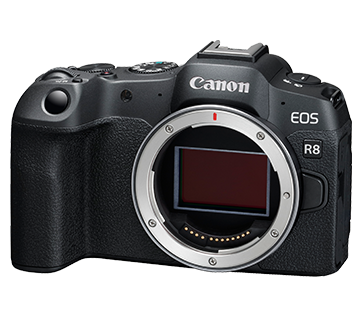

The Canon EOS R8 and Sony A9 II are two exceptional full-frame mirrorless cameras that cater to professional and advanced enthusiasts alike. The EOS R8, released in 2023, signifies Canon's dedication to offering high-quality imaging capabilities with a more accessible price point, while the A9 II, launched in 2019, showcases Sony's commitment to high-speed performance, making it particularly appealing to sports and action photographers. Buyers often grapple with choosing between the two due to their impressive specifications, focusing on factors such as speed, image quality, and usability depending on their specific needs.
Key differentiators between the two include the autofocus systems, frame rates, video capabilities, and overall ergonomics. The EOS R8 focuses on delivering a well-rounded performance with a comprehensive feature set at a competitive price, while the A9 II shines in fast-paced environments, thanks to its high frame rate shooting and advanced autofocus system. This comparison will delve into these aspects to help prospective buyers make an informed decision.
Specifications Comparison
Detailed Comparison
Image Quality
Both the Canon EOS R8 and the Sony A9 II are equipped with a 24-megapixel full-frame sensor, offering excellent image quality across various lighting conditions. The EOS R8 boasts an ISO range extending up to 102400, enabling exceptional low-light performance. In contrast, while the A9 II's standard range is slightly narrower (100-51200), it can be expanded to a maximum of 204800, allowing for impressive sensitivity during nighttime shooting or in challenging lighting scenarios.
Canon's color science tends to favor a warmer tone, often preferred for portrait and skin tones, while Sony is praised for its dynamic range and color accuracy, especially in landscapes. Users may notice a slight difference in images' overall feel, depending on the chosen camera.
In practical terms, both cameras deliver outstanding performance for most photographers, yet the greater ISO range of the R8 provides a tangible advantage in low-light situations without significant noise. However, photographers can confidently use both systems for professional results, especially in well-lit environments.
Ultimately, due to its superior ISO capabilities, the image quality aspect slightly favors the EOS R8.
Autofocus System
The autofocus systems of the R8 and A9 II represent two approaches to achieving fast and accurate focusing. The Canon EOS R8 features an extensive 1053 autofocus points, making it remarkable for tracking subjects across the frame, especially with moving objects, thanks to its Dual Pixel CMOS AF technology.
The Sony A9 II, on the other hand, offers 693 phase-detection autofocus points, which is slightly fewer than the R8. However, the A9 II excels in speed and accuracy, particularly in high-speed scenarios, thanks to its continuous shooting speed of 20 fps compared to the R8's 6 fps. This capability makes it the superior choice for action photography, such as sports or wildlife.
Both cameras deliver impressive autofocus performance under various conditions, but the high-speed shooting of the A9 II is unmatched, particularly in rapidly changing environments. For photographers needing swift focus retention and subject tracking, the A9 II is the clear winner in this category.
Overall, while both systems are highly capable, Sony's A9 II takes the lead in autofocus performance due to its unmatched speed and reliability.
Video Capabilities
When comparing video capabilities, the Canon EOS R8 stands out with its ability to record 4K video at 60 frames per second, providing opportunities for high-quality, smooth video capture. The higher frame rate enables more versatility in creative video projects, appealing to content creators and videographers alike.
The Sony A9 II offers 4K video recording at a maximum of 30 fps, which is sufficient for many applications, but it falls short of the R8's capabilities. The A9 II does feature advanced video tools, such as S-Log3 and HLG recording profiles, which are highly beneficial for professional video production and color grading. Additionally, while both cameras support electronic viewfinders, the A9 II is still slightly favored in the overall video specifications due to its advanced codec support and color profiles.
However, for most users, the smoothness and flexibility of the EOS R8's video capabilities at higher frame rates make it more suitable for dynamic shooting environments. Therefore, if video performance is pivotal in your decision-making, the EOS R8 has a noteworthy advantage.
Build & Ergonomics
Both the Canon EOS R8 and Sony A9 II are well-built, featuring weather-sealing that protects against the elements, making them suitable for outdoor use. The R8 is notably lighter at 461 grams, making it a more portable option for travelers and documentary photographers who need to minimize gear weight over long shooting sessions.
In terms of dimensions, the R8 is slightly more compact than the A9 II, which may appeal to users seeking a smaller form factor without sacrificing performance. However, the A9 II weighs more (678 grams) but is regarded as ergonomically friendly with a comfortable grip, especially useful during extended periods of use.
While both cameras offer electronic viewfinders and rear LCD screens, the R8 features a slightly higher resolution (1,620,000 dots compared to 1,440,000 dots in the A9 II), offering improved clarity in previewing images and navigating menus. The placement of controls and dials may also differ based on user preference, affecting overall usability.
In conclusion, while both cameras are robust and well-designed, the Canon EOS R8's lighter weight and compact design give it a slight edge in built and ergonomics for portability.
Battery & Storage
Battery life is a crucial factor for many photographers, and here the Sony A9 II offers a more impressive performance with a rated lifespan of 690 shots on a single charge, thanks to its larger battery design. This endurance makes it better suited for long shoots, particularly in demanding situations where charging may not be feasible.
The Canon EOS R8 does not specify a battery life comparable to the A9 II but has generally reported lower performance, leading to more frequent battery changes during long assignments. This can be a drawback for users on the go, especially in event or landscape photography where access to spare batteries might be limited.
Both cameras support dual card slots, with the A9 II enabling storage for different formats, which can be vital for professionals working with large file sizes or specific workflows. Both brands also offer robust wireless connectivity options.
Thus, when considering battery life and storage flexibility, the Sony A9 II stands out due to its superior battery lifespan and robust storage capabilities.
Value for Money
The pricing of the Canon EOS R8 at $1499 positions it as a more approachable option compared to the Sony A9 II, which is priced at $4500. For enthusiasts and semi-professionals, the R8 offers a compelling mix of features, including excellent image quality, advanced video capabilities, and a lightweight form factor, making it a strong value proposition.
On the other hand, the A9 II justifies its higher price point with its remarkable speed and performance, especially appealing to professionals shooting fast-action scenarios. Despite being significantly more expensive, the A9 II may provide a worthwhile investment for dedicated sports photographers and videographers who need top-tier performance and reliability.
When evaluating the overall value, the R8 provides exceptional features at a lower price point, making it suitable for a broader audience who may not require the high-speed capabilities offered by the A9 II. While the A9 II does present advanced options, its cost may deter casual photographers or those less focused on high-action photography.
In essence, in terms of value for money, the Canon EOS R8 emerges as the better choice for those prioritizing a balanced feature set without an overwhelming financial commitment.
Our Verdict
In the overall evaluation, the Canon EOS R8 narrowly takes the win over the Sony A9 II. The R8 excels in image quality, video capabilities, ergonomics, and value for money, making it an outstanding choice for enthusiasts and hobbyists looking for a versatile and affordable full-frame mirrorless camera. However, the A9 II's high-speed autofocus and battery life make it an excellent choice for professionals in need of fast-action capabilities. Ultimately, the best choice depends on the specific needs of the photographer-those focused on portability, high-quality video, and affordability should lean towards the R8, while those engaged in high-speed action photography will find the A9 II to be a robust investment.
Canon EOS R8
Sony A9 II
Also Compare
Frequently Asked Questions
Which camera is better for action photography?
The Sony A9 II is the better choice for action photography due to its high-speed shooting capabilities of up to 20 fps and advanced autofocus system that excels in quickly tracking moving subjects.
Which camera performs better in low light?
The Canon EOS R8 offers a more extensive ISO range (up to 102400), which can provide better low-light capabilities compared to the A9 II, especially useful for nighttime or dimly lit environments.
Is the Canon EOS R8 suitable for video work?
Yes, the Canon EOS R8 supports 4K video at 60 frames per second, making it an excellent choice for videographers seeking high-quality footage.
How important is weather sealing in these cameras?
Weather sealing is crucial for outdoor photographers, and both the EOS R8 and A9 II are weather-sealed, providing protection against dust and moisture, suitable for various shooting environments.
What are the advantages of mirrorless over DSLR systems?
Mirrorless cameras, including the EOS R8 and A9 II, typically offer lighter weight, better autofocus in live view, and quicker access to advanced features compared to traditional DSLR systems, making them appealing to contemporary photographers.