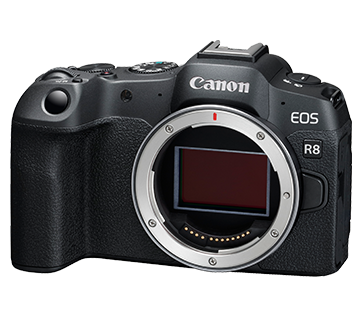

The Canon EOS R8 and Sony A7S III are two exceptional full-frame mirrorless cameras, favored by photographers and videographers alike. Both models have garnered attention for their impressive specifications and capabilities, making them popular choices among enthusiasts and professionals. The Canon EOS R8, launched in 2023, offers a more affordable price point and a versatile feature set, while the Sony A7S III, introduced in 2020, is celebrated for its superb low-light performance and advanced video features. Those considering these two models might be torn between video capabilities, low-light performance, and overall value for money, as they cater to slightly different needs in the photography and videography realms.
Specifications Comparison
Detailed Comparison
Image Quality
The resolution of a camera is a critical factor impacting image quality, and here the Canon EOS R8 has an edge with its 24 megapixels compared to the Sony A7S III's 12 megapixels. This higher pixel count allows for more detailed images, making the R8 a better choice for those who require large prints or are keen on cropping images while preserving quality. However, the A7S III compensates for its lower resolution with exceptional performance in low-light conditions due to its advanced sensor design, allowing it to capture cleaner images at higher ISO levels.
Both cameras utilize full-frame sensors, but the Canon's ISO range (100-102400) offers flexibility, while the Sony's range (80-102400, expandable up to 40-409600) allows for astonishing performance in extreme lighting conditions. Although both cameras offer powerful image processing systems, the Canon's greater megapixel count may yield better overall image quality, especially in well-lit environments, while the A7S III may shine in challenging low-light situations.
In practical usage, the difference will depend heavily on the user's intended applications. For typical portrait or landscape photography where detail is paramount, the R8 would likely perform better. On the flip side, for event coverage in dimly lit venues, the A7S III would likely be the superior choice due to its low-light capabilities.
Overall, while image quality varies depending on lighting conditions and use cases, the Canon EOS R8 edges ahead slightly in terms of overall resolution and detail capture, while the A7S III excels under extreme low-light conditions, leading to a complex but nuanced comparison.
Autofocus System
Autofocus performance is a critical consideration for many photographers and videographers. The Canon EOS R8 features an impressive 1053 autofocus points, significantly surpassing the Sony A7S III's 759 points. This expansive coverage enhances subject tracking and accuracy, especially in dynamic shooting situations. Canon's Dual Pixel autofocus technology is also noteworthy, providing smooth and fast focus transitions, critical for both video and photography.
In contrast, the Sony A7S III's autofocus system, while fewer in number, utilizes advanced AI-driven algorithms to make tracking moving subjects remarkably effective. The A7S III's system also has superior eye-detection capabilities in both stills and video, which can be a game-changer for portrait shots and dynamic scenes.
Where the R8 offers more points for coverage and potentially greater flexibility in selecting focus points, the A7S III compensates with intelligent recognition and fast focusing in real-time for moving subjects. This means that for a portrait photographer focused on detail, the R8 might be more favorable, whereas for action or wildlife photographers needing speed, the A7S III holds its own well.
Overall, while both systems are highly capable, the winner depends on the specific usage. For expansive coverage, the EOS R8 holds an edge, while the intelligent tracking of the A7S III makes it a strong contender.
Video Capabilities
When it comes to video features, the Sony A7S III is a powerhouse, offering 4K recording capability at up to 120 frames per second, which is particularly advantageous for high-frame-rate slow-motion footage. In contrast, the Canon EOS R8 maxes out at 4K 60p. While the R8 provides excellent video quality for casual users and vloggers, those looking to produce professional-grade slow-motion content will find the A7S III's capabilities superior.
Additionally, the A7S III's built-in stabilization offers 5.5 stops of stabilization, which aids in smooth handheld footage. This is a significant advantage for filmmakers who often shoot on the move. The Canon EOS R8 lacks in-body stabilization, which means users will need to rely on stabilized lenses or external gimbals to achieve smooth shots, impacting its handheld usability.
In terms of color profiles and dynamic range for video, the A7S III allows for detailed post-production flexibility with S-Log profiles and greater dynamic range, making it a preferred choice among professional videographers.
Therefore, while both cameras can shoot excellent video, the A7S III is the clear winner here, particularly for serious videography and filmmakers needing high frame rates and advanced color grading options.
Build & Ergonomics
Both cameras feature robust, weather-sealed bodies designed to withstand challenging shooting conditions, making them suitable for outdoor and professional use. The Canon EOS R8 is slightly lighter at 461g compared to the Sony A7S III's 699g, making it a more portable option for those who prioritize weight, particularly when carrying gear for long periods.
In terms of dimensions, the EOS R8 measures 133 x 86 x 70mm, while the A7S III is slightly bulkier at 129 x 97 x 81mm. Users may find the A7S III's grip more comfortable for prolonged use, especially during long shoots, as it provides a more substantial grip and handling experience.
Both cameras feature electronic viewfinders and tiltable 3-inch screens, but the EOS R8 provides a higher resolution of 1,620,000 dots versus the A7S III's 1,440,000 dots, which may make framing easier and viewing more comfortable in bright conditions.
Ultimately, while both models are ergonomically sound, the Canon EOS R8 may appeal to those who want a lighter camera for mobility, while the Sony A7S III offers a more comfortable grip and robust handling for thorough professional use, resulting in a tie in practical terms.
Battery & Storage
The battery life is a critical factor for both video and photography, and the Sony A7S III excels in this aspect, boasting an impressive 600 shots compared to the Canon EOS R8, which has not been specified but is generally believed to be shorter. This can result in the A7S III being more reliable during long shoots or when filming lengthy video sessions without needing frequent battery swaps.
Both cameras currently support dual card slots for storage, which is becoming a standard in professional models. The A7S III uses CFexpress Type A and SD UHS-II cards, offering faster write speeds that are essential for high-resolution video recording or burst shooting. On the other hand, the EOS R8's specifications do not provide detailed information about card slot types, which could impact its effectiveness during high-demand shooting scenarios.
In terms of practical usage, the longer battery life and superior storage options of the A7S III gives it a clear advantage, enhancing its utility for serious photographers and filmmakers who require reliability for extended periods.
As a result, when evaluating the battery and storage aspect, the Sony A7S III is the definitive leader, catering well to the obligations of heavy video and photography work.
Value for Money
The Canon EOS R8 is priced at $1499, which is significantly more accessible for entry-level to mid-tier photographers and videographers. This price point enables users to access high-end features without breaking the bank, making it an attractive option for those who want quality without the high price tag. The R8 meets the needs of those who primarily shoot stills or those who are just stepping into the videography realm without extensive professional demands.
Conversely, the Sony A7S III, priced at $3499, targets serious professionals or those heavily involved in video work. With its extensive features, superior low-light capabilities, and advanced video specifications, it justifies the higher cost for professional-grade results. For anyone producing professional content or requiring maximum versatility in varying lighting conditions, the investment in the A7S III could strongly pay off.
In summary, if budget constraints are a concern and you are looking for an excellent all-around performer, the Canon EOS R8 offers exceptional value for money. Conversely, for professionals demanding superior video features and performance, the A7S III is a justified investment despite its higher price.
The fundamental difference in targeted users and the corresponding price illustrates that, while the Canon EOS R8 provides solid value, the A7S III embodies a different market segment where price correlates with demand for advanced capabilities.
Our Verdict
In this detailed comparison, the Sony A7S III stands out as the overall winner due to its unparalleled video capabilities, advanced autofocus system, and superior battery life, making it the go-to choice for professionals who require high performance in both photography and videography. While the Canon EOS R8 shines in terms of image quality and value for money, making it an excellent option for enthusiasts and those starting their journey in photography and videography. Users who prioritize still photography, carry-weight, or budget will find the R8 appealing, while those dedicated to high-end videography will be better served by the features and robustness of the A7S III.
Canon EOS R8
Sony A7S III
Also Compare
Frequently Asked Questions
Which camera is better for video?
The Sony A7S III is better for video due to its higher frame rate capabilities (4K 120p), advanced color grading options, and superior stabilization features.
Is the Canon EOS R8 suitable for professional use?
Yes, the Canon EOS R8 is suitable for professional use, especially for photographers who prioritize image quality and shooting lightweight, but the A7S III is preferred for demanding video applications.
Which camera offers better low-light performance?
The Sony A7S III excels in low-light performance thanks to its lower megapixel count and expanded ISO range, making it ideal for shooting in dark conditions.
What is the price difference between the two cameras?
The Canon EOS R8 is priced at $1499, while the Sony A7S III is significantly higher at $3499, reflecting its advanced features and target audience.
How does the autofocus system compare?
The Canon EOS R8 has more autofocus points (1053) compared to the Sony A7S III (759), providing extensive coverage. However, the A7S III has advanced subject-tracking abilities that may enhance performance in fast-paced situations.