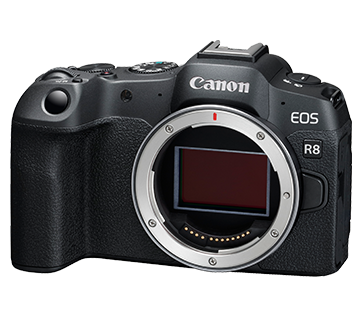
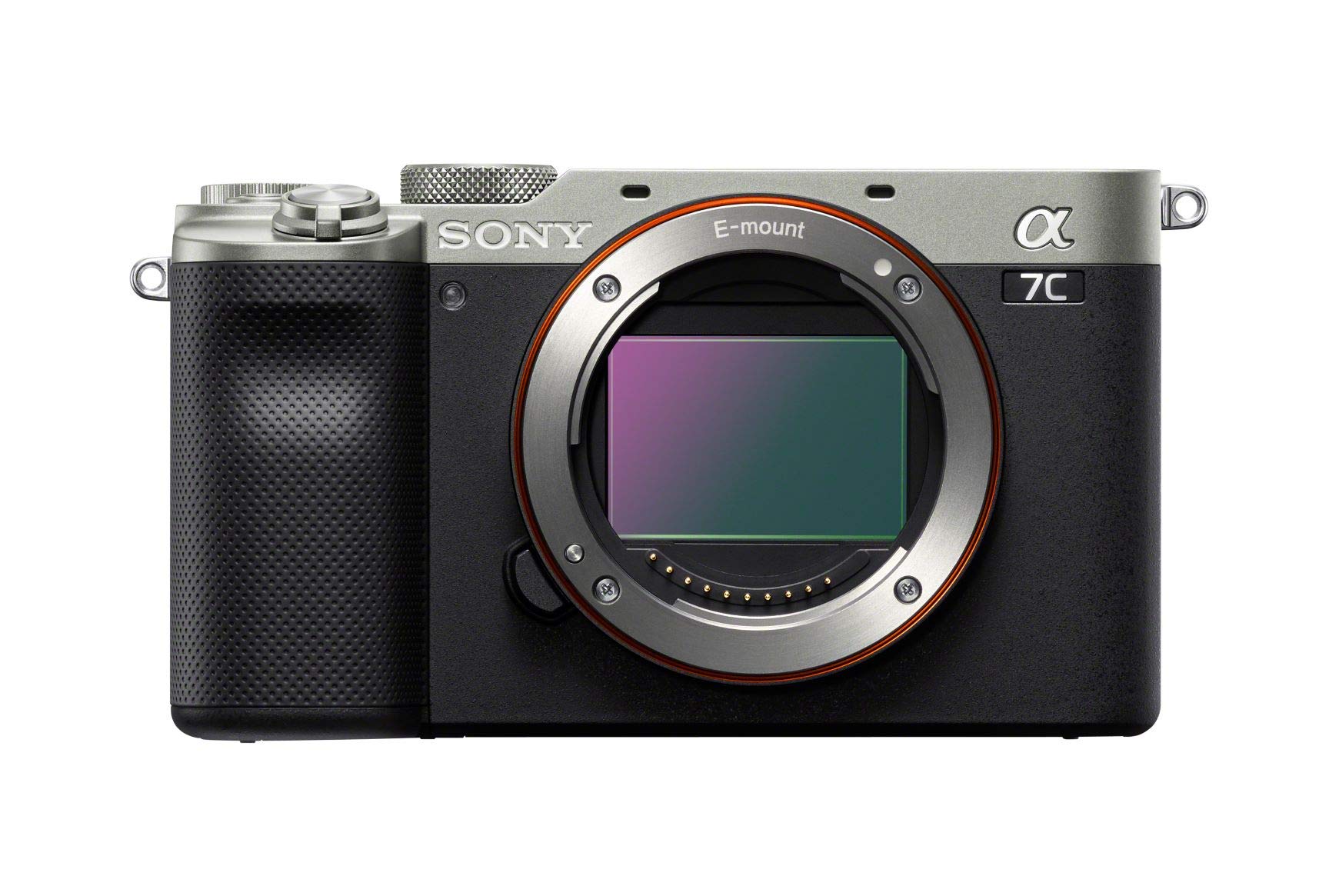
The Canon EOS R8 and the Sony A7C are two full-frame mirrorless cameras that frequently attract attention from photographers and videographers alike. Both models cater to enthusiasts and professionals seeking a lightweight and compact design coupled with the benefits of full-frame sensor technology. Given their similarities in price and features, it's common for potential buyers to compare these models closely as they search for the best option to suit their creative needs. Key differentiators include autofocus performance, video capabilities, and battery life, making it essential to evaluate how each camera excels in various aspects before making a decision.
Specifications Comparison
Detailed Comparison
Image Quality
Both the Canon EOS R8 and the Sony A7C sport a 24-megapixel full-frame sensor, delivering excellent image quality with rich details and dynamic range in well-lit conditions. The Canon EOS R8's ISO range of 100-102400 allows for more flexibility in low-light situations compared to the A7C, whose base range is 100-51200 but expands to 50-204800. This makes the R8 slightly more versatile in extreme lighting conditions. However, the Sony A7C is known for its superior high-ISO performance, potentially yielding cleaner images with less noise at the higher end of its ISO capabilities. Both cameras deliver superb color rendition, but tonal rendering may slightly vary, favoring Canon for warmer tones and Sony for cooler, more vibrant outputs.
Autofocus System
The autofocus systems of the Canon EOS R8 and the Sony A7C are robust and cater to different user preferences. The R8 features a staggering 1053 autofocus points with Dual Pixel technology, enabling fast and accurate subject tracking. This is particularly beneficial for action photography or moving subjects. On the other hand, the A7C employs 693 autofocus points with phase detection, which, while fewer, still provides excellent performance. The A7C's Real-time Eye Autofocus is particularly notable, delivering exceptional tracking capabilities for portraits and wildlife photography. Therefore, while the R8 wins in terms of autofocus point count, the A7C may provide practical advantages especially for users focused on portrait and wildlife shooting.
Video Capabilities
When it comes to video capabilities, the Canon EOS R8 tops out at 4K 60p, offering more frame rate options for smooth video capture, making it more fluid for fast-moving subjects and spectacular slow-motion shots. Conversely, the Sony A7C, while also capable of 4K recording, is limited to 30p, which may not satisfy those looking for the highest frame rate for 4K content. However, the A7C does feature in-body stabilization that enhances handheld shooting capabilities, providing smoother footage, an advantage that the R8 lacks entirely. As such, while the R8 excels in resolution and frame rate, the A7C's stabilization system could make it the preferred choice for videographers prioritizing stability and smoothness over higher frame rates.
Build & Ergonomics
Both cameras offer durable constructions with weather sealing, making them suitable for outdoor photography. The EOS R8 weighs 461 grams and possesses dimensions of 133 x 86 x 70 mm, rendering it quite comfortable for prolonged use. The A7C, being slightly heavier at 509 grams but more compact in its 124 x 71 x 60 mm form factor, fits neatly into smaller bags and is arguably more portable. However, the design choices lead to different handling experiences; the A7C features a compact design that may feel less ergonomic for extended shooting sessions compared to the R8's layout, which is designed for comfort. Ultimately, both cameras have unique advantages, making user preference essential in this category.
Battery & Storage
The Sony A7C impresses with a battery life rated for approximately 740 shots per charge, giving it an edge in prolonged shooting scenarios. Comparatively, specifics on the R8's battery life are not as robust or widely regarded. Both cameras use SD cards for storage, but they differ in terms of card slot configurations. The A7C has dual card slots, allowing for overflow or backup recording, while the R8 has a single slot that could potentially be a hindrance for professional use with extensive shooting demands. Owners of the A7C will find more peace of mind with its battery stamina and storage arrangement for long shoots.
Value for Money
The Canon EOS R8 is priced at $1499, making it a slightly more affordable option than the Sony A7C, which retails for $1799. For budget-conscious buyers seeking a capable camera with robust features, the R8 presents a compelling option, particularly with its superior video framerate capabilities. Additionally, the R8 provides an excellent balance of features that can cater to a wide range of photography and videography needs, thus offering good value for its price. On the contrary, the A7C justifies its higher price tag with superior battery life, stabilized video performance, and solid overall ergonomics. Those who prioritize these features might see the value in investing more in the A7C, meaning value may ultimately depend on the user's specific requirements.
Our Verdict
Overall, the Canon EOS R8 emerges as the winner through its superior video capabilities, autofocus system, and more attractive price point. While the Sony A7C offers benefits, specifically in terms of battery life and compact design, it may not appeal equally to all users, particularly those who prioritize frame rates in video alongside an advanced autofocus system for moving subjects. The R8 is ideal for those seeking a versatile camera that excels in both stills and video shooting, making it the more balanced option for a broader audience.
Canon EOS R8
Sony A7C
Also Compare
Frequently Asked Questions
Which camera is better for low-light photography?
The Canon EOS R8 has a wider ISO range, going up to 102400, which may offer more flexibility. However, the Sony A7C is known for its superior high-ISO performance, making it a more reliable choice for low-light conditions where noise is a concern.
Does either camera have in-body stabilization?
Yes, the Sony A7C features 5-stop in-body stabilization, which enhances handheld shooting, especially for video. The Canon EOS R8 does not include any stabilization, which might affect video quality when shooting without a tripod.
How do the autofocus systems compare?
The Canon EOS R8 has a higher number of autofocus points at 1053 compared to the A7C's 693. However, the A7C's Real-time Eye Autofocus can provide superior tracking for moving subjects and portraits, making both systems strong contenders for different scenarios.
What is the battery life like for each camera?
The Sony A7C has a significantly better battery life, estimated at 740 shots per charge, which is advantageous for extended shoots. The Canon EOS R8's battery life is not as well-documented, which could be a concern for some users.
Which camera has better video capabilities?
The Canon EOS R8 offers 4K 60p video recording, outperforming the Sony A7C, which is limited to 4K 30p. Therefore, for video creators wanting higher frame rates, the R8 is the preferable option.