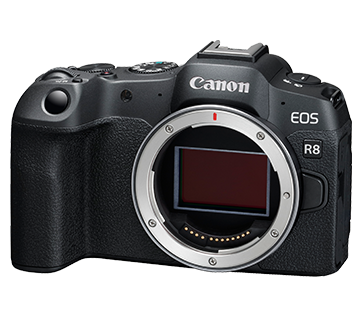
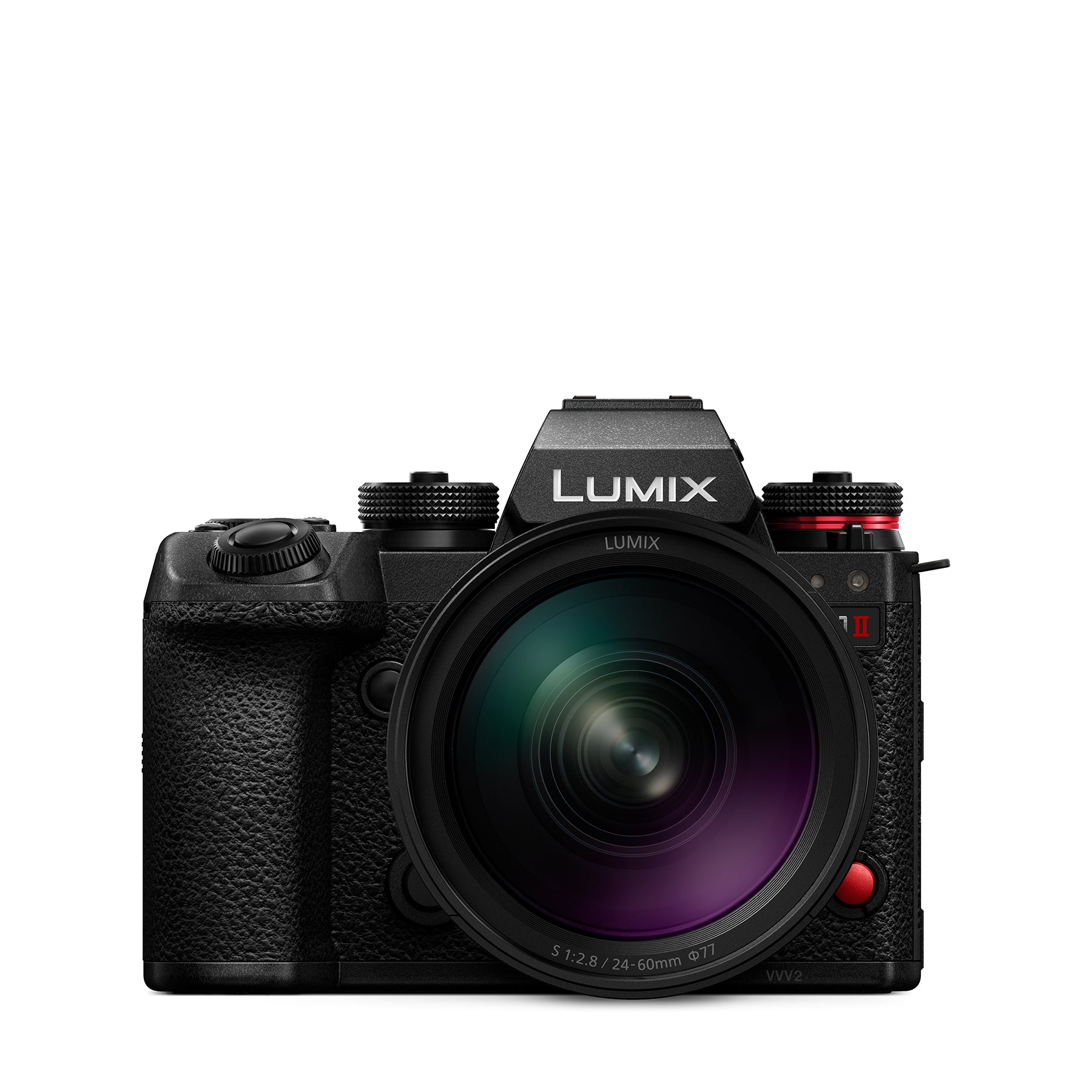
The Canon EOS R8 and the Panasonic S1 II are two formidable contenders in the full-frame mirrorless camera market, attracting attention from both amateur and professional photographers. Those considering these models are typically looking for advanced features that cater to both still photography and videography. The R8, with its lightweight and compact design, appeals to those who prioritize portability, while the S1 II offers more robust video capabilities and advanced stabilization features, ideal for creators focused on high-quality video production. The decision often comes down to specific needs, whether that's still photography or a multi-functional device for both stills and video.
Specifications Comparison
Detailed Comparison
Image Quality
Both the Canon EOS R8 and the Panasonic S1 II feature full-frame sensors, albeit with slight differences in resolution. The R8 boasts 24 megapixels, while the S1 II has a marginally higher pixel count of 24.1. In practical terms, this difference is minimal and unlikely to affect most users. However, when it comes to ISO performance, the R8 has a broader ISO range from 100 to 102400, allowing for greater versatility in low-light situations compared to the S1 II's unspecified range. This may provide the R8 with an edge for photographers who often shoot in challenging lighting conditions. Furthermore, Canon is known for its color science, which could appeal to those concerned with skin tones and overall color reproduction. Therefore, from an image quality perspective, the R8 shines in low-light versatility, but both cameras deliver excellent image performance.
Autofocus System
The autofocus capabilities differ notably between these two models. The Canon EOS R8 features an impressive 1,053 autofocus points, enabled by its Dual Pixel autofocus technology, which is highly acclaimed for its speed and accuracy, especially during action shots. In contrast, the Panasonic S1 II does not disclose its autofocus points, yet it is known for reliable performance. Canon's technology provides advanced tracking features, such as face and eye detection, making it particularly beneficial for portrait photography and moving subjects. Both systems may perform well in various conditions, but the R8's extensive autofocus points and superior tracking algorithms make it easier to capture fast action with precision. Thus, the Canon EOS R8 stands out with its superior autofocus capabilities.
Video Capabilities
When it comes to videography, the Panasonic S1 II takes the lead with its ability to shoot in 5.1K at 60p, providing filmmakers with more resolution and detail for their projects. Meanwhile, the Canon EOS R8 can only capture up to 4K at 60p. While the R8 is equipped with useful video features, such as various color profiles, it lacks in stabilization, which both of these cameras remedy differently. The S1 II includes a robust 8.0-Stop 5-Axis I.S. system that significantly helps with handheld shooting and reducing blurry footage. This makes the S1 II more favorable for videographers who require fluid, stable video even in dynamic shooting environments. Therefore, the Panasonic S1 II wins this round, especially for dedicated video creators.
Build & Ergonomics
The build quality of both cameras is excellent, with the Canon EOS R8 weighing in at a lightweight 461 grams, making it a more travel-friendly option. Despite its smaller size, it features weather sealing that will appeal to outdoor photographers looking to shoot in various environments. The S1 II, on the other hand, is more robust and also weather-sealed but may be perceived as bulkier. It is designed for durability and has a slightly larger grip that some shooters may find more comfortable for extended shooting sessions, particularly when using larger lenses. The R8's compact size may benefit those who want to carry a less intrusive camera. Overall, while both cameras are well-built, the choice here hinges on the individual's preference for either portability or a more substantial feel and grip.
Battery & Storage
Battery life is an important consideration for any shooter. The Canon EOS R8 has a decent battery life but lacks specific information regarding the number of shots per charge compared to the Panasonic S1 II, which often is noted for achieving around 400 shots per charge under typical use. Both cameras utilize similar storage options, supporting SD cards, with the S1 II expected to offer better performance in terms of write speed when recording high-resolution video. This can be crucial for videographers who run longer shooting sessions. So, though the R8 may perform satisfactorily, the S1 II's greater battery life and overall design for endurance in demanding applications give it an edge.
Value for Money
Price is often a decisive factor, especially for enthusiasts who want high performance without breaking the bank. The Canon EOS R8 is competitively priced at $1499, offering excellent features for the cost, especially for stills photography and general use. In contrast, the Panasonic S1 II is yet to be priced similarly, but its advanced video capabilities and stabilization features justify a potentially higher cost. For users who prioritize video work, the added investment in the S1 II may represent better value in the long run. However, for customers whose primary focus is still photography, the R8's pricing may be significantly more attractive. Therefore, while both provide value, the R8 offers a better deal for purely still-focused photographers.
Our Verdict
Overall, the Panasonic S1 II takes the win in this comparison but does so primarily for its advanced video capabilities and superior stabilization. The Canon EOS R8 excels in still photography, particularly in low-light conditions, providing significant value given its lower price. Ultimately, buyers focused on photography might prefer the R8 for its lighter weight and affordability, while those looking for a reliable all-rounder for both high-quality images and advanced video features may find the S1 II the better investment in their creative endeavors.
Canon EOS R8
Panasonic S1 II
Also Compare
Frequently Asked Questions
Is the Canon EOS R8 better for photography than the Panasonic S1 II?
Yes, the Canon EOS R8 is particularly strong for photography due to its extensive autofocus points and lower price, making it appealing for still photographers.
Can the Panasonic S1 II perform well for still photography?
Absolutely, the Panasonic S1 II offers excellent image quality and performance, though it is primarily geared towards videographers.
Which camera has better video features?
The Panasonic S1 II outshines the Canon EOS R8 with its ability to shoot in 5.1K, better stabilization, and features tailored for video production.
What is the weight difference between the two cameras?
The Canon EOS R8 is significantly lighter at 461 grams, which may benefit those who prioritize portability.
Are both cameras weather-sealed?
Yes, both the Canon EOS R8 and Panasonic S1 II are weather-sealed, making them suitable for outdoor shooting in various conditions.