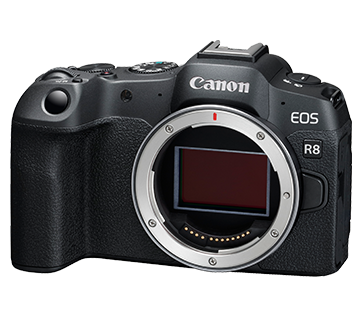
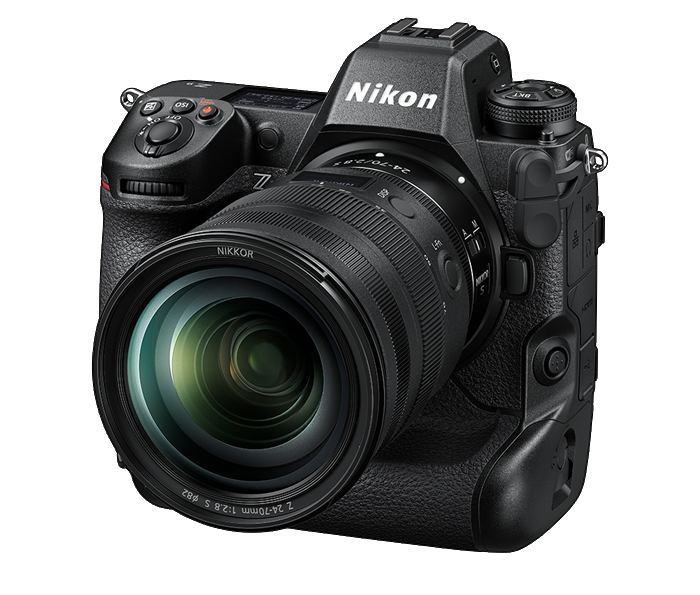
The Canon EOS R8 and Nikon Z9 are two formidable contenders in the mirrorless camera market, appealing to both professional photographers and advanced enthusiasts. While they are designed for different user groups, they often attract buyers who are evaluating serious full-frame systems with diverse capabilities. The Canon EOS R8 is a more accessible option with a lower price point aimed at creators needing robust image quality and decent performance, while the Nikon Z9 is tailored for professionals seeking cutting-edge features like high resolution and rapid shooting speeds. Key differentiators include sensor resolution, autofocus capabilities, and overall price, which can heavily influence a buyer's decision.
Specifications Comparison
Detailed Comparison
Image Quality
The Nikon Z9 features a much higher resolution sensor at 46 megapixels compared to the Canon EOS R8's 24 megapixels. This higher resolution allows for superior detail retention and the ability to crop extensively without sacrificing image quality. Both cameras use full-frame sensors, ensuring excellent low-light performance and dynamic range, but the Z9 edges out in detail, particularly in landscape and studio photography. On the other hand, while the R8 may not reach the same level of detail, it still offers excellent color accuracy and performance at higher ISO levels due to its robust ISO range of 100-102400, compared to the Z9's more modest range. Ultimately, the image quality is commendable in both cameras, but those requiring the highest fidelity will lean towards the Z9.
Autofocus System
Autofocus performance is vital for capturing subjects quickly and accurately, and here, the Canon EOS R8 provides a greater autofocus point count, boasting 1053 points. This extensive coverage enhances its capability to track moving subjects effectively and offers versatility in various shooting scenarios. However, the Nikon Z9, while having fewer autofocus points at 493, employs Nikon's advanced AF algorithms and superior tracking technology, making it extremely reliable for fast-paced action photography. The difference in autofocus performance will be pronounced in dynamic environments, such as sports photography, where the Nikon touts an impressive ability to track subjects consistently. Therefore, in terms of real-world autofocus capability for action scenarios, the Z9 takes the lead.
Video Capabilities
Video functionality is a significant aspect for many modern creators, and both models offer impressive specifications. The Canon EOS R8 supports 4K video recording at 60 frames per second, which is sufficient for high-quality content creation. In contrast, the Nikon Z9 excels in this area with 4K recording capabilities up to 120 frames per second, providing more flexibility for professional videographers. Additionally, the Z9 features 10-bit 4:2:2 internal recording, offering greater color depth and grading flexibility in post-production. While the R8 serves well for casual videography and content creators, the Z9's advanced features cater directly to filmmakers looking for high-end performance. Therefore, for dedicated video capabilities, the Z9 is the clear victor.
Build & Ergonomics
In terms of physical attributes, the Canon EOS R8 is significantly lighter and more compact, weighing 461 grams and measuring 133 x 86 x 70 mm, making it a great choice for portability, especially for travel photographers. Conversely, the Nikon Z9 feels more robust at 1340 grams and a more substantial build size of 149 x 150 x 91 mm, but this added weight provides a sense of durability in professional settings. Both cameras are weather-sealed, making them reliable in challenging environments. Ultimately, the choice here comes down to personal preference; if portability is a priority, the R8 is better suited, while professionals or those who prefer a heftier build may lean towards the Z9.
Battery & Storage
Battery life can greatly affect how a camera performs in field conditions, and the Nikon Z9 shines here with a rated battery life of about 740 shots per charge. This makes it more reliable for extended shooting sessions or events where changing batteries isn't feasible. The Canon EOS R8, while still reasonable, does not advertise an official battery life specification but is expected to deliver fewer shots compared to the Z9 due to the power demands of its features. Moreover, both cameras use dual card slots, which is an advantage for professional use, but the potential for better endurance with the Z9's battery may give it the edge for serious users.
Value for Money
The price point of each camera significantly influences their value proposition. The Canon EOS R8 is priced at about $1499, making it an attractive option for photographers and videographers seeking a feature-rich full-frame camera without the hefty investment associated with high-end models. The Nikon Z9, however, carries a premium price of around $5500, which is justified by its advanced features suitable for professional use, such as higher resolution, extensive features, and better durability. While the Z9 offers premium functionality, the R8 provides great value for entry to mid-level users who wish to access full-frame quality without an overwhelming expense. For budget-conscious buyers or those not requiring top-tier features, the R8 is a more sensible investment.
Our Verdict
In the battle between the Canon EOS R8 and the Nikon Z9, the Z9 emerges as the overall winner owing to its superior image quality, unmatched autofocus capabilities, and robust video performance, making it ideal for professional usage. However, the Canon EOS R8 holds significant appeal for photographers looking for an affordable, lightweight option that still offers great performance, especially for general photography and videography needs. Buyers must consider their specific requirements, weighing the importance of high-end specs against budget constraints, to choose the best camera for their needs.
Canon EOS R8
Nikon Z9
Also Compare
Frequently Asked Questions
Which camera is better for low-light photography?
The Nikon Z9 offers higher resolution and more advanced features, making it a better choice for low-light photography. However, both cameras handle low-light scenarios well, with the Canon EOS R8 having a broad ISO range.
Is the Canon EOS R8 a good choice for video?
However, if high-end video capabilities are a priority, the Nikon Z9 with its 4K 120p recording may be the better option.
What camera should I choose for sports photography?
For sports photography, the Nikon Z9 is the superior choice due to its extensive autofocus system and ability to shoot at 30 frames per second, ensuring excellent subject tracking and performance.
How important is weight in choosing a camera?
Weight is exceptionally important for travel photographers or those who carry gear for extended periods. The lighter Canon EOS R8 offers great portability, while the Z9's sturdier build is better suited for professional settings but may be heavier.
What lenses are compatible with each camera?
The Canon EOS R8 uses the Canon RF mount, while the Nikon Z9 utilizes the Nikon Z mount. Both systems have a growing selection of lenses catering to various photography needs.