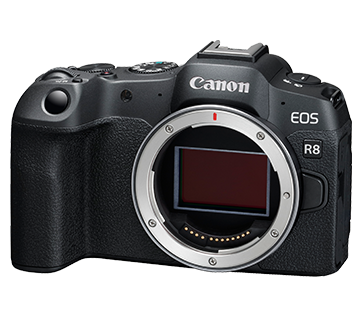
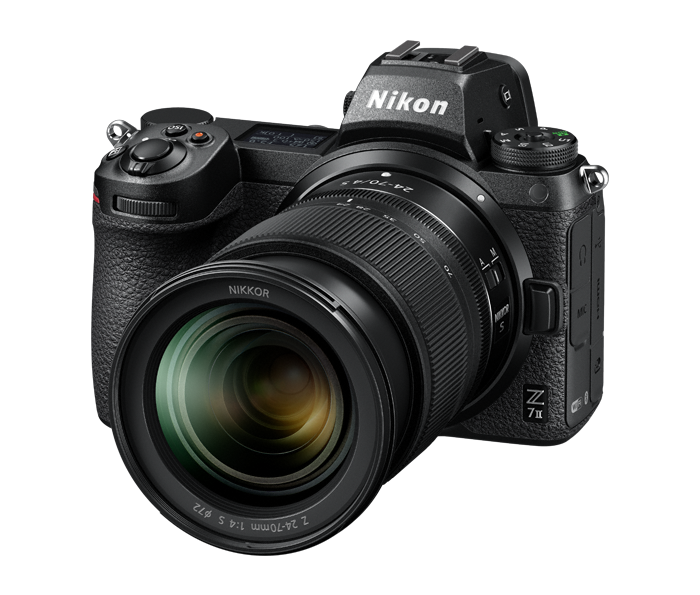
The Canon EOS R8 and Nikon Z7 II are two highly-regarded mirrorless cameras that appeal to enthusiasts and professionals alike. Often compared due to their full-frame sensors and advanced features, they cater to photographers seeking high image quality and versatility. The Canon EOS R8, released in 2023, positions itself as an affordable entry point for those wanting the latest technology, while the Nikon Z7 II, launched in 2020, represents a more established offering that emphasizes high resolution and robust performance.
Specifications Comparison
Detailed Comparison
Image Quality
In terms of image quality, the Nikon Z7 II leads with a significantly higher resolution of 46 megapixels compared to the 24 megapixels of the Canon EOS R8. This increase in pixel count allows for greater detail reproduction, which is particularly beneficial for large prints and cropping flexibility. The wider ISO range available in the Nikon also means it can perform better in low light conditions when expanded, providing cleaner images at high ISOs.
On the other hand, the Canon EOS R8's sensor, while lower in resolution, features a modern design with excellent color science known for vibrant and pleasing skin tones. Its ISO range is impressive, offering a native range up to 102,400, which can be advantageous for low-light photography. However, when comparing extensive pixel dimensions, the R8 may not resolve the same level of detail as the Z7 II.
Ultimately, while the R8 produces compelling images suitable for many photography styles, the Z7 II excels in scenarios requiring high detail, such as landscape or studio photography. Therefore, image quality goes to the Nikon Z7 II, thanks to its superior resolution and effective performance in diverse lighting conditions.
Autofocus System
The autofocus system on the Canon EOS R8 is robust, featuring 1,053 autofocus points that cover a substantial area of the frame. This allows for excellent subject tracking and accuracy, making it easier to capture fast-moving subjects. The autofocus is also quick and effective in a variety of lighting conditions, which can be a significant advantage when shooting events or wildlife.
In contrast, the Nikon Z7 II offers fewer autofocus points (493) but benefits from robust autofocus algorithms that provide excellent face detection and eye tracking. While it may seem at a disadvantage in terms of the number of points, the user experience often shows that Nikon's system can be very reliable in practice, providing accurate focus under various conditions.
Overall, while both cameras provide impressive autofocus capabilities, the Canon EOS R8 edges slightly ahead in sheer point number, allowing for greater precision. Nevertheless, both systems are robust and functional for most photographic needs.
Video Capabilities
Both the Canon EOS R8 and Nikon Z7 II deliver impressive video capabilities, supporting 4K video recording up to 60 frames per second. However, the R8 has an edge with its simplified video features, appealing to vloggers and content creators, thanks to a more user-friendly interface and additional video-centric functions.
Additionally, the Canon EOS R8 benefits from features like 'clean HDMI out' and will likely offer better color profiles specifically designed for video recording. On the other hand, the Z7 II is more geared toward hybrid shooters who need high-resolution video but may lack the intuitive operation and video features found in the R8.
While both cameras produce high-quality videos, the Canon EOS R8 is better optimized for video creators, making it the preferred choice for those who focus primarily on video content.
Build & Ergonomics
Both cameras have weather-sealed bodies, making them suitable for outdoor use. The Canon EOS R8 is compact and lightweight, weighing in at 461 grams, which improves portability, particularly for photographers who travel often or shoot for long periods.
In contrast, the Nikon Z7 II is heavier at 705 grams. However, its larger grip and body dimensions can provide better ergonomics and comfort during extensive shooting sessions, an aspect crucial for professional photographers. The larger screen on the Z7 II (3.2 inches vs. 3 inches) also offers better visibility and an additional number of dots (2,100,000 vs. 1,620,000) which is an advantage for reviewing images or working in bright conditions.
While both cameras are well-built and ergonomically designed, the preference often boils down to personal comfort and intended use. The Canon R8 wins on weight and compactness, while the Z7 II excels in grip and screen quality, resulting in a tie overall because it caters well to both preferences.
Battery & Storage
The Nikon Z7 II has a notable advantage in battery performance, rated for up to 420 shots on a single charge, allowing for extended shooting sessions without needing to recharge frequently. This is a significant factor for professional photographers who rely on long hours of shooting.
On the other hand, the Canon EOS R8, although it does not have an officially stated battery life, is expected to be less efficient based on its weight and power usage. Both cameras utilize the latest storage media formats; however, the Nikon Z7 II supports dual card slots, giving additional flexibility and security for professional use, particularly when shooting in RAW format.
Value for Money
Considering price, the Canon EOS R8 is positioned at a reasonable $1,499, making it appealing for those seeking high-quality imaging without breaking the bank. Its features and performance provide solid value for entry-level and mid-range photographers.
The Nikon Z7 II, priced at $2,999, delivers advanced capabilities but at a higher entry cost. For professionals, the additional features, including higher resolution and better battery live, could justify the price premium; however, for enthusiasts or entry-level users, the R8 might represent a better value proposition overall.
Thus, while both cameras offer their unique strengths, the Canon EOS R8 presents a more accessible option for those starting out and is reason enough to label this section in its favor.
Our Verdict
Overall, the Nikon Z7 II emerges as the winner due to its superior image quality and enhanced battery performance which caters to professionals needing detailed images and extended shooting time. While the Canon EOS R8 shines in terms of video capabilities and value for money, it is best suited for video-centric creators or enthusiasts seeking an entry-level mirrorless camera. Ultimately, the choice between these two high-quality cameras will depend on the specific needs and preferences of the photographer, whether they prioritize resolution and battery life or value and portability.
Canon EOS R8
Nikon Z7 II
Also Compare
Frequently Asked Questions
Which camera is better for low-light photography?
The Nikon Z7 II is generally better for low-light photography due to its higher resolution and extended effective ISO range.
What is the weight difference between the two cameras?
The Canon EOS R8 is lighter, weighing 461 grams compared to the Nikon Z7 II, which weighs 705 grams.
Do both cameras support 4K video?
Yes, both the Canon EOS R8 and Nikon Z7 II support 4K video recording up to 60p.
Which camera has better autofocus performance?
The Canon EOS R8 has more autofocus points, leading to potentially better tracking performance in various situations.
Is one camera more portable than the other?
Yes, the Canon EOS R8 is more portable due to its smaller and lighter form factor.