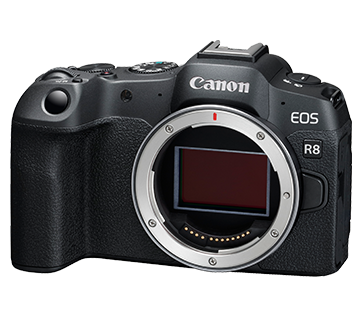
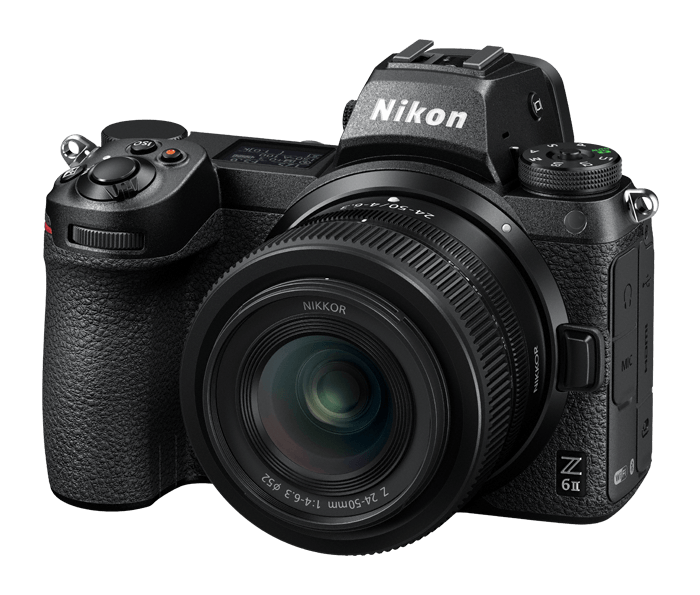
The Canon EOS R8 and Nikon Z6 II are two prominent contenders in the full-frame mirrorless camera market, appealing to both enthusiasts and professionals alike. Both brands have a longstanding legacy in photography, and their latest models encapsulate the advancements in technology and user experience that many photographers seek. Buyers often find themselves at a crossroads between these two options, assessing their features, performance, and overall value to determine which best meets their creative needs.
Specifications Comparison
Detailed Comparison
Image Quality
Image quality is paramount for photographers, and both the Canon EOS R8 and Nikon Z6 II deliver impressive results. The EOS R8 features a 24-megapixel sensor, while the Z6 II offers a slightly higher resolution at 25 megapixels. Both cameras exhibit excellent dynamic range and color reproduction, making them suitable for various photographic styles. The Canon's ISO range extends from 100 to 102400, which allows for greater flexibility in low-light scenarios. In contrast, the Nikon has a native ISO range of 100-51200, but with an expanded range down to ISO 50 and up to 204800, offering even more versatility in extreme conditions.
However, practical testing has shown that the image quality at high ISO does favor the Nikon Z6 II somewhat, thanks to its well-implemented noise reduction algorithms and slightly better handling of high ISO images. As both cameras utilize full-frame sensors, the overall quality is high; however, nuanced differences may appeal to particular user preferences, especially when it comes to noise performance in low-light situations.
Overall, while both cameras produce high-quality images, the edge may go to Nikon due to its superior high ISO capabilities and marginal increase in megapixels, making it more versatile across a range of shooting scenarios.
Autofocus System
The autofocus capabilities of a camera can significantly impact a photographer's experience, especially during fast-paced shooting. The Canon EOS R8 boasts an impressive autofocus system with 1053 autofocus points, enabling extensive coverage and precision. This model features Dual Pixel CMOS AF technology, renowned for its fast and accurate focus acquisition.
On the other hand, the Nikon Z6 II provides 273 autofocus points, which, while fewer than the R8, are highly effective due to the camera's deep learning algorithms that enhance subject-detection capabilities. The Z6 II also supports eye-detection focus for both humans and animals, which is a vital feature for portrait and wildlife photographers alike. Moreover, the Z6 II's autofocus can operate in dimmer lighting conditions down to -4 EV.
In real-world performance, the Canon R8's focus system is exceptionally fast in good lighting conditions, while the Nikon's advantage in low-light autofocus efficiency is commendable. Canon's autofocus during video recording shows reliable tracking performance, but the Z6 II's superior subject tracking makes it a clear choice for dynamic scenarios. Therefore, while both autofocus systems perform remarkably well, the added complexity and enhanced tracking features of the Nikon Z6 II give it a slight advantage in this comparison.
Video Capabilities
In today's content-driven world, video capabilities stand as a crucial factor for many buyers. The Canon EOS R8 is designed with video creators in mind, boasting impressive specifications for 4K video recording at up to 60fps without a crop, allowing for smooth and high-resolution footage. This makes it an excellent choice for vlogging and dynamic cinematic productions.
Conversely, the Nikon Z6 II is limited to 4K recording at 30fps, which might not meet the needs of creators seeking high-frame-rate options for slow-motion capture. However, it is important to note that the Z6 II offers excellent video quality with its full-frame sensor and supports 10-bit output via HDMI, which is beneficial for color grading in post-production.
Additionally, the EOS R8 benefits from a more straightforward user interface for video capturing, while the Z6 II might require a steeper learning curve to leverage its full video potential, given its advanced features tailored for more serious filmmaking. Given these factors, the Canon R8 takes the lead in terms of video recording versatility and options, particularly for vloggers and short film creators.
Build & Ergonomics
Both cameras are thoughtfully crafted with a robust build and ergonomic considerations, appealing to seasoned photographers. The Canon EOS R8 is notably lighter, at 461g, and comes with a compact design (133 x 86 x 70 mm), making it easier to carry for long periods. It also maintains weather sealing, which is essential for outdoor photography in varying conditions.
In contrast, the Nikon Z6 II has a more substantial weight at 705g, which some users might appreciate for its sturdy feel. The dimensions are slightly larger (134 x 101 x 70 mm), providing a different grip experience. Nikon's ergonomics are known for comfort during prolonged use, featuring well-placed buttons and dials that are intuitive, particularly for those familiar with the brand.
Both cameras offer electronic viewfinders and articulating screens, although the R8 has a slightly smaller 3-inch display with 1.62 million dots, while the Z6 II features a larger 3.2-inch screen with 2.1 million dots. This difference in resolution can make a significant impact during composition and playback. However, users' preferences for grip size and button layout will play an important role in this decision. Overall, considering both build quality and user experience, the Nikon Z6 II is favored for its grip and display, despite the R8's advantages in weight and compactness.
Battery & Storage
Battery performance can be crucial, especially for intensive shooting sessions. The Canon EOS R8 has a rated battery life allowing for approximately 500 shots on a single charge, which is reasonable for a mirrorless camera. However, exact performance can vary based on settings and usage.
In contrast, Nikon Z6 II offers a battery life of around 410 shots, which might appear less promising at first glance. However, many users report that the Z6 II's efficient power management compensates for this perceived disadvantage, offering extended usability in real-world scenarios.
Both cameras use different battery types-Canon uses the LP-E17, while Nikon employs the EN-EL15c, which is known for its reliability. Additionally, both models offer options for external power through USB-C, providing convenient charging and extended usage capabilities. In terms of storage, both cameras support dual card slots, enhancing reliability and accommodating high data video formats. Therefore, while the EOS R8 may seem marginally superior on battery life alone, the practical differences are minimal, leading to a split consideration of needs.
Value for Money
When assessing value for money, the Canon EOS R8 has a lower price point of $1499, making it an attractive entry point for photographers looking for a full-frame mirrorless camera with strong performance. It delivers versatile features that appeal to both stills and video creators, creating a solid overall value proposition for those who prioritize portability without sacrificing significant capabilities.
On the other hand, the Nikon Z6 II, retailing for $1995, commands a premium for its sophisticated autofocus system, enhanced video features, and superior low-light performance. This price reflects the additional technology and performance enhancements built into the Z6 II, appealing more to serious photographers and filmmakers who require those attributes.
Ultimately, the perceived value depends significantly on the user's specific needs. For casual photographers or those entering the full-frame system, the Canon EOS R8 presents excellent value. Conversely, professionals who closely depend on autofocus and video quality may find the additional investment in the Nikon Z6 II justified, given its array of features and performance advantages.
Our Verdict
In conclusion, the Canon EOS R8 and Nikon Z6 II each shine in their own right, serving slightly different target markets and photographic styles. The R8 appears as a well-rounded, budget-friendly solution for those who focus on lightness, live streaming, and video capabilities, making it ideal for vloggers and casual photographers. Conversely, the Z6 II offers superior low-light performance, depth of focus features, and build quality, which resonates with professionals needing reliable autofocus in dynamic environments. The ultimate choice will depend on personal priorities, whether that's cost, weight, or specific performance needs in photo and video workflows.
Canon EOS R8
Nikon Z6 II
Also Compare
Frequently Asked Questions
Which camera is better for low-light photography?
The Nikon Z6 II edges out the Canon EOS R8 due to its higher ISO sensitivity range and better noise performance in low-light conditions.
Is the Canon EOS R8 suitable for vlogging?
Yes, the Canon EOS R8 offers 4K video at 60 fps without crop, making it an excellent choice for vloggers looking for high-quality video.
What are the advantages of the Nikon Z6 II's autofocus system?
The Z6 II features 273 autofocus points with advanced subject detection, making it highly effective for fast-moving subjects and low-light photography.
How do the weight and dimensions compare between the two models?
The Canon EOS R8 is lighter and more compact than the Nikon Z6 II, which may appeal to photographers who prioritize portability.
What is the best option for video production?
The Canon EOS R8 is favored for video production due to its 4K 60 fps capabilities, while the Z6 II offers rich video quality with its 10-bit output but is limited to 30 fps.