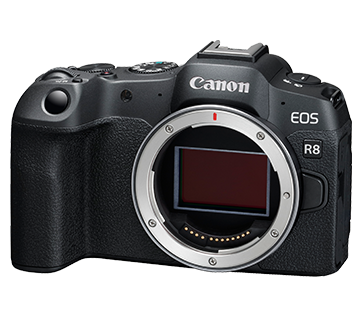
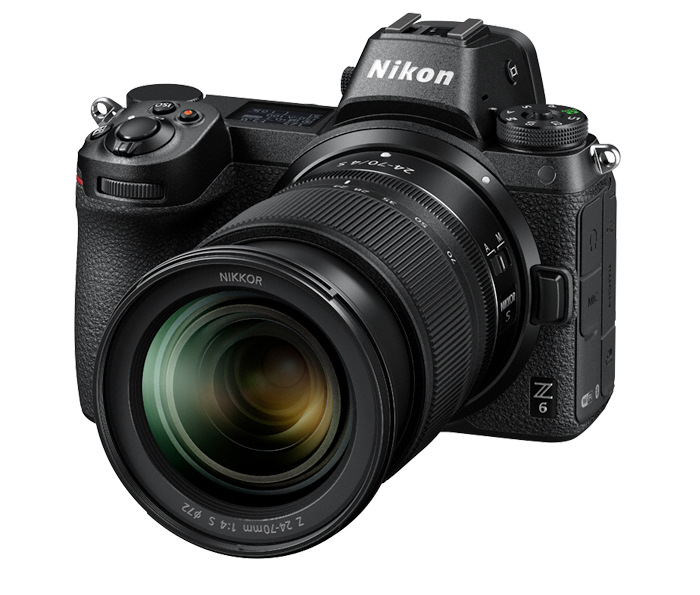
The Canon EOS R8 and the Nikon Z6 are two prominent full-frame mirrorless cameras that appeal to a diverse range of photographers, from enthusiasts to professionals. Both models offer impressive specifications and features, making them suitable candidates for those serious about photography and videography. Buyers often find themselves choosing between these two options due to their similar pricing and capabilities but differing strengths in certain areas. Key differentiators include sensor performance, autofocus systems, video functionalities, and overall ergonomics.
Specifications Comparison
Detailed Comparison
Image Quality
In terms of image quality, both the Canon EOS R8 and Nikon Z6 deliver excellent results, largely due to their full-frame sensors. The Canon EOS R8 has a resolution of 24 megapixels, while the Nikon Z6 offers just a bit more with 25 megapixels. This slight difference, however, may not be substantial for most users. The EOS R8 features an ISO range of 100-102400, benefiting low-light performance with its broader range compared to the Z6, which has a native range of 100-51200 but can be expanded to include 50-204800. This means the R8 has the advantage when pushing boundaries in extremely low-light situations.
Both cameras can produce beautiful colors and high dynamic range. The Z6 has gained recognition for its excellent color science and low-light capabilities, while the R8 may edge ahead in high ISO performance. Ultimately, users will find that both cameras provide outstanding image quality that meets the demands of professional contexts, but the R8's broader ISO range might appeal more to those who frequently shoot in varied lighting conditions.
Autofocus System
Autofocus systems are a critical aspect for many photographers, and here, the Canon EOS R8 excels with a robust system that features 1053 autofocus points. This coverage provides a high level of precision, making it particularly effective for tracking moving subjects. On the other hand, the Nikon Z6, while possessing a respectable 273 autofocus points, may not be as agile in dynamic situations.
Both cameras feature face and eye detection capabilities, but Canon's Dual Pixel Auto Focus technology in the R8 often leads to smoother focusing, especially in video mode. While the Z6 can lock focus effectively, shooters looking for highly responsive autofocus will likely favor the R8. Thus, when it comes to autofocus reliability and speed, the EOS R8 takes a prominent lead, particularly for action and portrait photography.
Video Capabilities
Video recording is a significant factor for many users, and the Canon EOS R8 stands out with superior video specifications. It can shoot 4K video at up to 60 frames per second, making it ideal for high-frame-rate videography. In contrast, the Nikon Z6 supports 4K recording but at a capped rate of 30 fps, which may limit options for users interested in fast-paced video work.
The EOS R8 also features no crop factor during 4K recording, ensuring users get the full wide-angle view of their lenses. The Z6, meanwhile, has a slight crop when recording in 4K, which can be a drawback for users aiming for wide shots. Additionally, while the Z6 does include stabilization, the R8 lacks in-body stabilization, which could be a consideration for handheld filming scenarios. Overall, the Canon EOS R8 is more versatile for video creators, making it the clear victor in this category.
Build & Ergonomics
When comparing build quality, both the Canon EOS R8 and Nikon Z6 are constructed with weather sealing, making them durable for outdoor shooting. The R8 is lighter, weighing in at 461 grams, while the Z6 is heavier at 675 grams. This can significantly affect shooting comfort during long sessions.
The dimensions reflect this difference as well; the R8 is slightly more compact than the Z6. Both cameras feature electronic viewfinders, but the R8's screen, measuring 3 inches and 1,620,000 dots, is less detailed than the Z6's 3.2-inch screen with 2,100,000 dots. The larger, higher-resolution display on the Z6 can provide better visibility and detail while composing shots.
Ultimately, the choice may boil down to personal preference regarding weight and external controls. Although the Z6 has a more sophisticated screen, the lighter build of the R8 makes it more attractive for extended shooting hours. Thus, while both cameras are well-built, the Canon EOS R8's advantages in portability may be favored by users needing something easy to handle during all-day shoots.
Battery & Storage
Battery life is an essential consideration for photographers, and the Nikon Z6 offers a decisive advantage with a rated life of around 310 shots per charge. In contrast, the Canon EOS R8 does not specify an official shot count, but many reports suggest it could fall short in comparison, potentially leading to more frequent recharging or carrying spare batteries during shoots. This can particularly matter for wedding or event photographers who are on the go without immediate access to charging.
Both models use different storage formats; the R8 uses dual card slots designed for the newer CFexpress and SD cards in the RF mount, while the Z6 utilizes XQD and SD cards. The advantage with dual card slots in the R8 provides flexibility and redundancy, especially significant for professional work where data loss is a concern.
In summary, while the Z6 may provide better overall battery longevity, the R8's dual card slots offer greater redundancy - a vital aspect for serious photographers. However, due to the battery life concern alone, the Z6 takes the edge regarding the ability to shoot for extended periods without recharging.
Value for Money
Pricing is often a determining factor for buyers, and the Canon EOS R8 is priced at $1499, which is significantly lower than the Nikon Z6's price tag of $1995. This makes the R8 a more attractive option for entry-level buyers or those looking to maximize their investment without sacrificing too much in terms of performance and quality.
Given the lower price, users can allocate their budgets to glass or accessories, which are equally important for any photography kit. The Z6, while more expensive, offers some advanced features like in-body stabilization and a slightly better screen, which appeal to more seasoned photographers or those who value video capabilities alongside photography.
Overall, considering performance against price, the Canon EOS R8 presents a clear edge in value for money without sacrificing core features, making it an excellent buy for most enthusiasts or semi-professionals. However, users needing specific features available on the Z6 may find the investment acceptable.
Our Verdict
In the overall comparison, the Canon EOS R8 emerges as the winner due to its superior autofocus system, video capabilities, and better value for money. While the Nikon Z6 excels in battery life and has a solid build with a higher-resolution screen, the numerous advantages in crucial areas, particularly for video creators and fast-paced photographers, give the R8 the upper hand. The EOS R8 is well-suited for those looking for a lightweight, feature-rich camera capable of high-quality photography and videography, while the Z6 may still appeal to users who prioritize battery longevity and high-definition screens despite its higher cost.
Canon EOS R8
Nikon Z6
Also Compare
Frequently Asked Questions
Which camera is better for low-light photography?
The Canon EOS R8 offers a wider ISO range, making it more suitable for low-light scenarios. However, the Nikon Z6 is also capable in low-light but has a narrower range.
What's the difference in video recording features?
The Canon EOS R8 can record 4K at 60fps without crop, while the Nikon Z6 is limited to 30fps 4K recording with a crop.
Are both cameras weather-sealed?
Yes, both the Canon EOS R8 and Nikon Z6 feature weather sealing, making them durable for outdoor shooting.
Which is lighter, the R8 or Z6?
The Canon EOS R8 is lighter at 461 grams compared to the Nikon Z6 which weighs 675 grams, making it easier to handle for extended periods.
How do the autofocus systems compare?
The R8 has a significantly more sophisticated autofocus system with 1053 points, while the Z6 features 273 points, making the R8 better for fast-moving subjects.