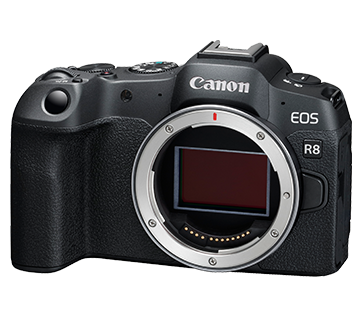
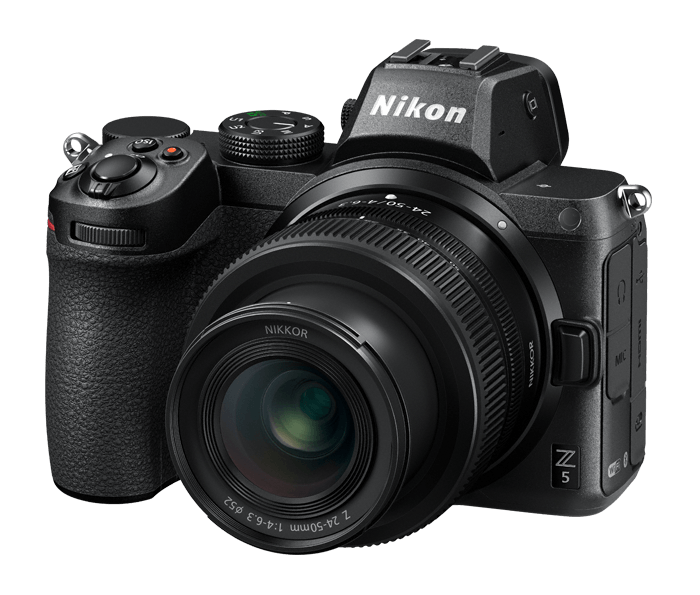
The Canon EOS R8 and the Nikon Z5 are two popular full-frame mirrorless cameras that appeal to enthusiasts and semi-professionals. Popularity stems from their excellent performance, competitive pricing, and advanced features packed into compact bodies. Buyers often compare these models due to their similar sensor resolutions, build qualities, and primary use cases, such as landscape, portrait, and event photography. However, the key differentiators, including autofocus capabilities, video performance, and overall ergonomics, play vital roles in decision-making for potential users.
Specifications Comparison
Detailed Comparison
Image Quality
Both the Canon EOS R8 and Nikon Z5 feature 24-megapixel full-frame sensors, which deliver excellent image quality with detailed resolution and vibrant colors. The R8's sensor is slightly larger at 36 x 24 mm compared to the Z5's 35.9 x 23.9 mm. However, in real-world photography conditions, the differences in image quality are generally minimal, with both cameras capable of producing stunning images across various lighting situations. The R8 also has a maximum ISO range of 102400 compared to the Z5's 51200 (which expands to 102400), allowing it to perform slightly better in extremely low light conditions. While both models exhibit impressive dynamic range and color fidelity, the R8's slightly broader ISO range gives it an edge.
Autofocus System
The Canon EOS R8 is equipped with 1053 autofocus points, significantly outpacing the Nikon Z5's 273 points. This abundant number of points allows for rapid and reliable subject tracking, particularly in fast-moving situations like sports and wildlife photography. Canon's Dual Pixel AF technology ensures quick focus acquisition and can maintain sharp focus even on moving subjects. In contrast, while the Z5's autofocus system is capable and includes face detection capabilities, it may struggle slightly in dynamic scenarios compared to the R8's extensive system. Therefore, serious photographers prioritizing superior autofocus capabilities may find the R8 to be a more suitable choice.
Video Capabilities
The Canon EOS R8 excels in video capabilities, offering 4K video recording at 60 frames per second, which is beneficial for those producing high-frame-rate video content. This significant advantage allows for smoother footage and more versatility in post-production. On the other hand, the Nikon Z5 is limited to 4K video at 30 frames per second, which is sufficient for basic videography but falls short for high-performance needs. Additionally, the R8's video performance is enhanced by its superior autofocus capabilities in video mode, making it ideal for vlogging or live demos. This edge in video resolution and frame rate clearly favors the R8 among video-focused creators.
Build & Ergonomics
Both the Canon EOS R8 and Nikon Z5 boast weather-sealed bodies, making them robust options for outdoor photography in various environmental conditions. However, the Z5 is noticeably heavier at 675g compared to the R8's 461g, which may be a significant factor for photographers who prioritize lightweight gear. Additionally, the Z5 features a slightly larger 3.2-inch screen with 1,040,000 dots versus the R8's 3-inch display at 1,620,000 dots. The Canon's electronic viewfinder offers a better resolution, enhancing user experience during composition. Ultimately, while both cameras feel solid and comfortable in hand, the R8's lighter build and superior screen may appeal more to travelers and event photographers.
Battery & Storage
In terms of battery life, the Nikon Z5 is a clear winner with a capacity to take approximately 470 shots per charge compared to the R8's shorter life due to its more power-demanding features. Users enticed by long shooting sessions without the need for constant battery swaps will appreciate this aspect of the Z5. Furthermore, both cameras use similar storage formats (CFexpress for R8 and XQD for Z5), providing ample speed for high-resolution image and video recording. However, taking overall battery life into account provides the Z5 an advantage for extensive shooting scenarios.
Value for Money
The Canon EOS R8 is priced at $1499 while the Nikon Z5 comes in slightly lower at $1399, making the Z5 the more affordable option for those on a budget. The cost differences bear relevance considering the features offered by each camera. While the R8 provides superior autofocus performance and enhanced video capabilities, the Z5 provides greater battery life and a solid full-frame experience at a lower price point. Both cameras present excellent value propositions for their respective strengths, but it's crucial for prospective buyers to weigh their specific needs against their budget constraints.
Our Verdict
Overall, the Canon EOS R8 comes out ahead due to its superior autofocus system, video capabilities, and lighter build, making it an attractive option for photographers and videographers who require high performance in both stills and motion. However, the Nikon Z5 offers excellent battery life and a more accessible price point, appealing to budget-conscious shooters or those who prioritize stability and durability. Therefore, the R8 is recommended for users focusing on high-action photography and videography, while the Z5 remains an excellent choice for more casual photographers or those who prefer a robust battery performance.
Canon EOS R8
Nikon Z5
Also Compare
Frequently Asked Questions
Which camera has better low-light performance?
The Canon EOS R8 has a maximum ISO of 102400 compared to the Nikon Z5's 51200 (expandable to 102400), giving the R8 an edge in extreme low-light situations.
Is the Canon EOS R8 better for video?
Yes, the Canon EOS R8 supports 4K recording at 60 fps, while the Nikon Z5 is limited to 4K at 30 fps, making the R8 the better choice for videographers.
Which camera is lighter and more portable?
The Canon EOS R8 is lighter at 461 grams, compared to the Nikon Z5 at 675 grams, making the R8 more portable for travel.
How do the autofocus systems compare?
The Canon EOS R8 has 1053 autofocus points, significantly more than the Nikon Z5's 273 points, resulting in faster and more reliable focusing capabilities.
Which camera is more budget-friendly?
The Nikon Z5 is priced at $1399, making it the more budget-friendly option compared to the Canon EOS R8 at $1499, while still offering great performance.