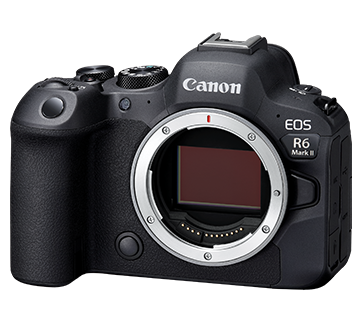
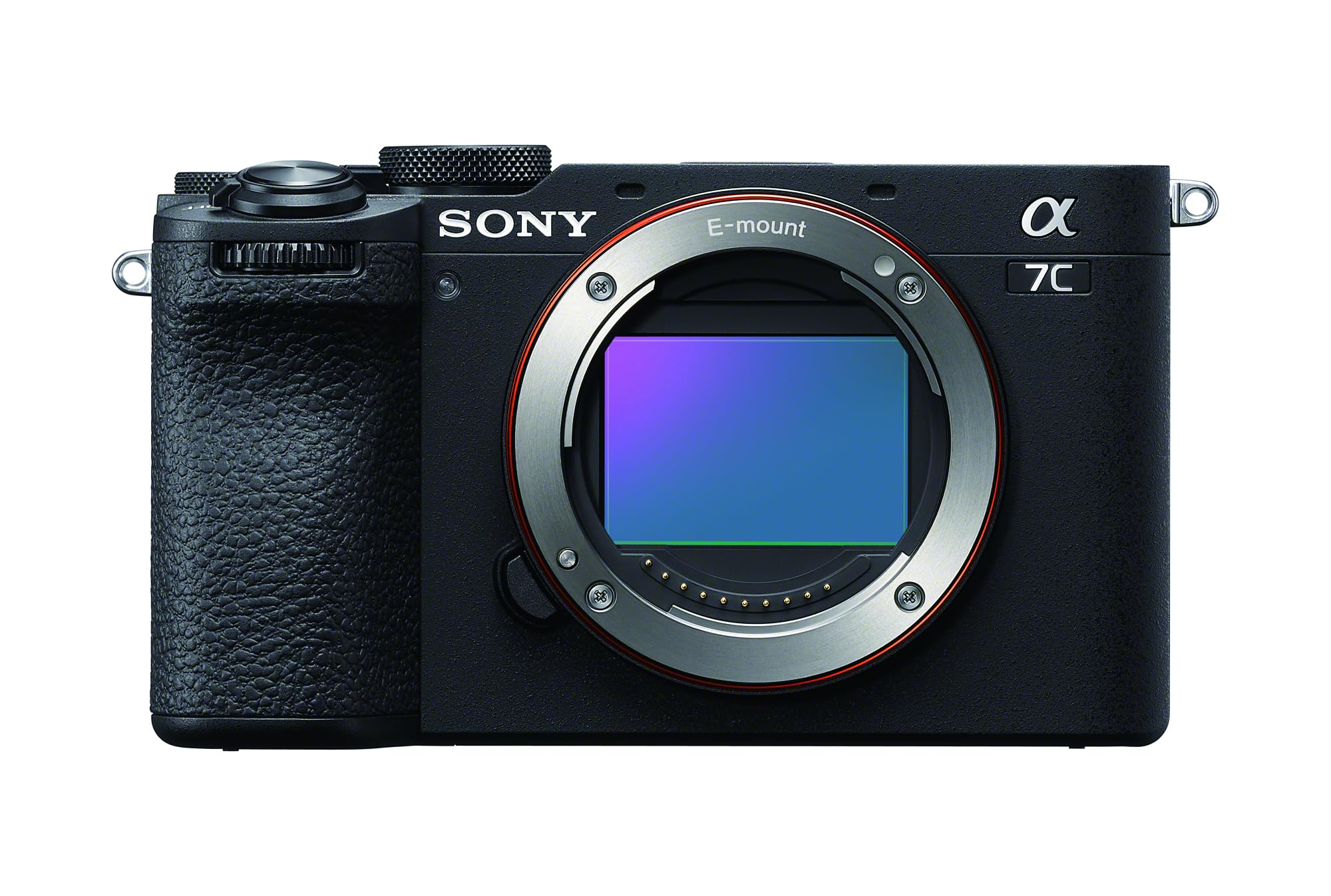
The Canon EOS R6 Mark II and the Sony A7C II are two full-frame mirrorless cameras that have made a significant impact in the photography and videography communities. They are commonly compared as they both cater to enthusiasts and professionals looking for compact and powerful cameras. Photographers who primarily shoot fast-paced action, events, or travel might find themselves choosing between these two models as they each offer unique advantages tailored to different needs. This comparison highlights their key differentiators such as image quality, autofocus performance, video capabilities, and overall build quality.
Specifications Comparison
Detailed Comparison
Image Quality
The Canon EOS R6 Mark II features a 24-megapixel sensor, which strikes a balance between high-quality output and manageable file sizes. This camera is renowned for its excellent performance in low-light conditions, reaching an ISO range that extends up to 204800, making it a solid choice for photographers working in challenging lighting environments. The dynamic range and color depth are also strong points, allowing for vivid images with a good amount of detail in both highlights and shadows.
Despite having a higher resolution sensor at 33 megapixels, the Sony A7C II offers exceptional image quality and sharpness. Additionally, its ISO range, although offering an expanded limit, natively goes up to 51200, allowing for excellent performance. This model is particularly favored for commercial photography due to its detailed resolution, capturing more fine details which is advantageous for large prints or cropping in post-processing.
Ultimately, while the Canon R6 Mark II excels in low-light conditions and offers great versatility, the Sony A7C II's higher resolution caters exceptionally well to detail-oriented photography. Thus, for standard scenarios, the R6 Mark II may have the edge, whereas for detail-heavy applications, the A7C II shines.
Autofocus System
In terms of autofocus systems, the Canon EOS R6 Mark II boasts an impressive 4897 autofocus points, which is significantly high, providing myriad options for focusing on moving subjects. Its Dual Pixel AF technology is well-recognized for rapid and reliable focus acquisition, ideal for dynamic action photography or video recording. This system is highly refined, offering smooth transitions and tracking on subjects.
On the flip side, the Sony A7C II features 759 phase-detection autofocus points, which, while fewer than its Canon counterpart, still provides highly competent performance with excellent subject tracking capabilities, particularly for human and animal eyes. Many users find Sony's Real-Time Eye AF to be highly effective and responsive.
Both systems are effective, but the R6 Mark II may provide an edge with its greater number of points and proven performance in fast-paced environments. However, for photographers who appreciate real-time tracking and don't require as many focus points, the A7C II offers an excellent autofocus experience.
Video Capabilities
Both the Canon EOS R6 Mark II and the Sony A7C II shine in video capabilities with 4K recording at up to 60 frames per second. The R6 Mark II offers additional features such as 10-bit 4:2:2 internal recording and Canon Log, which is beneficial for professional video production workflows allowing for greater flexibility in color grading. Its dual pixel autofocus also enhances video shooting, providing stable focus during recording.
In contrast, the A7C II also supports 10-bit 4:2:2 internally while bringing additional video-friendly features such as S-Cinetone and S-Log3 profiles, appealing to filmmakers looking for cinematic looks directly from the camera. Its versatility in shooting modes and good AF performance for video makes it well-suited for a range of filming environments.
Considering the advanced video features of both options, the R6 Mark II has the upper hand regarding AF performance for video, while the A7C II may appeal more to users looking for varied color profiles. This section can be seen as a tie depending on specific user priorities in video logic.
Build & Ergonomics
The build quality of both the Canon EOS R6 Mark II and the Sony A7C II is impressive, with weather sealing that allows both cameras to resist moisture and dust, making them suitable for outdoor use. The Canon is slightly bulkier and heavier at 670 grams compared to the Sony's 514 grams, which can be notable when considering portability for travel.
The grip on the R6 Mark II is ergonomically designed, offering a solid feel in hand, particularly for extended shooting sessions, while the A7C II's compact design appeals to those seeking lightweight equipment. However, some may find the smaller body of the A7C II less comfortable during prolonged use.
Ultimately, the choice may come down to preferences regarding weight and grip ergonomics. If portability is a major consideration, the A7C II provides a slight advantage, while those preferring a more robust grip and a heftier feel will appreciate the Canon.
Battery & Storage
When comparing battery life, the Canon EOS R6 Mark II leads with a rating of 580 shots per charge compared to the Sony A7C II's 540. Both cameras utilize their respective manufacturers' battery technologies, which are optimized for performance and longevity.
In terms of storage, both cameras support dual-card slots, which allows for expanded storage options and redundancy, though the R6's dual slots can accommodate both SD and CF express cards for faster data handling. This can be crucial for high-volume photographers or videographers who require rapid file writes and backups.
While the differences are minor in battery life, the R6's versatility in card slot options places it slightly ahead in this aspect.
Value for Money
The Canon EOS R6 Mark II is positioned as a slightly more affordable option, emphasizing its strong all-around performance in both photography and videography. For those needing a flexible camera for varied shooting conditions, the value proposition appears solid, especially considering the lower price point and the robust feature set it offers.
The Sony A7C II, on the other hand, tends to be slightly pricier, likely due to its higher resolution sensor and video features targeted toward sophisticated video workflows. While both cameras are premium offerings, the added cost of the A7C II is justified if high resolution and specific video capabilities are a priority.
Perceived value will greatly depend on user needs; for all-round versatility and a lower initial investment, the Canon might be more appealing. For users requiring specific features that cater to high-value outputs, the investment in the A7C II can be worthwhile.
Our Verdict
The Canon EOS R6 Mark II and Sony A7C II both bring unique strengths to the table, making them excellent choices depending on user priorities. While the Canon excels in autofocus performance, battery life, and build quality, Sony's strengths are reflected in its resolution advantages and versatile video capabilities. Therefore, neither camera outstrips the other decisively-instead, they cater to slightly different markets. Enthusiasts focused on fast-paced shooting and reliable performance may lean towards the R6 Mark II, while those aiming for high-resolution detail and refined video features might find the A7C II serves their needs best. Ultimately, both cameras represent significant investments delivering top-tier performance.