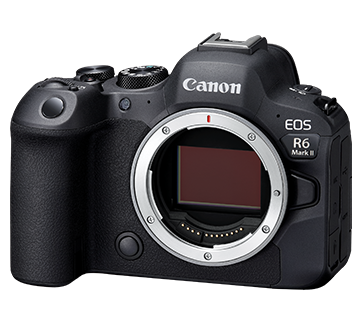
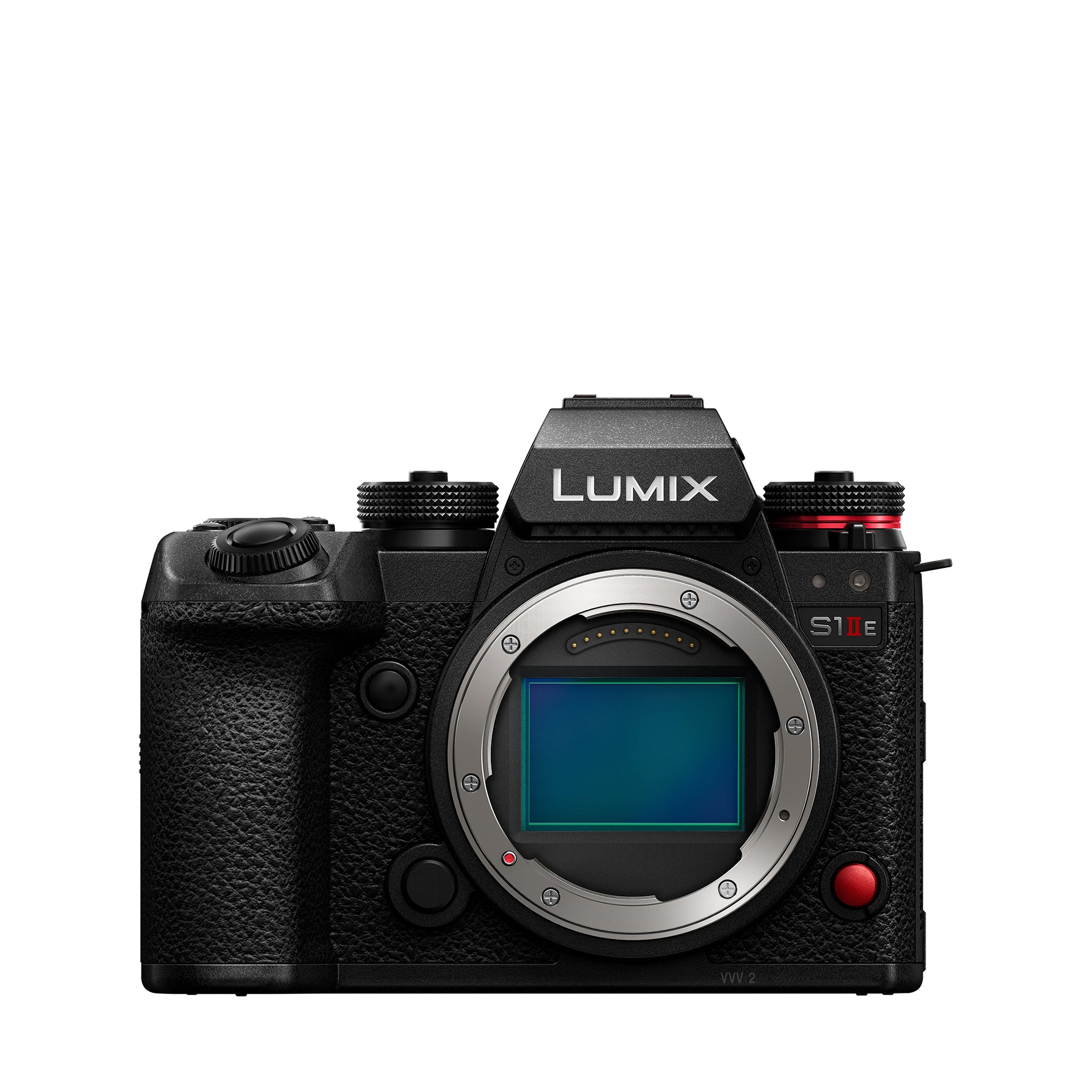
The Canon EOS R6 Mark II and the Panasonic S1 II E are two prominent full-frame mirrorless cameras that cater to both enthusiasts and professionals. As both offer impressive specifications and performance, they are frequently compared by photographers who are looking for a reliable camera for various shooting needs, particularly in low-light and fast-action scenarios. Key differentiators between these two models include their autofocus capabilities, video recording options, and overall handling, making it essential for potential buyers to understand each camera's strengths and weaknesses before making a decision.
Specifications Comparison
Detailed Comparison
Image Quality
Both the Canon EOS R6 Mark II and the Panasonic S1 II E feature full-frame sensors, with the R6 Mark II sporting a resolution of 24 megapixels and the S1 II E a marginal upgrade at 24.1 megapixels. This small difference in resolution does not significantly impact overall image quality. The R6 Mark II's ISO performance is noteworthy, offering a native range of 100-102400 that can be expanded to 204800, making it excellent for low-light photography. In contrast, while the S1 II E does not specify its maximum ISO capabilities, it is known to perform well in low-light as well but may not reach the extremes offered by the Canon. Both cameras produce fantastic colors and detail, but the Canon's superior high ISO performance gives it an edge in low-light conditions, making it more versatile for various shooting scenarios.
Autofocus System
Focusing quickly and accurately is vital for capturing those perfect moments, and the Canon EOS R6 Mark II excels here with its advanced Dual Pixel autofocus system that boasts an impressive 4897 autofocus points, allowing for remarkably accurate and fast focusing capabilities. On the other hand, the Panasonic S1 II E utilizes a Contrast Detection autofocus system that, while effective, features fewer autofocus points, making it less appealing for fast-paced situations. The Canon's eye and face detection also provide an advantage for portrait photography, whereas the S1 II E may require more manual adjustment. Consequently, the Canon R6 Mark II's superior tracking performance during action shots gives it a significant advantage.
Video Capabilities
Video recording is an increasingly important feature for many modern shooters. The Panasonic S1 II E outshines the Canon EOS R6 Mark II in this aspect with its availability of 5.9K and 5.1K recording options at 60p, as well as 4K at up to 120 fps. This flexibility provides videographers various resolutions and frame rates for different creative needs. In contrast, while the R6 Mark II offers solid 4K recording at up to 60p, it lacks the higher resolutions that the S1 II E provides. Both cameras include in-body stabilization; however, the S1 II E's more diverse video resolutions make it the preferred choice for serious videographers and content creators.
Build & Ergonomics
When considering a camera, users often evaluate how comfortable it is to use. The Canon EOS R6 Mark II, weighing 670 grams, offers a compact and ergonomic design that feels comfortable even during extended shooting sessions. It benefits from weather sealing, allowing it to withstand challenging environmental conditions. The Panasonic S1 II E is slightly larger and heavier, but it is also aimed at professional users who appreciate a robust feel. Both cameras have a weather-sealed body, making them suitable for outdoor shooting. However, the R6 Mark II's more compact design may be preferable for those who prioritize portability, while the S1 II E's sturdiness may appeal to those who favor durability.
Battery & Storage
Battery life is crucial for both stills and video photography, and here the Canon EOS R6 Mark II has an advantage with a rated battery life of approximately 580 shots per charge. The S1 II E, while not officially stating its battery life, tends to be less efficient compared to the Canon under similar conditions. Additionally, the R6 Mark II offers dual-card slots with compatibility for CFexpress and SD cards, providing flexibility in storage options. The S1 II E also supports dual slots but may vary in performance based on the type of card used. Consequently, for those who require extended shooting capabilities without frequent swaps, the Canon R6 Mark II is the better option.
Value for Money
Both cameras target enthusiasts and professionals, but they come with different price points and values. The Canon EOS R6 Mark II, with its powerful features, compact design, and extensive lens ecosystem, presents strong value, especially for photographers who lean towards still photography. Conversely, the Panasonic S1 II E, with its advanced video recording capabilities, appeals to those looking for a dual-purpose camera. However, considering overall versatility and performance, many users may find the R6 Mark II to provide a better rounded value, particularly for those who prioritize autofocus and still image quality. Ultimately, value may depend on individual shooting preferences, but the Canon could be seen as slightly better for a broader audience.
Our Verdict
In this comprehensive comparison, the Canon EOS R6 Mark II emerges as the overall winner primarily due to its strong autofocus capabilities, efficient battery life, and superior low-light performance, making it an ideal choice for photographers who capture fast-moving subjects or work in variable lighting. While the Panasonic S1 II E showcases excellent video capabilities and is best suited for videographers seeking high-resolution formats, it lacks some of the all-round strengths of the Canon for still photography. Therefore, casual and serious photographers alike may find more value in the Canon R6 Mark II, while those heavily focused on video production may prefer the Panasonic S1 II E.