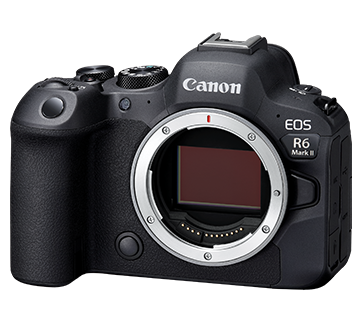
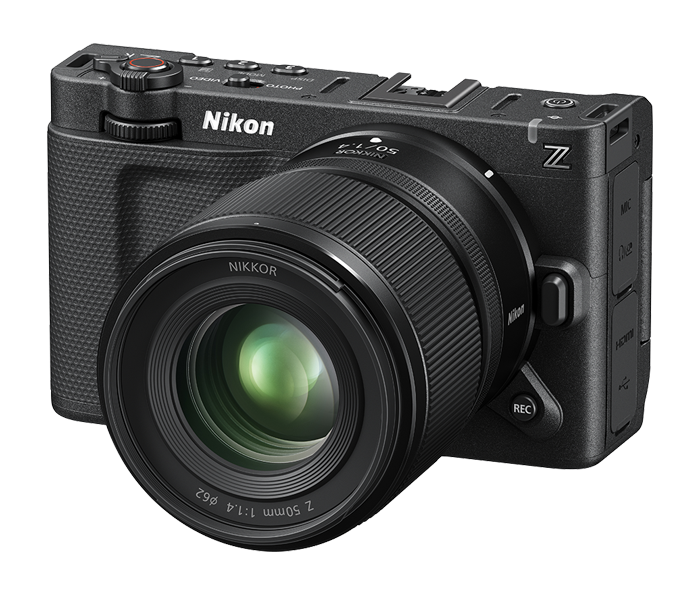
The Canon EOS R6 Mark II and Nikon ZR are two strong contenders in the full-frame mirrorless camera market. Both cameras cater to enthusiasts and professional photographers who are seeking high-quality image performance along with advanced features. While they both share the common goal of delivering excellent photographic capabilities, they differ in specific areas that can influence a buyer's decision. Understanding these differences is essential for individuals looking to invest in a reliable camera system for their creative pursuits, whether for still photography or videography.
Specifications Comparison
Detailed Comparison
Image Quality
In terms of image quality, both the Canon EOS R6 Mark II and Nikon ZR deliver impressive results. The R6 Mark II features a 24-megapixel full-frame sensor, which captures a well-balanced amount of detail, while the ZR offers a slightly higher resolution at 25 megapixels. However, the Canon excels in its ISO range, stretching from 100 up to an impressive 102,400, expandable to 204,800. This capability enhances low-light performance significantly, allowing photographers to capture clearer images in challenging lighting conditions. The ZR, on the other hand, has a lower maximum ISO of 64,000, which may result in more noise at higher sensitivities compared to the Canon model. Overall, while both cameras perform superbly, the R6 Mark II provides a slight edge in versatility with its ISO capabilities and dynamic range.
Autofocus System
When it comes to autofocus, the Canon EOS R6 Mark II again showcases its strength with a whopping 4,897 autofocus points, significantly outperforming the Nikon ZR's 273 points. This extensive autofocus system allows the R6 Mark II to accurately track subjects across the frame, making it particularly suitable for action photography, such as sports or wildlife. The advanced face and eye detection capabilities of the Canon camera are also noteworthy, ensuring that portraits remain sharp and in focus. While the Nikon ZR's autofocus system may be simpler, it still offers reliable performance for general photography, but it may struggle in fast-paced shooting situations compared to Canon's system. Thus, those heavily reliant on autofocus will likely favor the R6 Mark II.
Video Capabilities
In the realm of video capabilities, the Canon EOS R6 Mark II continues to impress with its ability to record 4K video at 60p, allowing for high-quality video output suitable for professional work. Additionally, the Canon's superior in-body stabilization rated at 8 stops significantly aids handheld shooting, offering smoother footage. Meanwhile, the Nikon ZR has strong video specs as well, but it is limited to 4K video at lower frame rates and only 7.5 stops of stabilization. The Canon's combination of higher frame rates and more effective stabilization presents a compelling case for those focused on videography, where motion and fluidity are critical. Hence, for video creators, the R6 Mark II proves to be a more robust choice.
Build & Ergonomics
Both cameras boast solid build quality with weather sealing, making them suitable for outdoor use. The Canon EOS R6 Mark II weighs slightly more at 670g, compared to the Nikon ZR, which weighs 630g, allowing for a marginally lighter carry. In terms of dimensions, the R6 Mark II is larger (138 x 98 x 88 mm) compared to the ZR (133 x 81 x 49 mm), but this could translate to better handling for users with larger hands or those who prioritize a more ergonomic grip. Additionally, the R6 Mark II features an electronic viewfinder, which is a preferred choice for many users transitioning from optical viewfinders, while the ZR lacks one. Therefore, considering ergonomic factors and usability, the Canon holds a slight advantage.
Battery & Storage
Examining battery performance, the Canon EOS R6 Mark II offers a life of approximately 580 shots, which is substantial for a full-frame mirrorless camera, providing users with enough endurance for longer shoots. The Nikon ZR, although generally performing well, does not showcase a published battery life, making it harder to gauge its endurance. Regarding storage, both cameras utilize CFexpress and SD cards, but the established compatibility with Canon's mounting system ensures that photographers can easily find a wide variety of lenses and accessories. Overall, the R6 Mark II's known battery life gives it a lead in endurance and practicality for serious photographers.
Value for Money
The Canon EOS R6 Mark II and Nikon ZR are priced differently within the premium segment, with the Nikon ZR retailing at around $2200. While the R6 Mark II's price is not explicitly listed, its extensive feature set justifies a competitive or slightly higher price based on its superior specifications. When considering the overall value for what each camera offers in terms of image quality, autofocus, video capabilities, and ergonomics, the R6 Mark II is likely to attract buyers looking for a comprehensive and future-proof system. Nevertheless, the Nikon ZR does present a strong option for users more focused on slightly higher resolution and a potentially lower entry point, thus the category is quite close.
Our Verdict
Overall, the Canon EOS R6 Mark II emerges as the winner in this comparison due to its superior autofocus capabilities, video specifications, and low-light performance. It caters well to photographers and videographers needing a robust camera for varied genres. However, the Nikon ZR appeals to those seeking slightly higher resolution and potentially lower overall cost in a decent package. Depending on the user's specific needs, both cameras offer strong performance but the R6 Mark II stands out as a more well-rounded choice.