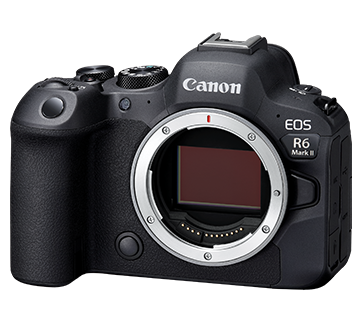
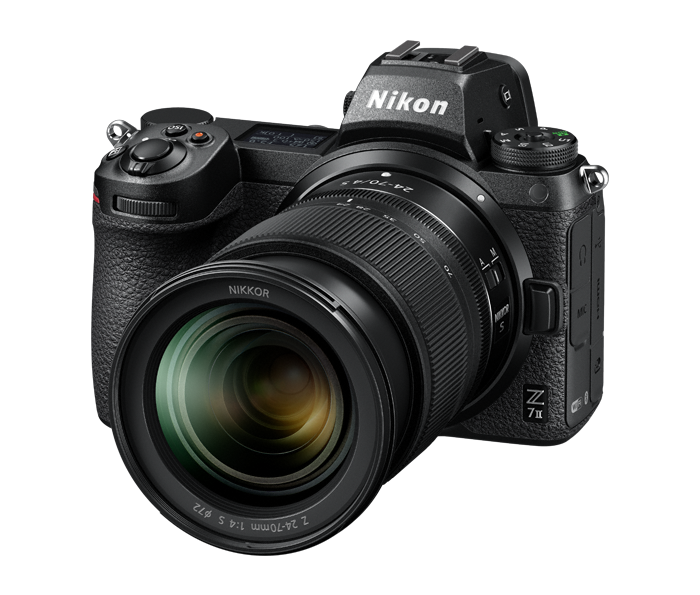
The Canon EOS R6 Mark II and the Nikon Z7 II are two powerhouse mirrorless cameras that are often compared by photographers and videographers alike, particularly those who are seeking full-frame systems that cater to a wide range of creative needs. Potential buyers might be weighing their options between Canon's prowess in autofocus and low-light performance against Nikon's superior resolution and image quality. With each camera offering unique strengths, understanding the nuances between them can help photographers choose the right tool for their artistic vision.
Specifications Comparison
Detailed Comparison
Image Quality
When it comes to image quality, the Nikon Z7 II takes the lead with its 46 megapixels, which allows for stunning detail and resolution in photographs. This camera is particularly advantageous for landscape photographers or those who require large prints, as its high pixel count can capture an impressive amount of detail even in challenging lighting conditions. On the other hand, the Canon EOS R6 Mark II offers 24 megapixels, which is more than sufficient for most applications, yet may not produce the same level of detail as the Nikon for large-scale prints or rigorous cropping. However, the R6 Mark II excels in low-light scenarios thanks to its higher ISO range, reaching up to 102400 natively and maximizing at 204800, allowing users to maintain image quality with less noise in darker environments.
Additionally, the color science and dynamic range differ; the Nikon Z7 II tends to produce images with a slightly more neutral color tone while the Canon camera often delivers warmer skin tones, which appeals to portrait and wedding photographers. Ultimately, while Nikon's superior resolution is noteworthy, Canon's low-light capabilities can make a significant difference in real-world usage. This makes image quality a nuanced evaluation where the choice may depend on the photographer's primary needs and genres.
Autofocus System
The autofocus capabilities of these cameras present clear differences that can influence performance in dynamic shooting situations. The Canon EOS R6 Mark II dresses itself with an impressive 4897 autofocus points, making it a superb choice for tracking fast-moving subjects, whether in sports, wildlife, or candid photography. In realistic tests, the R6 Mark II demonstrates rapid focus acquisition combined with reliable subject detection and accuracy, which are critical for photographers capturing fleeting moments.
In contrast, the Nikon Z7 II also holds a strong ground with 493 autofocus points. While it lacks the sheer quantity found in the R6 Mark II, it utilizes a hybrid autofocus system that performs exceptionally well in both low-light and high-contrast scenarios. However, as the R6's focusing abilities can outperform in most active environments due to its pioneering Dual Pixel CMOS AF, it becomes more favorable for those who prioritize speed and tracking across varied subjects. Thus, Canon's autofocus system shines through, especially for action-oriented photography.
Video Capabilities
Both the Canon EOS R6 Mark II and the Nikon Z7 II feature robust video specifications, capable of recording in 4K at 60 frames per second. This common feature provides filmmakers with high-resolution, fluid video output, making both options suitable for professional video production. However, the Canon model adds advantages in video stabilization, boasting an impressive 8 stops, compared to the Z7 II's 5 stops. The stabilization system in the R6 Mark II is particularly beneficial for handheld shooting, enabling smoother footage without the need for bulky external stabilizers.
Moreover, the Canon EOS R6 Mark II includes advanced features like 10-bit 4:2:2 internal recording, which provides greater flexibility in post-production when color grading, enhancing its appeal to videographers. The Nikon Z7 II, while capable, does not match Canon's versatility in video specs, particularly for capturing high-quality footage in challenging shooting environments. Therefore, when considering video capabilities-especially for dynamic motion and post-production flexibility-the Canon R6 Mark II holds the edge.
Build & Ergonomics
Both the Canon EOS R6 Mark II and the Nikon Z7 II exhibit high-quality construction and effective weather sealing, making them suitable for outdoor shooting under variable conditions. The Canon R6 Mark II measures 138 x 98 x 88 mm and weighs 670g, while the Nikon Z7 II is slightly smaller in height at 134 x 101 x 70 mm, but weighs more at 705g. For those who prioritize compact camera systems for travel, the difference in weight and dimensions may sway decisions, with the R6 Mark II having a slight advantage.
Ergonomically, both cameras provide comfortable grips, yet user preference will significantly dictate which feels better in hand. The R6 Mark II offers a fully articulating touchscreen, which is a boon for vloggers and those shooting from difficult angles, while the Z7 II features a tilting display that may feel less versatile for some users. The Canon's menu systems and user interface have received positive feedback for their intuitiveness, which can reduce the learning curve for new users compared to Nikon's sometimes criticized complexity in navigation. Hence, for build quality and ergonomics, the hands-on experience can vary from user to user, but the Canon edges ahead with its articulating screen.
Battery & Storage
When comparing battery life, the Canon EOS R6 Mark II surpasses with a rated battery life of approximately 580 shots compared to Nikon Z7 II's 420 shots. This difference becomes significant for photographers and videographers who need extended shooting sessions without frequent recharging, making the Canon a more reliable option for long days on location.
Both cameras support dual card slots for storage, with the Nikon Z7 II utilizing CFexpress and XQD, while the Canon R6 Mark II employs a similar dual card configuration but leans on SD cards. The advantage here lies in the faster transfer speeds offered by CFexpress cards, which can be advantageous for high-resolution bursts or 4K video.
Despite slightly inferior battery longevity, Nikon's dual storage management offers robust performance for enthusiasts who require extensive data handling when working with high-resolution files. Thus, while battery life tilts in favor of Canon, the overarching capabilities for storage depend on user style and data demands.
Value for Money
In terms of price, the Nikon Z7 II has a higher cost at approximately $2999, while the Canon EOS R6 Mark II typically sells at a lower price point, making it more accessible for many potential users. Considering the specs, particularly in autofocus, stabilization, and battery life, the R6 Mark II offers impressive value, especially for those focused on action photography, videography, and general versatility.
Conversely, the Nikon Z7 II justifies its price through superior resolution and image quality, ideal for professionals and enthusiasts who prioritize detailed imaging for high-end prints or fine art photography. Though Nikon presents a strong return for those needs, the added cost doesn't provide as broad utility as seen in the more affordable Canon. Therefore, for buyers weighing features against cost, the Canon EOS R6 Mark II emerges as the more value-friendly option overall.
Our Verdict
Overall, the Canon EOS R6 Mark II takes the crown in this comparison due to its superior performance in critical areas such as autofocus, video capabilities, and battery life. For photographers who require performance in action scenarios or ample versatility for various shooting styles, the R6 Mark II excels. However, the Nikon Z7 II remains a strong contender, particularly for those who prioritize high-resolution images and fine details. The choice ultimately depends on the specific needs of the user-whether it's speed and versatility with Canon or exceptional image quality with Nikon.