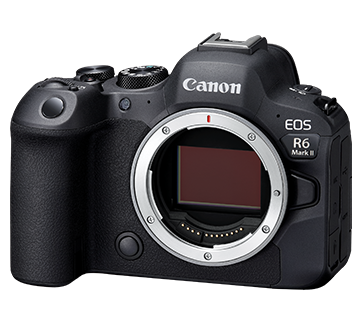
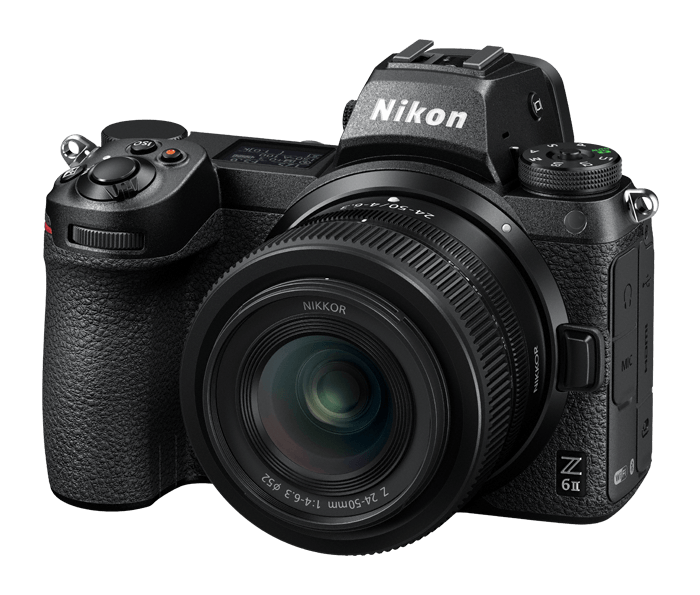
The Canon EOS R6 Mark II and the Nikon Z6 II are two highly regarded full-frame mirrorless cameras that attract professionals and enthusiast photographers alike. They are often compared due to their similar target markets, advanced features, and competitive pricing, making it essential for potential buyers to understand the distinctions between them. Those choosing between these two models may prioritize different aspects based on their specific needs, such as image quality, autofocus performance, or video capabilities. Each camera excels in particular areas, which will help determine the best choice for different types of users.
Specifications Comparison
Detailed Comparison
Image Quality
When it comes to image quality, both the Canon EOS R6 Mark II and the Nikon Z6 II are designed to deliver exceptional results. The Canon features a 24 MP full-frame sensor, which, while lower in resolution compared to the Z6 II's 25 MP sensor, is known for its effective low-light performance and dynamic range, including an impressive ISO range that extends all the way up to 204800. In practical terms, both cameras can produce stunning images with vivid colors and detailed textures, but users might notice a slight edge in overall sharpness with the Nikon's marginally higher megapixel count.
The Canon EOS R6 Mark II, on the other hand, benefits from Canon's advanced image processing technology, including fast burst shooting and impressive RAW file capabilities. Users often favor the Canon's image output, particularly in challenging lighting scenarios, where its high ISO performance shines. With both cameras offering versatile image quality, potential buyers might lean towards Canon for quick-action scenes and varying light conditions, whereas the Nikon can appeal more to those specializing in detailed, larger prints where higher resolution can be advantageous.
Overall, while both cameras deliver excellent image quality, the decision ultimately depends on specific user needs, leading to a close result in this category.
Autofocus System
The autofocus systems of these two cameras showcase significant differences that could impact user experience. The Canon EOS R6 Mark II offers an advanced Dual Pixel Autofocus system with an astonishing 4897 autofocus points, ensuring precision and accuracy in almost any scenario. The system is highly regarded for its ability to recognize subjects effectively, especially moving subjects, making it ideal for action photography or wildlife shooting.
Conversely, the Nikon Z6 II features a more modest 273 focus points, which can be effective but doesn't quite match the breadth of the Canon's system. While the Nikon's autofocus is responsive and reliable, particularly in good lighting conditions, it may struggle slightly in low-light scenarios or with fast-moving subjects compared to the R6 Mark II. Moreover, Canon's eye-tracking technology has gained substantial praise, providing unmatched capabilities in portrait situations.
Ultimately, the Canon EOS R6 Mark II's autofocus excellence places it ahead in this category, making it the preferred choice for users requiring speed and reliability in fast-paced photography.
Video Capabilities
Both the Canon EOS R6 Mark II and the Nikon Z6 II offer robust video capabilities that cater to video enthusiasts and filmmakers. The R6 Mark II supports 4K video recording at 60p, providing high frame rates and excellent footage quality, making it particularly appealing for vloggers and those creating quick-action content. Furthermore, the camera incorporates advanced in-body image stabilization (IBIS) rated at 8 stops, which significantly enhances stability during handheld shooting.
In contrast, the Nikon Z6 II records 4K video at a maximum of 30p, making it limited for high-frame-rate applications. However, it does offer additional video features such as 10-bit output and the capability to record in ProRes format via an external recorder, which can be appealing to professional videographers. That said, the built-in stabilization of the Z6 II falls short with just 5 stops, which can lead to shakier footage when compared to the impressive stabilization offered by Canon.
Taking into account frame rate flexibility and stabilization features, the Canon R6 Mark II excels in this category, catering to diverse video needs.
Build & Ergonomics
Both cameras are designed with durability and user comfort in mind, featuring weather sealing to withstand various environmental conditions, making them reliable for outdoor shooting. However, their ergonomics subtly differ. The Canon EOS R6 Mark II is slightly heavier at 670g, while the Nikon Z6 II weighs 705g. This weight difference may be negligible for most users, but it may influence extended shooting comfort for some.
The Canon model features a 3-inch screen with 1,620,000 dots, while Nikon provides a slightly larger 3.2-inch screen with 2,100,000 dots. The higher resolution of the Nikon screen can make focusing and reviewing images more enjoyable. Additionally, the button and dial arrangement on both cameras are designed to facilitate quick settings adjustments, but ergonomics can be subjective, and users often have personal preferences regarding the feel of the camera in hand.
Both models provide a premium build quality, but the nuanced differences in screen size and control layout may tilt preference slightly towards Nikon for users valuing that aspect more.
Battery & Storage
When comparing battery life and storage options, the Canon EOS R6 Mark II is rated for approximately 580 shots per charge, outpacing the Nikon Z6 II, which stands at about 410 shots. This longer battery life can be crucial for professional photographers who need to shoot for extended periods without interruption.
Both cameras support dual card slots, enabling users to backup images and expand storage capacity. The Canon takes advantage of its CFexpress and SD card slots, supporting faster write speeds, which can be beneficial during high-resolution image capture and fast burst mode. In contrast, the Nikon Z6 II also incorporates two SD card slots but limits itself to the capacity and speed benefits associated with standard SD cards.
Considering the longer battery life and faster storage options, the Canon R6 Mark II has the upper hand in this category.
Value for Money
The pricing of both cameras reflects their feature sets and intended target markets. The Nikon Z6 II retails at approximately $1995, which positions it competitively within the full-frame mirrorless market. It offers a good blend of features, especially for those looking for a reliable camera with excellent image quality and solid video capabilities, albeit at a slower frame rate.
In contrast, the Canon EOS R6 Mark II, while not officially priced, is expected to closely align with its predecessor, which often sits around $2499. Given the advanced features like higher continuous shooting speed, better autofocus capabilities, and superior in-body stabilization, some users may find these added features justify the higher price.
Ultimately, while the Nikon Z6 II presents a strong case for value through its price and features, the Canon R6 Mark II could be seen as offering better overall performance for slightly higher expenditure, especially for those who prioritize fast-paced shooting, making value significantly reliant on specific needs.
Our Verdict
In conclusion, while both the Canon EOS R6 Mark II and the Nikon Z6 II are excellent choices for photographers and videographers, the Canon emerges as the overall winner. It excels especially in autofocus, video capabilities, and battery life, making it a top choice for action-oriented photographers and videographers who need performance and versatility. However, the Z6 II still holds its ground with excellent image quality and value for those who may not require the absolute latest features, particularly if a lower price point is a priority. Ultimately, the choice depends on the use case and individual preference for brand systems.
Canon EOS R6 Mark II
Nikon Z6 II
Also Compare
Frequently Asked Questions
Which camera is better for low-light photography?
The Canon EOS R6 Mark II has a higher maximum ISO range and better low-light performance, making it a better choice for low-light conditions.
Is the Canon EOS R6 Mark II better for video work?
Yes, the Canon R6 Mark II offers higher frame rates in 4K video recording, along with superior stabilization features, making it more suitable for video projects.
How do the autofocus systems compare?
The Canon R6 Mark II has a significantly more advanced autofocus system with 4897 points compared to 273 in the Nikon Z6 II, providing greater precision in fast-paced scenarios.
Which camera is better for photographs with fast motion?
The Canon EOS R6 Mark II is the preferred choice for fast motion photography due to its higher burst shooting capability at 40 fps and superior autofocus performance.
Are both cameras weather-sealed?
Yes, both the Canon EOS R6 Mark II and Nikon Z6 II are weather-sealed, making them suitable for outdoor photography in different conditions.